Violations in modes of existence, racism and environmental (in)justice in the marajoara Amazon
“There is a lot of beautiful, stunning Amazon, there are many people that live, sleep, eat and dream of a totally original way [of living], and there are many idealists that, when decide what to do of their lives, assume that the world is also their responsibility and they strive to let it as they see proper Lorena Cândido Fleury, 2013, p. 24 in free translation
17 December 2020 | Duration of reading: 5 min
By Maycom Nascimento
The Amazon has got a lot of attention recently, either for its biodiversity richness, or by fire events and deforestation that affected (and affects) the region recently. Despite Amazon being a coveted region and culturally and economically attractive, little is known about it, about those who live there and how they live, their challenges and the contradictions in their experiences. Talking about Amazon is also talking about its diversity and social and cultural richness - there are quilombolas, riverside communities, farm-workers, extractivists, indigenous and many other, holders of different ways of life and existence, cultural practices, knowledge and different activities.
Notwithstanding these local populations having their rights acknowledged in the Brazilian juridical ordenment since the promulgation of the Brazilian Federal Constitution in 1988, they live under a condition of fear and violence due to the expansion of agricultural and non-agricultural (construction of hydropower plants, ports, railroads, monocultures of soy, rice and others) activities. These activities menace their stay in their territories and provoke a disruption of Traditional Communities and People civil, territorial and ethnic rights.
Studies toward racism and environmental injustice are propped in the correlation between environmental and ethnic racial fields, in order to analyze the costs of the so-called “development” over populations in context of social vulnerability, calling attention to the racial components of those fights. Most of the construction and enterprises of public and private sectors are installed in areas inhabited by racial and ethnically identified as ingigenous and quilombolas populations. Those populations suffer the consequences of environmental and social damages brought to their reality by enterprises, as pointed by the data in the Map of Conflicts involving Environmental and Health Injustice in Brazil (see here).
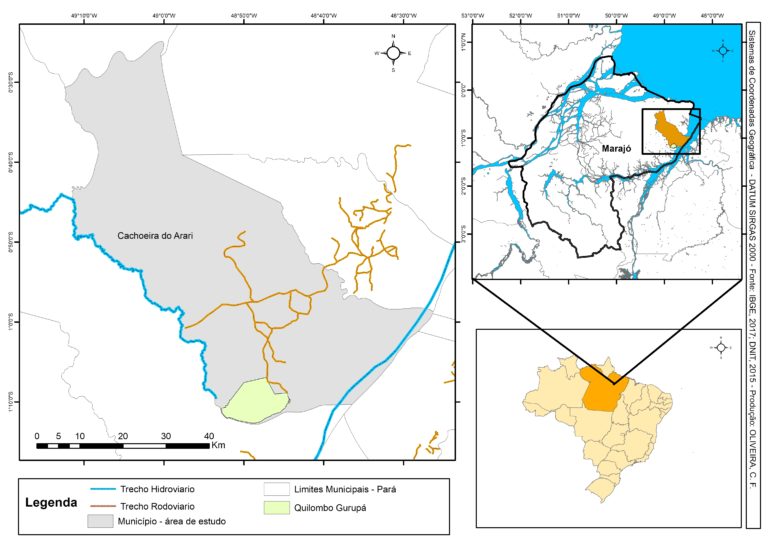
The study we are developing, in the scope of the master's course in Rural Development of Federal University of Rio Grande do Sul, seeks to understand how the racism and environmental injustice are reflected in the disputes and conflicts crossed by the violations of rights and modes of existence. The object of study regards the impacts on the quilombola community of Gurupá in Cachoeira do Arari municipality, in the Archipelago of Marajó Island/Pará, caused by the advance of rice agricultural frontier in the region.
The marajoara archipelago is one the regions of Pará state that most concentrate quilombola communities, 15 in total, and neither have ownership title from Instituto Nacional de Colonização e Reforma Agrária (INCRA - National Institute of Colonization and Agrarian Reform) over their lands. These communities only have a certification from Fundação Cultural Palmares (Cultural Foundation of Palmares).
Data collected so far point a series of irregularities in rice cultivation areas reported by quilombola communities, such as: lack of previous free and informed consult, as provided by the 169 ILO (International Labour Organization) convention; utilization of quilombola territory to construct ports and products transportation; aerial release of pesticides transgressing the norms of agricultural aviation; concession of the Environmental Licensing (Licenciamento Ambiental) by the State Secretariat for the Environment without the Study of Environmental Impact and Environmental Impact Report (Estudo de Impacto Ambiental e Relatório de Impacto Ambiental - EIA/RIMA).
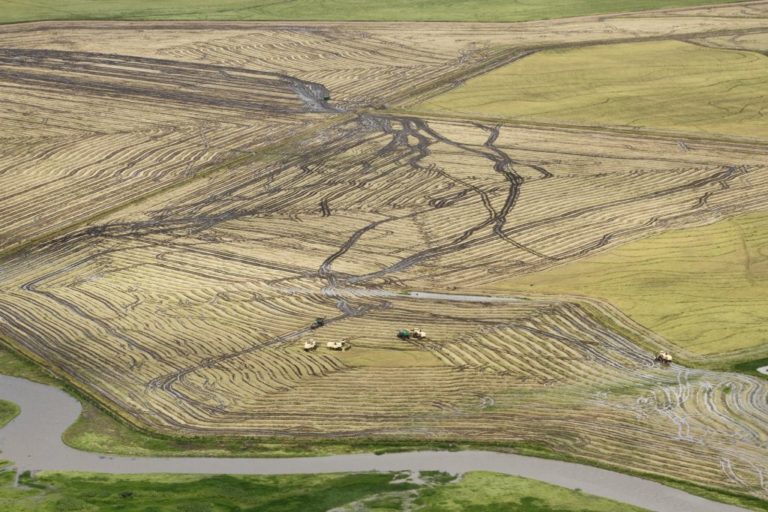
Rice fields in Cachoeira do Arari. Photo: Raimundo Paccó/Amazônia Real
Furthermore, it was identified that quilombola communities keep existing and resisting to maintain their traditions, modes of existence and territory, despite their rights being institutionally guaranteed. Lastly, it was verified that the way the rice cultivation was installed did not consider the different ways of life, world views, relationships with nature and environment, and show severe violation of the individual and collective rights, being a sign of the way that these undertakings of the Brazilian agribusiness are capable of transforming these people into nonexistent.
Science is done collaboratively
This text is a result of the research in development by Maycom Nascimento in the scope of the master's course in Post-Graduation Program in Rural Development of Federal University of Rio Grande do Sul (PGDR/UFRGS). This research is advised by Lorena Cândido Fleury. This study has financial support from CAPES through a master’s scholarship.
Want to know more? Access the links below!
Acserald, H. (2002). Justiça ambiental e construção social do risco. Desenvolvimento e Meio Ambiente, 5: 49-60. (Link)
Fleury, L. C. (2013). Conflito ambiental e cosmopolítica na Amazônia brasileira: a construção da Usina Hidrelétrica de Belo Monte em perspectiva. Tese (doutorado) – Universidade Federal do Rio Grande do Sul, Instituto de Filosofia e Ciências Humanas, Programa de Pós-Graduação em Sociologia, Porto Alegre. (Link)
Gomes, D. L. & Bringel, F. O. (2016). Tensões territoriais entre rizicultores e quilombolas no arquipélago do Marajó. In: Macedo, C. O., Oliveira, F. B., Souza, R. B., Marcos, R.S. (Org.). Os ‘Nós’ da Questão Agrária na Amazônia. 1ed. Açaí, v. 1, p. 153-167.
Herculano, S. (2008). O clamor por justiça ambiental e contra o racismo ambiental. InterfacEHS – Revista de gestão integrada em saúde do trabalho e meio ambiente, 3(1): 01-20. (Link)
Maycom Nascimento is pedagogue, has a Master's degree in Rural Development, and is a member researcher of the Technology, Environment and Society research group (TEMAS) at UFRGS. See more here.