Minicourses
MC1 -Introduction to superconductivity. (1.5hs)
Evandro Vidor Lins de Mello, Universidade Federal Fluminense, Niteroi, Brasil
Abstract: Lesson 1: Basic experiments and phenomenology of superconductors in general. Meissner effect, the energy gap, demonstration of the lattice interaction (phonons). BCS theory, granular superconductors, Josephson effect. Why is it important to increase Tc? Technological and potential applications. Lesson 2: Introduction to high-temperature cuprate superconductors (HTSCs). Unconventional properties of HTSCs such as the pseudogap and charge density waves (CDWs). Experimental techniques; ARPES, STM, in addition to the usual ones such as susceptibility and resistivity measurements in HTSCs. Theory based on the superconducting phase fluctuation of Emery and Kivelson. The proposal of phase separation as an explanation for intrinsic disorder and some results; superfluid density, proximity effect, Hall effect, and the phase diagram.
MC2 – Experimental techniques in superconductivity: from sample synthesis to the characterization of physical properties. (1,5hs)
Fabiano Mesquita, Instituto de Física, UFRGS, Porto Alegre, Brasil
Abstract: The course aims to introduce and deepen the understanding of experimental methods employed in the investigation of superconducting materials, with emphasis on synthesis techniques, structural characterization, and measurements of electrical and magnetic properties. Practical aspects of sample preparation (ceramics, thin films, and single crystals), heat treatment, and purity control will be addressed, along with an introduction to cryogenic instrumentation and the use of high-sensitivity measurement devices. Theoretical lectures will be complemented by laboratory activities focused on determining the critical temperature (Tc), performing electrical resistance measurements under different magnetic fields and temperatures, recording magnetization curves (ZFC/FC), and estimating critical parameters (Hc, Jc). The course will also discuss experimental challenges related to strongly correlated systems and unconventional superconductors, highlighting the importance of careful data analysis and experimental reproducibility. The course is intended for graduate students in Physics and related fields who wish to develop practical skills in the characterization of superconducting materials, offering an integrated training that bridges theoretical foundations and advanced experimental procedures.
MC3 – The optical conductivity of high-temperature superconductors. (1,5hs)
Ricardo Lobo, CNRS, ESPCI Paris, Sorbonne Université, Paris, França.
Abstract: The optical conductivity is the extension to optical frequencies of the electrical resistivity of materials. It carries a quantitative
information on free and bound charge carriers. The total optical
spectral weight is a constant for a given material, which allows for the
analysis of coupling between excitations. In this short course I will
show the basis of the optical conductivity and discuss the main models
explaining optically active excitations (phonons, mobile carriers,
interband transitions, gaps, etc). I will give a particular emphasis to
the behavior of free carriers, from the basic Drude model to extended
versions of it that take into account the quasi-particle self-energy and
frequency dependent life-time effects. I will discuss the optical
response observed in high temperature superconductors (cuprates and
pnictides), both in the strongly correlated normal state and the exotic
superconducting phase. I’ll discuss features such as the pseudogap, the
pairing mechanism, non-Fermi liquid signatures, and mass renormalization.
MC4 – Towards a unified view of the topological insulators and the type II superconductors. (1,5hs)
Mauro Doria, Universidade Federal do Rio de Janeiro, Rio de Janeiro, Brasil
Abstract: Here we point to some common features between the topological insulators and the type II superconductors that suggest their unification under a single theoretical framework. These common features become evident once the description of the topological insulators through the so-called first order equations is taken. These equations were firstly found by Alexei Abrikosov in his 1957 seminal work where the magnetic properties of superconducting alloys were understood. A deeper understanding of the first order equations was later obtained by Evgeniy Bogomolny when he proved that they solved exactly the Ginzburg-Landau theory for one value of the coupling constant. Here we propose that such equations describe the topological insulators once spin is included into them. Undoubtedly the Abrikosov-Bogolmony (AB) equations provide a venue to understand the topological properties of a system through its magnetic properties. The simplest set of such equations is associated to the complex numbers and describes the type II superconductors. They give rise to vortices and they are two dimensional, that is, they are applicable to three-dimensional space with uniaxial symmetry. The inclusion of spin (quaternions), renders the equations three-dimensional. Nevertheless, a closer investigation shows that they describe surface quantum plasmons, and so, apply to conducting layers where topological skyrmions arise to play the role of the fundamental quasi-particles. The AB set consists of two equations, and in case of spin, the first one is just a zero-helicity condition that guarantees the spin-momentum locking, a feature commonly found in the topological insulators. The second spinorial AB equation determines the local magnetic field which is responsible for the topological stability of the skyrmionic quasi-particles through the Chern-Simons index. The AB equations accept a Lorentz generalization to four dimensions, known as the Seiberg-Witten equations that describe massless monopoles. The AB equations are intimately related to the so-called Lichnerowicz-Weitzenbock decomposition of the kinetic energy, that here is extended to three terms to include a surface effect, which is shown to be exactly the Rashba interaction. As an outcome, the spectrum of the zero-helicity state is found to be linear. Hence the present framework provides a natural explanation for the onset of the Rashba term and of its Dirac like spectrum, which are common features of the topological insulators. For the case of several stacked layers, the arousal of a pseudo gap, the presence of conducting bands with different masses, the topological stability of quasi-particles in the form of skyrmions and anti-skyrmions are straighforward consequences of the present approach.
Extended Lectures
EL1 – Mesoscopic quantum phenomena in superconducting systems: from local probe microscopy to nanodevices
Vasily Stolyarov, Director Center for Advanced Mesoscience and Nanotechnology (CMN), Moscow Institute of Physics and Technology (MIPT), Russia.
EL2 – Josephson Coupling via Magnetic and Topological Barriers
Alexander Golubov, Head of the Laboratory of Topological Quantum Phenomena in Superconducting Systems, CNM, MIPT, Russia.
Abstract: Josephson junctions incorporating nontrivial barrier materials offer a powerful platform for engineering unconventional superconducting transport. This overview examines recent studies of Josephson coupling mediated by ferromagnetic and topological barriers.
In ferromagnetic (F) barriers, the exchange field induces spatial oscillations in the superconducting pairing amplitude. This proximity effect, characterized by a complex coherence length, determines the ground-state phase difference in superconductor–ferromagnet–superconductor (SFS) junctions based on its interplay with barrier transparency and F-layer thickness. This behavior is directly observable as oscillations and decay in the critical current; a negative critical current signifies a π state. These 0–π transitions have been systematically studied in metallic SFS junctions, where nonmonotonic critical currents and reentrant superconductivity appear. Advanced hybrid structures, such as SIsFS junctions (where I is an insulator), allow independent control over the critical current (via the insulator–superconductor part) and the ground-state phase (via the ferromagnetic part), significantly expanding the design space for cryogenic memory and phase-based superconducting logic.
Unconventional coupling also arises in superconductor–topological insulator–superconductor (S–TI–S) junctions. Superconductivity induced in spin-momentum-locked surface states hosts helical Dirac fermions that are immune to backscattering, enabling ballistic transport and the formation of low-energy Andreev bound states. These Andreev modes generate current-phase relations that deviate significantly from a sinusoidal shape, approaching a sawtooth form in short junctions. Recent experiments on Nb–BiTeSe–Nb junctions have revealed signatures of this topological proximity effect, including frequency-dependent Shapiro step suppression and ultrafine critical-current oscillations in weak magnetic fields. Analysis suggests that the missing Shapiro step can be explained by overheating, while the fine oscillations—occurring on unexpectedly small field scales—indicate resonant transmission through Andreev bound states at the superconductor–topological-insulator interfaces.
These findings demonstrate that ferromagnetic and topological barriers enable rich and tunable Josephson physics. A deeper understanding of phase-shift mechanisms and interface-bound quasiparticles will be essential for developing novel superconducting circuits, including scalable memory elements and protected qubits.
Lectures
L0- Probing orbital order (and disorder !) in a cuprate with Resonant Inelastic X-ray Scattering (RIXS)
Eduardo Granado, Universidade Estadual de Campinas, Campinas, Brasil.
Abstract: In typical Jahn-Teller (JT) crystalline systems, such as those containing Cu2+ 3d9 ions under an octahedral CuL6 local environment, a static lattice distortion breaks the orbital degeneracy associated with the symmetrical crystal-field environment, leading to a cooperative JT transition at a given temperature TJT. In experimental investigations up to date, the orbital order parameter is not directly accessed, being only indirectly inferred from the accompanying lattice distortion. Providing tools to investigate directly the electronic sector of partly ordered orbital systems, on the other hand, is an essential step towards a deeper understanding and microscopic insight of many quantum materials, as the accompanying magnetic structures and anisotropic macroscopic properties are normally highly sensitive to the degree of orbital order.
In this work, a decisive step forward into the experimental description of disordered and partially ordered orbital systems is taken by a combined Resonant Inelastic X-Ray Scattering (RIXS) and (local and crystal) structure investigation of the CuSb2O6 cuprate. This insulating material shows a Jahn-Teller-like phase transition at TJT=400 K. The RIXS cross-sections of the dd transitions were both analytically and numerically calculated, being strongly dependent of the specific orbital state of Cu2+. A comparison between experimental and calculated dd-RIXS cross sections points to a high level of incoherent orbital mixing of x2-y2, y2-z2, and z2-x2 base states down to at least T=20K << TJT, contrary to our initial expectations. In this lecture, I will present the methodology used to obtain experimental evidence regarding the electronic (orbital) disorder of this system and demonstrate the effectiveness of RIXS in probing the orbital degrees of freedom in quantum materials.
L1 – Engineered Non-Magnetic Impurities for Robust Majorana Zero Modes
Alexei Vagov, Higher School of Economics (HSE), Russia.
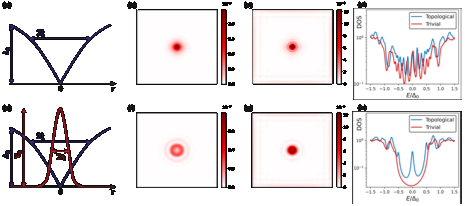
Abstract: Majorana zero modes (MZMs) localized in the vortex cores of topological superconductors are widely regarded as promising building blocks for fault-tolerant quantum computation. However, their unambiguous experimental detection remains challenging due to the extremely small energy separation between the MZM and conventional Caroli–de Gennes–Matricon (CdGM) vortex states. In this work, we show that non-magnetic impurities can provide a constructive mechanism to overcome this limitation. Within a microscopic Bogoliubov–de Gennes framework applied to hybrid topological superconductors, we demonstrate that impurity-induced vortex pinning substantially enhances the minigap separating the MZM from other vortex-core excitations. Importantly, the MZM itself remains unaffected owing to its topological protection. This leads to the emergence of a robust and well-isolated zero-bias peak in the local density of states. Our results challenge the conventional requirement of a large Δ/EF ratio for reliable MZM detection and propose an experimentally feasible strategy based on engineered non-magnetic pinning centers in conventional s-wave superconductors. Аuthors acknowledge support from the International Academic Cooperation program of HSE University.
References
1. V.D. Neverov, T. Karabasov, A.V. Krasavin, D. Rodichev, V.S. Stolyarov, and A. Vagov Research 9, 1087 (2026); DOI: 10.34133/research.108
L2 – Machine Learning prediction of superconducting pairing potential for disordered s-wave superconductors
V. D. Neverov, Moscow Institute of Physics and Technology (MIPT) and Higher School of Economics (HSE), Moscow, Russia.
Abstract: Machine Learning (ML), particularly deep neural networks, has emerged as a powerful tool across multiple scientific domains, revolutionizing data-driven research and computational methodologies. From its inception, ML has evolved into an analytical method capable of processing high-dimensional datasets, extracting hidden correlations, and predicting complex physical phenomena with remarkable accuracy. These capabilities have significantly accelerated scientific discovery, enabling researchers to tackle problems that were previously computationally intractable.
In condensed matter physics, ML has opened new avenues for understanding strongly correlated systems, quantum materials, and emergent phenomena. A particularly compelling application lies in the study of superconductors, where inhomogeneities and disorder play a crucial role in determining electronic properties. Traditional approaches, such as solving the Bogoliubov-de Gennes (BdG) equations, provide a framework for analyzing inhomogeneous superconductors but often require substantial computational resources, especially when dealing with large systems.
In our work [1,2], we developed a machine learning algorithm designed to predict the spatial distribution of the pairing potential in a superconductor based on a given disorder profile. This approach uses the ability of neural networks to learn mappings between disorder configurations and the corresponding superconducting order parameter, bypassing the need for iterative numerical solutions of the BdG equations in many cases.
[1] Neverov Vyacheslav, et al. “Scalable machine learning approach to disordered 𝑠-wave superconductors.” Phys. Rev. B 113 024515 (2026)
[2] Neverov Vyacheslav, et al. “Machine learning prediction of superconducting pairing potential for quasi-one-dimensional disordered s-wave superconductors.” Mesoscience & Nanotechnology, 1 2 (2025)
L3 – The History of superconductivity in Brazil: institutions, protagonists, advances, current Stage.
Wilson Ortiz, Universidade Federal de São Carlos, São Carlos, Brazil.
Abstract: Superconductivity has had a unique trajectory in Brazil, marked by the creation of pioneering institutions, the decisive work of researchers, and the development of research lines that accompanied the evolution of the field. From the first low‑temperature laboratories that emerged between the 1960s and 1970s, through the rapid and vigorous scientific mobilization following the discovery of high‑temperature superconductors in 1986, the country consolidated excellence groups dedicated to the synthesis of new materials, studies of fundamental properties, cryogenics, and technological applications.The creation of thematic sections in national events, the expansion of collaborative networks, and modern scientific infrastructure — including large multiuser laboratories — contributed to structuring the field and training generations of specialists. Currently, Brazil maintains a relevant presence in emerging materials, quantum phenomena, and superconducting devices, while also facing institutional challenges and strategic opportunities that shape its future.This lecture presents a comprehensive historical overview of superconductivity in the country, highlighting institutions, key figures, scientific advances, and the contemporary stage of research.
L4 – An unified model for cuprate superconductors based on a spinodal (phase separation) transition.
Evandro Vidor Lins de Mello, Universidade Federal Fluminense, Niteroi, Brasil.
Abstract: Many years of intense research on cuprate superconductors have led to several discoveries, such as the pseu-dogap and mesoscopic charge density waves (CDW), yet a complete theory is still lacking. Recent experiments, on overdoped samples, near the superconducting-to-metal transition detected superconducting puddles and a considerable degree of charge disorder, suggesting that a thermodynamic transition operates at all doping levels. Accordingly, we propose a spinodal or charge-separation transition starting near the pseudogap temperature T*(p), which among other things, generates the CDW small domains with a typical double-well Landau free-energy functional. Thus, from the half-filled to the overdoped region, the free energy forms an array of wells with fluctuations of the n = 1 static holes. With doping, mobile p holes tend to occupy these wells with alternating high and low densities, generating the well known mesoscopic CDW patterns. The confined holes in small regions develop local superconducting amplitudes, giving rise to a mesoscopic granular superconductor. Similar to the XY model, the grains develop correlation effects mediated by Josephson coupling, which is proportional to the local superfluid density. We show in the seminar that this approach yields a unified account of many cuprate’s properties, like the superfluid density, the Hall coefficient, the proximity effect and the increase in Tc when different non-superconcucting materials are combined.
L5 – Efficiency of the superconducting diode effect of pair-density-wave states in two-dimensional d-wave altermagnets.
Hermann Freire, Universidade Federal de Goiás, Goiânia, Brazil.
Abstract: We systematically study the efficiency of the intrinsic superconducting diode effect of several pair- density-wave states that can emerge in two-dimensional d-wave metallic altermagnets. To this end, we investigate several scenarios using an effective minimal mic roscopic model and Ginzburg-Landau analysis in order to derive the corresponding pairing phase diagrams. In addition, we also examine whether the presence of a Rashba spin-orbit coupling and an applied external magnetic field are beneficial to this effect in these systems. As a consequence, our results add further support to the fact that altermagnetic materials indeed provide a good platform for the pursuit of finite-momentum superconductivity, which can lead to an optimization of the diode efficiency in some physically interesting situations. The latter phenomenon has been recently proposed to be key in improving the applicability of new energy-efficient quantum electronic devices.
L6 – BRICS STI Architecture: opportunities for international collaboration
Irina Kuklina, Executive Director of the International Center for Innovation in Science, Technology and Education (ICSTE), Moscow, Russia
Abstract: In preparation.
L7 – Probing Quantum Phase Instabilities via Synchrotron X-ray Techniques under Extreme Conditions.
Ricardo D. dos Reis, Brazilian Synchrotron Light Laboratory (LNLS),Campinas, Brazil
Abstract: Many of today’s most compelling quantum materials exhibit emergent states of matter that challenge classical descriptions, arising from a complex interplay between spin, electronic, and lattice degrees of freedom. These interactions often lead to collective phenomena such as superconductivity, long-range orders, the Kondo effect, or the emergence of exotic quasiparticles like Weyl and Majorana fermions. Deciphering the mechanisms behind these quantum states remains a frontier in condensed matter physics, with significant implications for both fundamental science and future technological applications. In this talk, I will demonstrate how synchrotron-based techniques—including X-ray absorption, diffraction, and scattering—can be integrated with extreme environments such as high magnetic fields, cryogenic temperatures, and hydrostatic or uniaxial pressure. This multi-extreme approach enables the continuous and reversible tuning of quantum correlations. I will focus on materials at the brink of phase instabilities, exploring how lattice contractions and structural symmetries influence their electronic properties and nontrivial topology.
L8 – Maximum limit of connectivity in rectangular superconducting films with an oblique weak link
Fabiano Colauto, Universidade Federal de São Carlos, São Carlos, Brazil.
Abstract: A method for measuring the electrical connectivity between parts of a rectangular superconductor was developed [1] for weak links making an arbitrary angle with the long side of the sample. The method is based on magneto-optical observation of characteristic lines where the critical current makes discontinuous deviations in the flow direction to adapt to the non-uniform condition created by the presence of the weak link. Assuming the Bean critical state model in the full penetration regime for a sample submitted to a perpendicular magnetic field, the complete flow pattern of screening currents is reconstructed, from which the transparency of the weak link, i.e., the ratio between its critical current and that of the pristine sample, τ = J/Jci, is then related to the angle θ formed by two characteristic discontinuity lines which, in turn, are intimately associated to the presence of the weak link. The streamline distribution is compared with magneto-optical observations of the flux penetration in Nb superconducting films, where a weak link was created using focused ion beam milling. The present work generalizes previous analyses in which the weak link was perpendicular to the long sides of the rectangular sample. Equations and measurements demonstrate that the relationship between the transparency and the angle θ is not affected by the tilting of the weak link. Noticeably, in order to attain optimum connectivity, the weak link critical current can be less than that of the pristine sample, namely, τmax = sin Φ, where Φ is the tilt angle of the weak link. This expression generalizes the previous result of τmax = 1 for Φ = 90o.
[1] Colauto et al., Maximum limit of connectivity in rectangular superconducting films with an oblique weak link, Phys. Rev. Applied 23, 044027 (2025).
L9 – Finite Elements Method Applied to Develop Power Applications of Superconductivity.
Marcelo Azevedo Neves, departamento de Física, Universidade Federal Rural do Rio de Janeiro, Seropédica,Brasil.
Abstract: This lecture reviews some power installations using HTS in real-world and emphasizes the critical role of Multiphysics Computational Simulation — specifically Finite Element Method (FEM) analysis — as a cornerstone for HTS applications. It will be presented how FEM-based virtual prototyping enables the precise calculation of performance parameters in key superconducting devices, such as HTS Fault Current Limiters (FCLs), power cables, and cryogenic dielectric characterization systems. By bridging material physics and industrial engineering, these simulations provide a robust framework for enhancing the efficiency and reliability of next-generation power equipment. The lecture presents the necessity of advanced computational modeling in transitioning superconducting physics from laboratory research to large-scale industrial implementation.
L10 – Strain and superconductivity in Cuprates: thin-film experiments, ab initio modeling and theoretical modelling.
Sofia Favre , Universidad de la Republica, Montevidéo, Uruguay.
Abstract: Strain has emerged not only as a powerful tuning parameter for manipulating the superconducting properties of cuprate materials, but also as a pathway to probe their more fundamental properties. Interestingly, the strain response is cuprate dependent: while some cuprates show weak sensitivity to strain, others exhibit dramatic enhancements of the critical temperature. The strain effect is also strongly doping-dependent, highlighting the complex coupling between lattice distortions, electronic structure, and the superconducting pairing mechanism. In this presentation, I will first give a brief overview of the most relevant results on strain effects across different cuprate families. Then, I will present our work on how strain modifies the interplay among structure, phonons, and superconductive properties in three representative cuprates. On the experimental side, YBa2Cu3O7 (YBCO), Bi2Sr2CaCu2O8 (BSCCO), and La2-xSrxCuO4 (LSCO) thin films with controlled residual and epitaxial strain were grown by pulsed laser deposition, allowing us to tune the c-axis deformation. We correlated the induced strain with phonon-mode shifts and the superconducting transition temperature. Additionally, for two of these systems we performed ab initio calculations under strain conditions to support and guide the interpretation of the experimental results. The three materials were further analyzed within a common phase-fluctuation framework, adapted to each crystal structure and particularities, providing a consistent explanation for the observed strain–Tc relationship. Moreover, in the case of BSCCO we detected an anomalous softening of key Raman-active oxygen modes that strongly correlates with the suppression of Tc. These findings suggest a common strain-driven mechanism that modifies electron–phonon coupling and charge screening in layered cuprates. This combined approach offers new guidance for strain-engineering superconductivity in oxide heterostructures.
L11 – Introductory lecture on superconducting qubits and recent advances in fast quantum gates.
Daniel Dominguez, Centro Atomico de Bariloche e Instituto Balseiro, Bariloche, Argentina.
Abstract- In recent years, significant progress has been made in the design of quantum processors using superconducting qubits, which become one of the most promising platforms due to their scalability, long coherence times, and potential for fast high-fidelity operations. In this lecture I will review the basics of superconducting quantum circuits made with Josephson junctions. The transmon and fluxonium devices will be described and the standard protocols for implementation of quantum gates will be presented. In particular, current work on fast Landau-Zener gates in fluxonium qubits will be discussed.
L12 – The optical phase diagram of single-layer bismuth-based cuprate Superconductors.
Ricardo Lobo, CNRS, ESPCI Paris, Sorbonne Université, Paris, França.
Abstract- CuO2 planes are the building block of superconductivity in cuprates. Bi2Sr2CuO6 (Bi2201) is called a single-layer cuprate as there is a lone CuO2 plane per unit cell. Superconductivity can be achieved in this material by doping the Sr site with La or by increasing its oxygen contents. Single-layer Bi2201 is particularly interesting as the doping range available for this material spans from the Mott-insulating state to the strongly overdoped regime. We have measured La- and O-doped samples of Bi2201 spanning the whole extension of possible dopings. We have found particular signatures related to the pseudo-gap and superconducting gap. We have also determined the correlation strength of these materials by comparing the measured optical conductivity with the uncorrelated calculation from first principles. We place this comparison in the realm of carrier mass renormalization due to strong correlations.
L13 – Multistability and competing phases in superconducting graphite.
Yakov Kopelevich, Universidade Estadual de Campinas, Campinas, Brasil.
Abstract: In preparation.
L14 – Magnetic flux trapping, microstructure optimization, and transport properties for applications.
Durval Rodrigues Jr., Escola de Engenharia de Lorena, Universidade de São Paulo, Lorena, Brasil.
Abstract: In preparation.
L15 – Superconductivity and related phenomena in Ni-Bi system.
Yutao Xing, Universidade Federal Fluminense, Niteroi, Brasil.
Abstract: In this seminar, I will provide a brief introduction to the High-Resolution Electron Microscopy Laboratory (LaMAR) of UFF. Following this, several research topics related to nanomaterials undertaken in the laboratory will be presented. One example is the study of superconductivity in the Ni-Bi system. While neither pure Ni nor Bi exhibit superconductivity, their bilayers prepared at room temperature and 80 K show a superconducting transition with critical temperature (Tc) ~ 4 K. Our detailed microstructural study of the interface between Ni and Bi in these bilayers revealed that the superconductivity originates from the intermetallic compounds NiBi3 and NiBi, which form spontaneously during sample preparation. Oscillation of the Tc as a function of the thickness of the Ni-Bi bilayer in this system was observed. This Tc oscillation occurs in samples that satisfy both quantum size limits (QSL) and coherence (CSL) limits. Due to the low density of states near the Fermi level, the mean free path of electrons becomes larger than the thickness of the bismuth thin films, thus enabling the observation of the Tc oscillation in the Ni-Bi system.
L16 – The Time-Dependent Ginzburg–Landau Approach to Mesoscopic Superconductivity and Vortex Dynamics.
Rafael Zadorosny, Universidade Estadual Paulista, Ilha Solteira, Brasil.
Abstract: The Ginzburg–Landau (GL) theory provides a powerful framework for describing superconductivity near the critical temperature, and its time-dependent extension (TDGL) allows for the investigation of non-equilibrium processes such as vortex nucleation, motion, and annihilation. In mesoscopic superconductors, where the sample size becomes comparable to the coherence length, confinement and geometry play decisive roles in the evolution of the superconducting order parameter. Using numerical solutions of the TDGL equations, we examine distinct vortex regimes and identify the crossover between macroscopic and mesoscopic scales, characterized by the competition between surface and bulk [1]. Dissipative mechanisms associated with vortex motion are also addressed, revealing how energy losses and local heating influence the stability and dynamics of the superconducting state [2,3]. Moreover, we explore the response of mesoscopic systems to alternating magnetic fields, showing how vortex entry and exit dynamics give rise to complex relaxation phenomena [4], and vortex matter under AC magnetic fields [5]. These results illustrate the versatility of the TDGL approach in bridging theoretical modeling and experimental observations, contributing to the understanding of vortex matter and dissipation in confined superconductors.
References:
[1] R. Zadorosny, et al., Phys. Rev. B 85, 214511 (2012).
[2] E.C.S. Duarte, et al., Materials Science & Engineering B 296, 116656 (2023).
[3] V.D. Pashkovskaia, et al., J.Phys. Chem. Lett. 15, 10742 (2024).
[4] A. Presotto, et al., J. Phys.: Condens. Matter 32, 435702 (2020).
[5] D. Brito, et al., to be published elsewhere
L17- Temperature-Driven Structural Crossover of Vortex Matter in Penrose Quasicrystal
Andrey V. Krasavin, Higher School of Economics (HSE), Moscow, Russia.
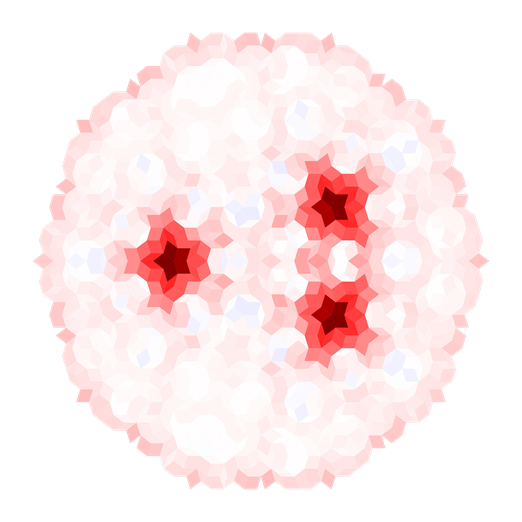
Abstract: Recently, superconductivity has been experimentally observed in materials with the quasicrystal lattice structure [1]. The discovery gave strong impetus to the theoretical research of various aspects of superconductivity in such topologically non-trivial structures. In this work we investigate the structure of vortex states in Penrose lattice which is widely used as a simple model of a quasicrystal. The superconducting state with multiple vortices is investigated using a solution of the Bogoliubov – de Gennes (BdG) equations of the microscopic superconductivity theory. These are solved by a employing a recently developed method which allows one to obtain a fully self-consistent solution with respect to order parameter, number of electrons, and magnetic field [2]. Results of the calculations reveal a temperature-driven crossover in which the vortex lattice with the symmetry of the Penrose quasicrystal (Fig. 1) is replaced by classical triangular Abrikosov vortex lattice.
[1] Kamiya, K., Takeuchi, T., Kabeya, N. et al. Nat. Commun. 9 154 (2018).
[2] V.D. Neverov, A. Kalashnikov, A.E. Lukyanov, et al., Condens. Matter 9 8 (2024).
L18 – The Superpower of a Young Scientist: The Logical Framework Matrix as a Tool for Success
Irina Obukhova, Coordinator of the International Relations and Project Center for Advanced Mesoscience and Nanotechnology, Moscow Institute of Physics and Technology (MIPT), Rússia.
Abstract: This lecture examines a critically important yet often overlooked aspect of a researcher’s career in university education: project management as a “superpower” of early-career scientists. Students tend to believe that success in science requires only deep knowledge of their subject area, passing exams, and writing papers. However, the reality is that without the ability to manage projects (including their theses, grants, time, and teams), even the most brilliant ideas remain unrealized.
During the lecture, a key practical tool will be discussed in detail — the Universal Logical Framework Matrix. Students will learn how this matrix helps to: Clearly formulate goals and expected outcomes (even for term papers or theses); Build the logical chain “resources → activities → results → impact”; Identify external risks and assumptions that could derail a project;Define objective indicators of achievement (to later have something to write in grant reports or present before a committee). It will be demonstrated that mastering the Logical Framework Matrix enables young scientists to win competitive grants, properly complete applications, and avoid typical crises in research — from vague objectives to uncontrolled missed deadlines.In addition, the lecture will provide a few insights on the process of formulating results into the well-structured paper. Students will study the examples of paper thesis and identify the “holes”. The lecture provides students with ready-made practical “recipes” for integrating a project management approach into their thesis work, term papers, and first research projects, transforming the chaos of research work into a transparent and manageable process.
[1] Obukhova Irina “Prospects of using best European practices for modernization of doctoral education in Russia” European Proceedings of Social Behavioral Science (Web of Science) e-ISSN: 2357-1330, 2022
[1] Irina Gennadyevna Obukhova, Tatyana Kalganova, Elvira Enverovna Valeeva, Yulia Nadirovna Ziyatdinova, “System of Postgraduate Studies in the UK: A Case Study of Brunel University”
L19 – Coexistence of superconductivity and charge density wave in a correlated regime.
Eleonir João Calegari, Universidade Federal de Santa Maria, Santa Maria, Brasil.
Abstract: To investigate the coexistence of superconductivity and charge density wave (CDW) in a correlated
regime, we employ the Green’s functions formalism, as well as the Hubbard-I approximation, as away to introduce the correlations into the problem, in the form of a repulsive Coulomb interaction U. In addition, we investigate the effects of second-nearest neighbor hopping t1 on a pure CDW state. The analysis of the results shows that, for small values of t1, both CDW and superconducting gaps compete for the same region on the Fermi surface. The increase of t1 decreases the competition and
may lead the system to a coexistence regime. Effects of temperature in the coexistence regime, are also investigated.
L20 – Fractal condensates: Superconductivity in Fibonacci quasicrystals
A. A. Shanenko, Higher School of Economics (HSE), Rússia.
Abstract: Quasicrystalline superconductors have recently emerged as a fascinating platform for exploring unconventional superconducting phenomena due to their intrinsic lack of translational symmetry. In this talk, we investigate a superconducting Fibonacci chain – a prototypical quasicrystal – and uncover its exotic properties absent in periodic systems. Our findings are obtained by numerically solving the self-consistent Bogoliubov – de Gennes equations. In particular, we demonstrate [1] that the system exhibits universal end superconductivity: the pair potential at the chain ends can persist at temperatures significantly higher than the the critical temperature in the chain center. In addition, the left and right ends of the chain usually display different critical temperatures. This difference arises from the interplay between topological bound states and critical states intrinsic to the quasicrystalline structure. Furthermore, we find [2] that effects of the Hartree-Fock interaction – usually negligible in conventional superconductors – can play a crucial role in quasicrystals due to the intrinsic breaking of translational symmetry. The Hartree-Fock potential amplifies self-similar (fractal) spatial oscillations of the superconducting order parameter while reducing its average value and modifying its critical exponent. Our findings can point to new pathways for engineering superconducting properties in aperiodic systems. The results are obtained within the project “International academic cooperation” of HSE University (Moscow) with UFRJ (Rio de Janeiro).
[1] Quanyong Zhu, Guo-Qiao Zha, A. A. Shanenko, and Yajiang Chen, Superconducting properties of Finonacci chains with enhanced superconducting pairing at the boundaries, Phys. Rev. B 112, 134503 (2025)
[2] Edward G. Nikonov, Yajiang Chen, Mauro M. Doria, and Arkady A. Shanenko, Hartree-Fock interaction in superconducting condensate fractals, Beilstein J. Nanotechnol. 16, 2177 (2025)
L21 – Symmetry, Pairing, and Novel Phenomena in Unconventional Superconductors.
David Möckli, Instituto de Física, UFRGS, Porto Alegre, Brasil
Abstract: This presentation explores the diverse phenomena of unconventional superconductivity through the unifying lens of symmetry. We will begin by reviewing how symmetries like time reversal and inversion, coupled with strong electronic correlations, dictate the formation of non-standard Cooper pairs, such as spin-triplet and d-wave spin-singlet states. We will then examine the fascinating consequences of explicitly breaking these symmetries, with a special focus on non-centrosymmetric metals. The discussion will investigate how the absence of an inversion center induces antisymmetric spin-orbit coupling, which mixes pairing channels of different parity and leads to a host of extraordinary properties, most notably anomalously high upper critical fields. The discussion will be grounded in examples from key material classes, including the heavy-fermion superconductors, cuprates, and low-dimensional transition metal dichalcogenides.
L22- Magnetocaloric effect in mesoscopic superconductors
Isaias Gonzaga de Oliveira, Departamento de Física, Universidade Federal Rural do Rio de Janeiro, Seropédica, Brasil.
Abstract: The isothermal evolution of a type-II mesoscopic superconducting cylinder under a magnetic field expansion is analyzed through the standard time-dependent Ginzburg-Landau theory. We calculate the isothermal variation of the entropy, $\Delta S(T,H)$, by means of Maxwell’s relation to show that it reaches a maximum at a temperature
T near and below the critical temperature Tc (H). We show how vortex configurations affect this process, which is the building block of the magnetocaloric effect. The conclusion is that in all situations heat is always absorbed from the environment, qualifying the mesoscopic superconductor as a magnetic refrigerator.
L23 – Using Electrical Currents to Control Oxygen Defects in Superconducting YBCO Devices.
Maycon Motta, Universidade Federal de São Carlos, São Carlos, Brazil.
Abstract: Electromigration (EM), the transport of atoms driven by high electrical currents, has evolved from a reliability issue in microelectronics into a promising tool for controlling materials at the nanoscale. Here, we investigate how EM can be used to control the structure and superconducting properties of YBa2Cu3O7−δ (YBCO) devices by redistributing oxygen vacancies. The YBCO microdevices were fabricated in Brazil at the CNPEM, demonstrating the feasibility of developing complex superconducting devices within national research infrastructure. Under high current densities, EM drives oxygen migration, enabling spatial modulation of the superconducting state. We observe a systematic c-axis expansion associated with oxygen depletion, supported by consistent spectroscopic signatures of changes in the local copper environment. The spatial distribution of lattice distortion closely matches the optical contrast under a single current polarity, confirming a direct link between oxygen-vacancy redistribution and local optical response. Measurements under opposite current polarities reveal distinct oxygen-migration behavior between surface and bulk regions. In addition, a deoxygenation threshold is identified, linking the onset of optical contrast to a critical vacancy concentration. These results demonstrate that electromigration can be used as a tool to spatially engineer superconducting properties, opening pathways toward reconfigurable superconducting devices and oxide-based functional electronics.
L24 – Modeling Pathways Toward a Segmented-Stator Superconducting Magnetic Bearing Prototype
Guilherme Homrich, Universidade Federal do Rio Grande do Sul, Porto Alegre, Brazil
Abstract: Superconducting magnetic bearings (SMBs) have emerged as a promising technology for high-efficiency rotating systems, particularly in flywheel energy storage systems (FESSs), where frictionless operation and reduced mechanical wear are essential. In recent years, High-Temperature Superconductors (HTS) have enabled the development of passive magnetic bearings with self-stabilizing characteristics and high stiffness, making these devices attractive for applications involving energy storage, transportation and advanced electromechanical systems.
This presentation discusses modeling pathways toward the development of a segmented-stator superconducting magnetic bearing prototype based on YBCO bulk superconductors and permanent magnet rotors. The work combines experimental characterization and finite element modeling using COMSOL Multiphysics, with emphasis on three-dimensional simulations derived from Maxwell’s equations. Different numerical approaches for HTS modeling are explored, particularly the H-ϕ and T-A formulations, highlighting their applicability, limitations and computational characteristics in SMB simulations involving the complete geometry of the device.
A segmented stator topology assembled from YBCO bulks is presented as a case study for evaluating axial and radial force production under quasi-static rotor displacements. The presentation also addresses practical aspects related to SMB construction, moving mesh implementation, cryogenic operation and experimental force measurements. Preliminary results indicate that both formulations can adequately predict levitation forces, although important differences arise regarding computational cost, hysteresis loss representation and numerical complexity.
Finally, the presentation discusses current challenges associated with SMB implementation in flywheel systems, including vacuum operation, rotational loss characterization, thermal management and the scalability of superconducting technologies for future energy applications.