
Technology background
the tribômetros (instruments for measuring the frictional force between two surfaces) current are not able to control the temperature of the disk during the tests, not allowing the verification of the isolated influence of this variable on the results of friction materials.
Furthermore, the current state of the art tribômetros are used to screen for wear and friction materials on a small scale and, more than that, in restricted ranges (small) pressure and speed. Thus, They do not represent the conditions of vehicle braking.
Technology description
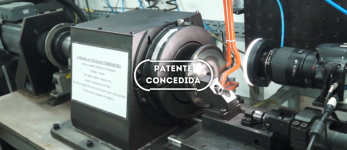
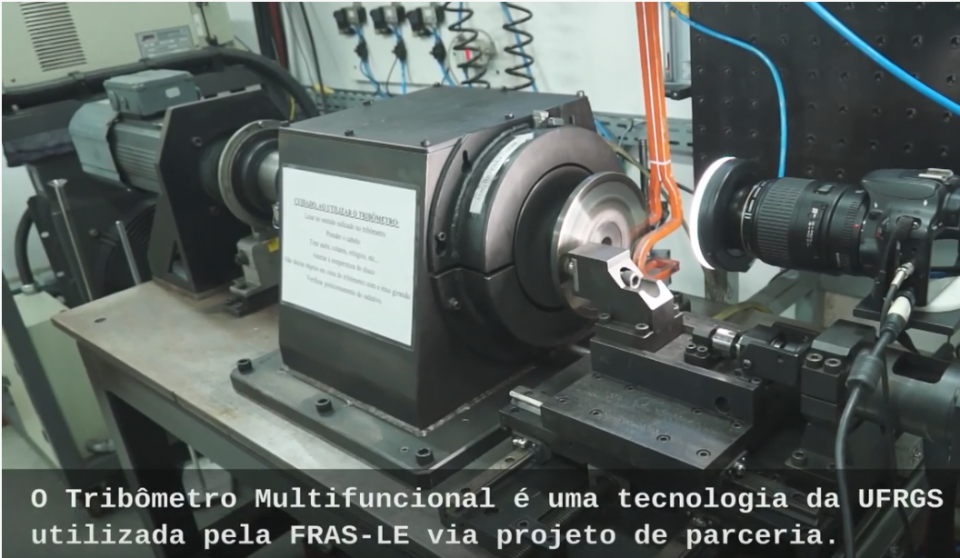
Tribometer (equipment to measure friction and wear between two surfaces) specific to the test friction materials (insert and disc) used in vehicle brakes.
Problem Fixed
The technology used for heating the disk in commercial tribometers is through electrical resistances.. It turns out that the use of this technique implies considerable energy losses in the form of heat to the external environment. (environment) and thermal inertia effects associated with the mass of the resistors. These factors lead to increased costs for carrying out the braking tests due to the greater consumption of energy and time involved in the process..
Applications
– Metal-mechanics;
– Automotive;
Advantages
– Allows the simulation of conditions similar to vehicle braking
– It allows testing considering a wide range of slip speeds and contact pressures
– Allows tests that separate the temperature from the other operating parameters (pressure and speed)
– Allows load control or sample drag torque on the disc in the cooling period between two consecutive braking
– mode of operation under controlled level of deceleration or under constant speed.
Technology Readiness Level (TRL – Technology Readiness Level)

Consult the updated TRL of this technology directly with the team responsible for the Technological Showcase. Access our Contact us!
Interested in licensing this technology? Contact the UFRGS Innovation Agency.
Status and opportunity
Patent granted by INPI under application number BR 20 2012 005346-8.
The patent can be found in full at Lume bylink.
Inventors:
Patrick Daniel Neis
Ney Francisco Ferreira
Visit the Lab… (Click on the logo)

Video published by UFRGS TV on technology:
