WPT basically deals with the transfer of energy between two coils magnetically coupled and usually separated by air. In the nineteenth century Nikola Tesla tried to transfer large amounts of energy through coils over long distances. However, this idea was abandoned because the low efficiency of the transfer system and various problems related to limited technology of that time. However, with the technological evolution, many new applications have emerged, which do not require very large amounts of energy or do not require long distances. These facts along with the discovery of methods to optimize transferred power makes this an area of great interest in the scientific community, being present in a large number of periodicals related to power electronics.
Currently we are interested in automatic optimization of the power transfer during misalignements of the transmitter and the receiver coils. The research in this area is focused on low power WPT, with applications in powering electronic devices such as biomedical implants or moveable devices such as an endoscopy capsule.
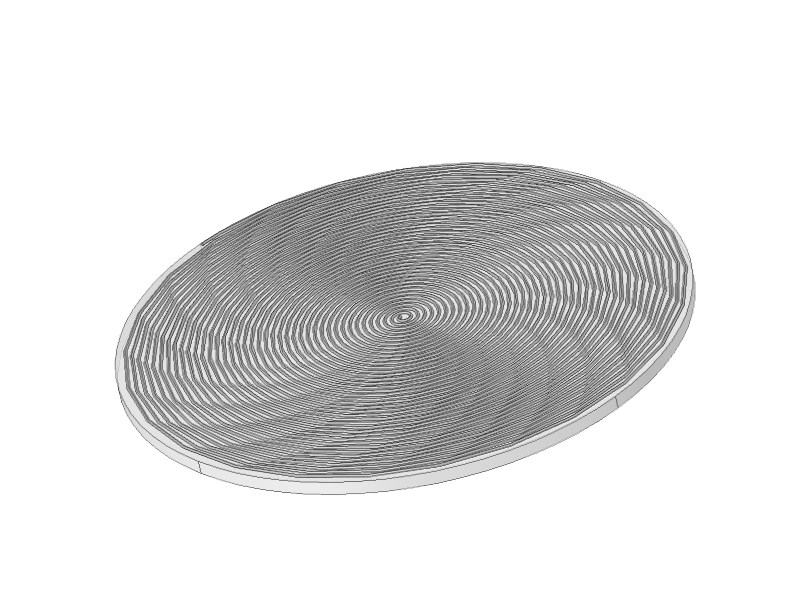
Plane Coil
A plane coil (receiver or transmitter) for wireless Power Transfer applications.
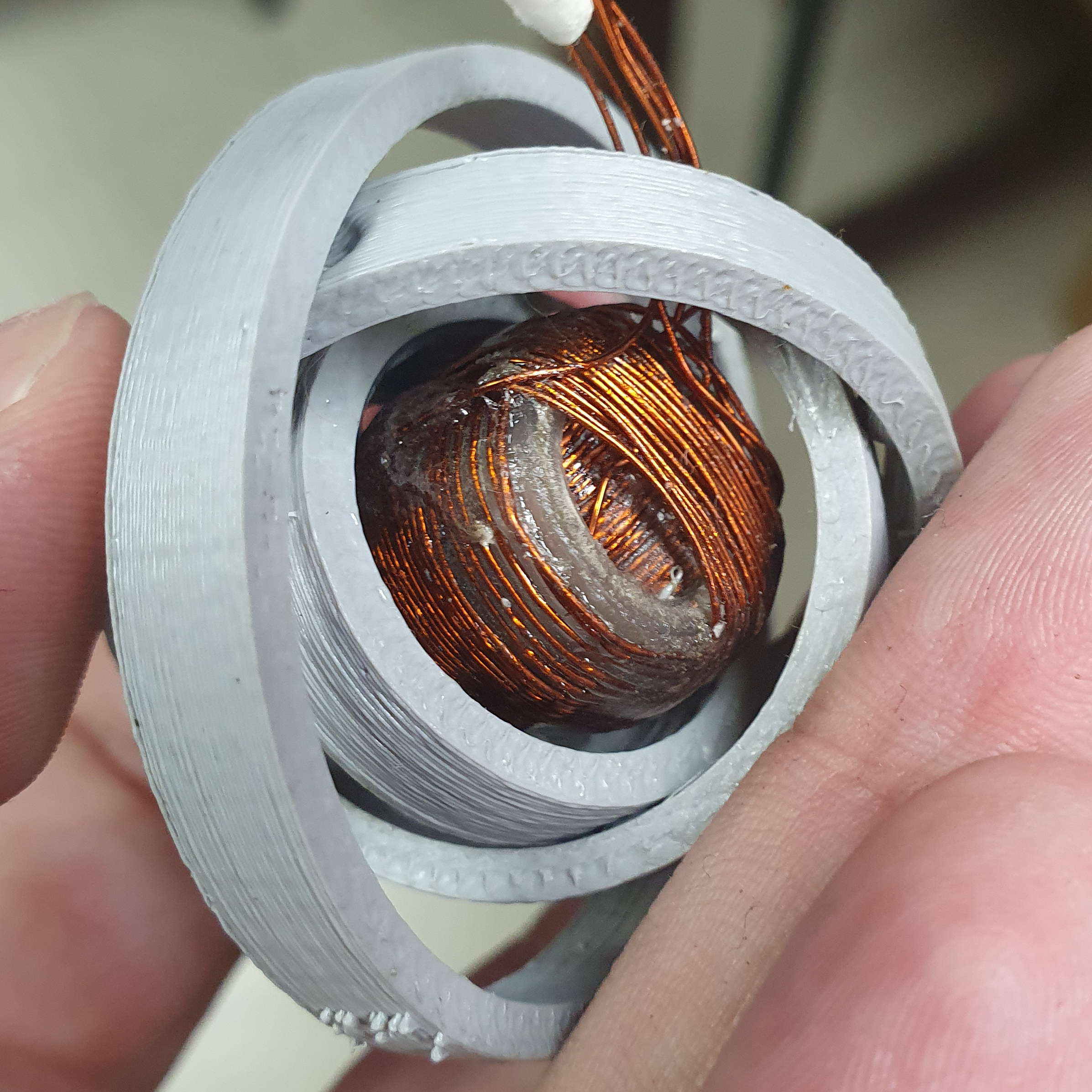
3D Receiver Coils
The 3D coils assure there will be coupled magnetic field in the receiver at any position.
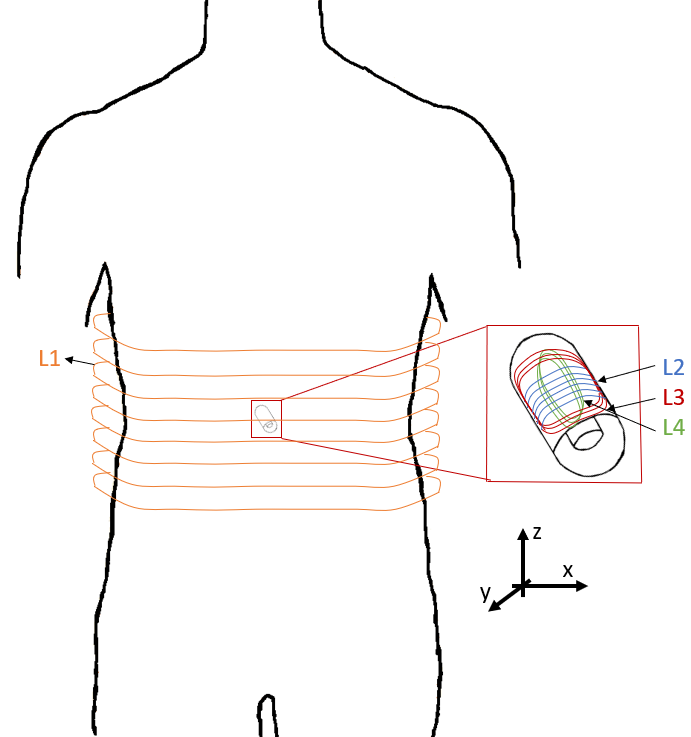
Endoscopic capsule
Endoscopic capsule with 3D receiver powered by an external big transmitter coil.
Object Detection and Tracking
The decision to install traffic signs at inter sections, safety lanes or even widening areas is always subject to a technical survey. The collection of local images with cameras and the subsequent analysis is a useful procedure in these situations. This project aim to adapt a method for analyzing video images of road intersections for the detection and tracking of four categories of vehicles: cars, buses, trucks and motorcycles. Thus, we are intsrested in objetc detectors and multiple object trackers in order to monitor an specific scene, capture by a fixed camera. Although it is possible to monitor and account for vehicles in a “clean” scene with the proposed systems, the main challenge of this project is to perform this processing in scenes with occlusions, such as roads containing trees, traffic signs or advertisements or when there are overlaps of other vehicles.
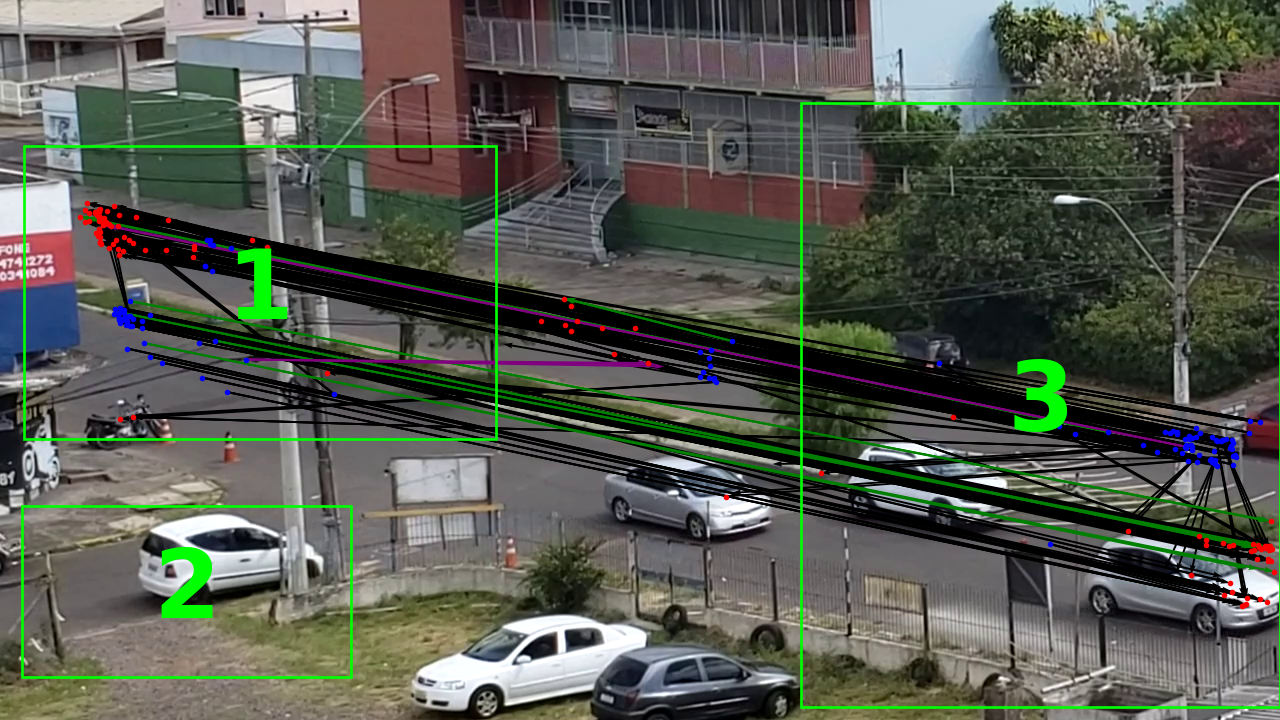
Vehicle flow control
Detection and tracking of vehicle in road intersections using machine learning and artificial intelligence.
Simulation
Using CARLA simulator to test and validate different tracking techniques.
Application
Applying in real world videos.
detection of invasive plants in grain crops
Crops are susceptible to the presence of invasive plants as well as infection by pests, fungi or bacteria and any changes in environmental conditions usually have adverse effects. Currently, many technologies are available for monitoring data: drones for capturing images, remote communication, wireless sensor networks, geo-referencing, among others. This scenario, where there is an abundance of monitoring data needing automated decisions demands efficient signal processing systems, prioritizing relevant information to proceed with some classification or some grouping of this data. This scenario includes the use of heuristic techniques of machine learning, as well classical techniques of signal processing. In particular, this project aimed to identify invasive plants in order to decide where (and when) to apply herbicides reducing costs and impacts on the environment.
Image capturing devices
Smart devices with image capture and local processing coupled to the agricultural implement for herbicide application
Invasive plants
CNNs detecting invasive plants.
Invasive Plnats
CNNs detecting invasive plants.
Eddy Current Sensors
Material inspection using the eddy current technique is based on Faraday’s law of electromagnetic induction, in which the induction of a time-varying magnetic flux induces a current in an electrical conductor. When a coil energized with alternating current approaches a conducting material, the primary magnetic field produced penetrates the material resulting in circular eddy currents. The induced current in the conductive material results in a secondary magnetic field, which opposes the field produced by the coil. As an effect, there is a change in the equivalent impedance at the terminals of the inductor that generating the field. This project proposed a method to estimate unknown parameters in a Eddy current detection system: the magnetic coupling coefficient k between the probe coil and the surface of a conductive sample and also a constant C dependent on the material and geometrical properties of the conductive target. These parameters are defined from the analysis of the electrical equivalent model of the measurement system. Thereby, the lift-off from an ECT probe can be estimated during a scanning procedure by estimating k. The method depends on the input impedance of the inductive probe stimulated by a power source with an appropriate range of frequencies.
Eddy Currents
A coil inducing a variable magnetic field on a conductor, generating eddy currents.
Basic Hardware
Basic hardware of the proposed measurement system.
Block Diagram
Block diagram of the proposed system.
Energy Harvesters
Energy Harvesting (EH) is the ability to collect available energy form the environment. There are several proposed techniques to capture energy from different sources, such as vibration, movement, solar, thermal, etc. The availability of renewable energy allows the application of the concept of green energy to low-power devices such as wireless autonomous sensors nodes. Usually, such devices have a limited battery capacity compromising its lifetime, its processing capacity, and its operating range. Piezoelectric Energy Harvesters (PEH) are transducers used for power generation from mechanical motion or vibration. Piezoelectricity is based on the property of some materials that are capable to convert a mechanical stimulus into electrical energy or a electrical stimulus to a mechanical movement. The maximum power transfer from the piezoelectric transducer depends on its intrinsic impedance and the total output load. Usually piezoelectric transducers are modeled by capacitive equivalent circuits working at natural low frequencies, which requires huge inductors in order to match the impedance for transferring maximal power to the load. Thus, in this project we proposed an active inductor, avoiding the huge physical inductor, in order to tune the circuit and matching the impedances. We also have developed a prototype to be installed on a highway in Brazil, capturing energy generated by vehicles passing over a platform.
Piezoelectric harvester
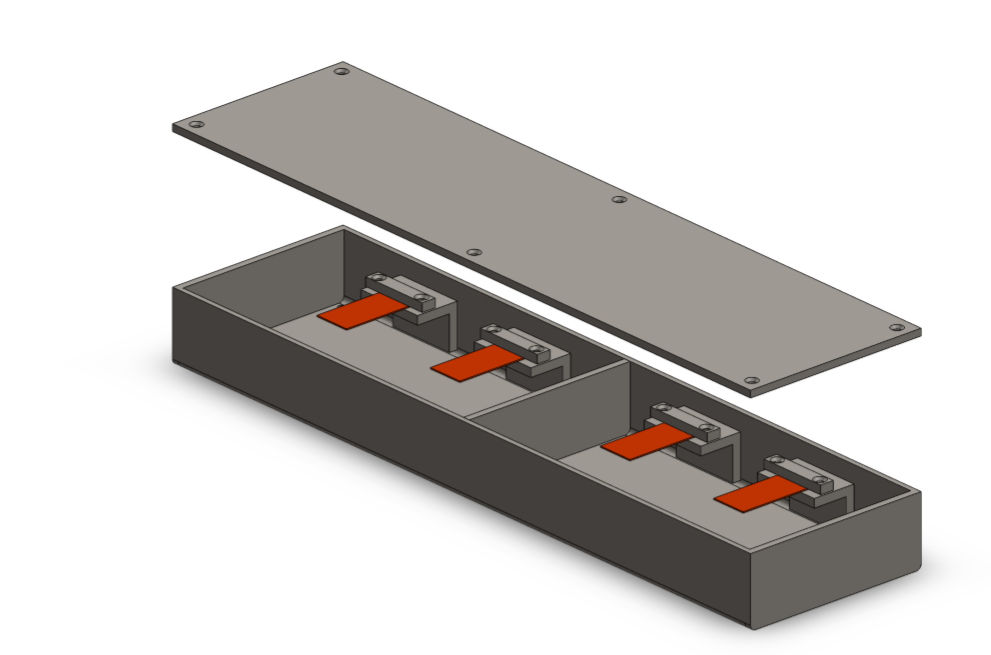
Design of the piezoelectric harvester with four transducers.
Piezoelectric Harvester
The piezoelectric harvester prototype with the detail of the transducers.
Piezoelectric Harvester
The piezoelectric harvester installed on the highway.
Vibration on the second mode of a cantilever beam stimulated with a piezoelectric Transducer.
Address
Av. Osvaldo Aranha, 103 - 206 B - Bom Fim, Porto Alegre - RS - Brazil, 90220-011