Technology background
The generation of municipal solid waste and its disposal are among the most serious environmental problems facing developing countries and between them, the plastic waste is increasingly larger volume, due to improper management of urban waste and also its incorrect allocation by people. Most plastics are not biodegradable, causing a decrease in the lifetime of landfills, and they come from non-renewable sources.
Technology description
Biocomposite of biodegradable polymer, vegetable fiber-reinforced high mechanical performance, from the tree Embira.
Problem Fixed
The product features improved biodegradation and has excellent properties, highlighting its high elastic modulus.
The vegetable fiber is incorporated into the biodegradable polymer, such as PLA, which is applied in average life artifacts, as disposable plates, pen, toothbrushes and becomes an attractive alternative to ease the generation and accumulation of polymeric waste, reducing the damage these can cause to the environment.
Advantages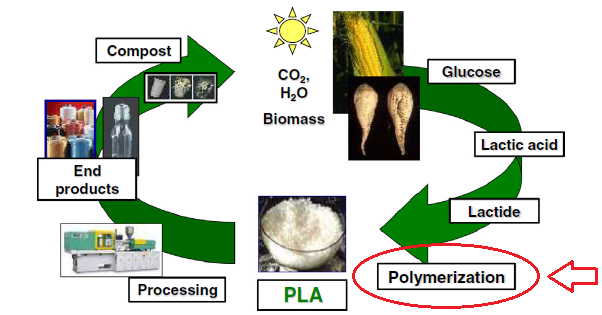
-High elastic modulus of the composite;
-vegetable fiber with high cellulose content, promoting a high resistance;
-Acceleration of decomposition in the presence of the plant fiber biodegradable thermoplastic matrix.
Applications
-Industry disposable packaging
-Pharmaceutical industry
;
-Food industry;
-Agribusiness.
Nível de Maturidade da Tecnologia (TRL – Technology Readiness Level)

Status of the technology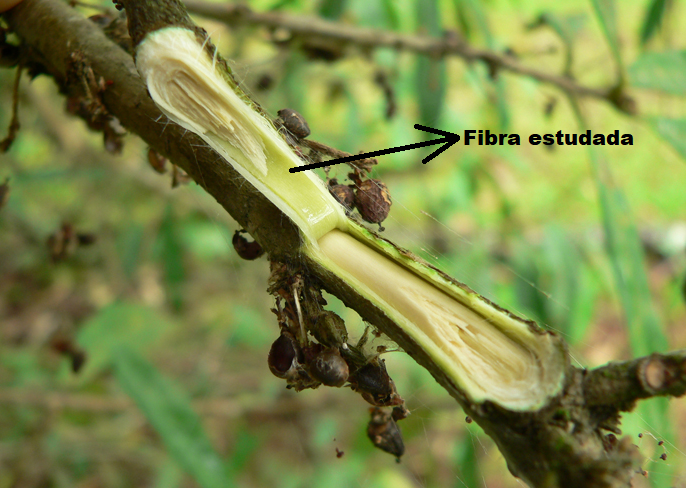
Patent filled by INPI.
Inventors
Rafael Ghesla Silvestrim
Ruth Marlene Campomanes Santana
Adriana da Silva Moura
Visit our laboratory (click in the logo)