
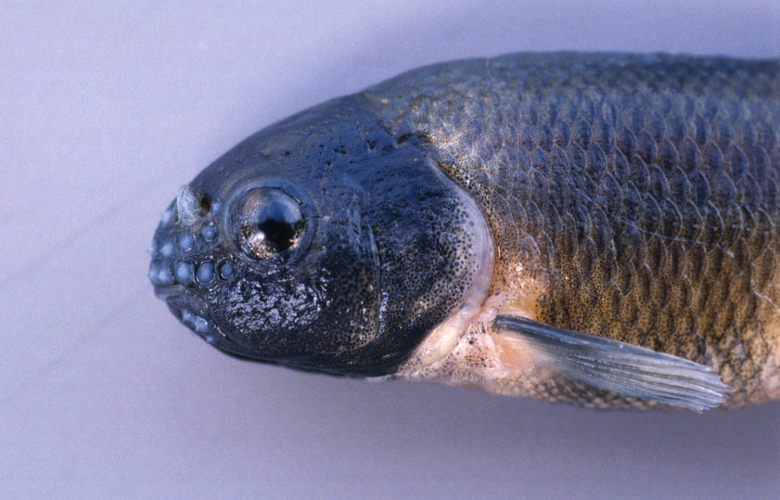
Pimephales promelas: It may not be pretty, but it’s an outstanding model

By Dr. Alexandre Arenzon – 07/10/25

It may not be a beauty model, but it is undoubtedly an outstanding model organism for toxicity testing.

In aquatic ecotoxicology, selecting the right model species can make all the difference, either because its sensitivity reflects that of other aquatic organisms or because it enables the use of diverse standardized test methods that yield representative and regulatory-relevant results.

Native to North America and well adapted to laboratory conditions, the fathead minnow (Pimephales promelas) plays a crucial role in understanding the effects of chemical substances on freshwater ecosystems. Its relevance stems from a series of well-documented attributes: short life cycle, ease of laboratory maintenance, sensitivity to contaminants, and a comprehensive toxicological database.

Although widely adopted in regulatory frameworks across North America, where it serves as a cornerstone species for environmental risk assessment, Pimephales promelas still faces challenges for broader use in Brazil. Two Brazilian technical standards (ABNT) recommend its use in acute and chronic toxicity tests. However, being a non-native species, its importation is subject to strict regulatory procedures. This contrasts with the zebrafish (Danio rerio), an Asian species also included in ABNT standards, but freely traded in Brazil.

The cultivation protocols for P. promelas are well established and feasible for implementation in laboratory settings. This enables efficient production of test organisms to meet the demands of various types of ecotoxicological studies.

From a regulatory standpoint, the United States Environmental Protection Agency (USEPA) routinely employs both acute toxicity tests (survival) and chronic tests (survival and growth) with Pimephales promelas. In addition, standardized methods are available for early-life stage testing, reproductive toxicity, and assessing the effects of endocrine-disrupting chemicals. The robustness and international acceptance of these protocols reinforce the scientific credibility of the data generated with this species.

At the Ecotoxicology Laboratory of UFRGS, we continuously improve the culturing methods for Pimephales promelas, achieving higher hatching and survival rates of the produced larvae. We are also implementing early-life stage test protocols and developing behavioral assays that are simple to apply—contributing to the expansion of this species’ use in ecotoxicological studies in Brazil.


References:

  1. Ankley, G.T., Jensen, K.M., Kahl, M.D., Korte, J.J. and Makynen, E.A. (2001). Description and evaluation of a short-term reproduction test with the fathead minnow (Pimephales promelas). Environmental Toxicology and Chemistry, 20: 1276–1290. https://doi.org/10.1002/etc.5620200616

  2. Ankley, G.T., Villeneuve, D.L. (2006). The fathead minnow in aquatic toxicology: past, present and future. Aquatic Toxicology, 78(1): 91–102. https://doi.org/10.1016/j.aquatox.2006.01.018

  3. U.S. Environmental Protection Agency. (2002). Method 1001.0: Fathead Minnow, Pimephales promelas, Larval Survival and Teratogenicity Test; Chronic Toxicity. EPA-821-R-02-013.

  4. U.S. Environmental Protection Agency. (2002). Fathead Minnow (Pimephales promelas) Larval Survival and Growth Toxicity Tests. EPA-821-R-02-013.

Effluent monitoring Frequently asked questions

Por Dr. Alexandre Arenzon – 07/03/23

No Brasil, é exigido por lei que os efluentes sejam monitorados quanto à sua toxicidade antes de serem descartados nos corpos receptores. Para isso, são utilizados métodos de análise que avaliam a capacidade dos efluentes em causar efeitos negativos sobre os organismos que habitam esses corpos receptores. Embora existam vários métodos de análise que avaliam diferentes tipos de efeitos tóxicos, como efeitos fisiológicos, histológicos e genéticos, a legislação brasileira, por exigir métodos de análises padronizados, acaba determinando que o monitoramento seja baseado em efeitos sobre a sobrevivência, reprodução e/ou crescimento dos organismos. Esses efeitos podem ser considerados como indicadores mais visíveis dos potenciais impactos que os efluentes podem causar nas populações desses organismos.


Embora esses métodos de monitoramento sejam considerados “básicos”, eles são eficazes em identificar a toxicidade dos efluentes e fornecer informações importantes para a proteção do meio ambiente. No entanto, ainda há muitas dúvidas e questionamentos entre aqueles que contratam as análises e, até mesmo, entre os que avaliam os resultados. Desta forma,  apresentamos, abaixo, alguns esclarecimentos para dúvidas que recebemos com maior frequência. 

A toxicidade refere-se à capacidade de uma determinada substância, produto ou conjunto de substâncias em provocar efeitos danosos aos organismos com os quais entra em contato. Estes efeitos podem ser desde alterações comportamentais, alteração de crescimento ou reprodução, até a morte dos organismos.

Desde 2005 a toxicidade é mais um dos parâmetros que devem ser monitorados em efluentes lançados em ambientes aquáticos no Brasil. Esta exigência legal é, atualmente,  amparada pela Resolução 430/2011 do CONAMA, apesar de alguns Estados possuírem exigências leais próprias. Segundo a Resolução CONAMA 430/2011, os Órgãos de Fiscalização Ambiental são responsáveis por exigir e fiscalizar este monitoramento. Esta exigência recai sobre todos os efluentes lançados em águas Classe 1, 2, 3 e, exclusivamente no Rio Grande do Sul, 4 da Resolução CONAMA 357/2005.

Para se estimar o grau de impacto que um determinado efluente pode causar no corpo receptor são realizados os ensaios de toxicidade. Estes ensaios têm por objetivo simular, em laboratório, os efeitos que poderiam ser observados no corpo receptor após o lançamento do efluente.

Considerando que desejamos estimar os efeitos ambientais de um determinado efluente para a avaliação da toxicidade são utilizados organismos aquáticos que representem os diferentes níveis tróficos existentes no ambiente. Os organismos, chamados de organismos-teste, são expostos a diferentes concentrações de uma amostra deste efluente (por exemplo, 100%, 50%, 25%, 12,5%, 6,25%, etc.) e mantidos por um tempo pré-determinado (definido pelas normas técnicas que norteiam os métodos). Após esta exposição observam-se os efeitos causados pela amostra sobre os organismos.

Organismos-teste são espécies cujos conhecimentos de sua biologia são suficientes para que possam ser utilizadas como indicadores da toxicidade da amostra a ser analisada. Tanto o cultivo, como os métodos de exposição destes organismos são definidos em normas técnicas, permitindo a reprodutibilidade dos resultados. Espera-se que estes organismos possuam uma relativa sensibilidade a diferentes compostos químicos. Desta forma, os efeitos observados tenderiam a ser representativos daqueles que poderiam ocorrer com os organismos do corpo receptor. 

Ensaios de toxicidade são análises cujos resultados são baseados nas respostas apresentadas por organismos vivos. Ou seja, os organismos-teste utilizados são os “sensores” de medição. Desta forma a qualidade destes organismos é fundamental para a confiabilidade dos resultados.

Pensando na qualidade destes organismos, estes devem, preferencialmente, ser cultivados em laboratório nas condições predeterminadas nas normas técnicas. Desta forma, informações importantes para a utilização dos organismos nos ensaios de toxicidade podem ser conhecidas e falsos resultados evitados. A utilização de organismos estressados, mal nutridos ou debilitados pode, por exemplo, indicar uma falsa toxicidade das amostras ensaiadas.

Na impossibilidade da utilização de organismos-teste provenientes de cultivos próprios, o laboratório executor dos ensaios de toxicidade deve garantir e comprovar que o lote de organismos utilizados atenda aos padrões de qualidade exigidos pelo método.

Os organismos-teste, assim como quaisquer outros organismos do ambiente, podem apresentar diferenças nas suas sensibilidades as substâncias presentes nos efluentes. Assim, é possível que, para um mesmo efluente, os organismos-teste de diferentes níveis tróficos respondam diferentemente ao grau de toxicidade deste. Da mesma forma, também não é possível eleger um nível trófico que, genericamente, será sempre o mais afetado pela toxicidade dos efluentes.

Ensaios de toxicidade aguda avaliam a capacidade do efluente em causar efeitos danosos (em geral morte ou imobilidade) aos organismos-teste após um curto período de exposição à amostra (normalmente inferior a 96 horas).  Se a amostra de efluente apresenta toxicidade aguda, significa que ela é tóxica o suficiente para matar os organismos mesmo quando eles ficam expostos a esta por pouco tempo.

O Fator de Toxicidade (FT) é uma das formas de expressar os resultados dos ensaios de toxicidade aguda com efluentes. Apesar de ser citada na legislação federal brasileira, o termo é mais comum nos Estados do Rio Grande do Sul, Santa Catarina, Paraná e Rio de Janeiro.  Resumidamente, o FT representa quantas vezes o corpo receptor precisaria diluir o efluente para este deixar de apresentar toxicidade aguda para os organismos. Um efluente que, por exemplo, apresente um FT = 16, se ao chegar ao corpo receptor, não for diluído mais de 16 vezes, poderá causar mortalidade aos organismos ali presentes. Já um efluente que apresente um FT = 1, não apresenta toxicidade aguda na sua forma integral (100%), mesmo que não seja diluído pelo corpo receptor.

Ensaios de toxicidade crônica expõem os organismos-teste as amostras de efluentes por um intervalo de tempo mais significativo em relação ao seu ciclo de vida, ou uma fase importante deste. Nestes ensaios são avaliados desde efeitos mais sutis como alteração sobre a reprodução e crescimento, ou até a morte dos organismos expostos, mesmo que esta ocorra de forma mais lenta.

Quando a amostra avaliada apresenta toxicidade aguda, a morte dos organismos-teste impossibilita o desenvolvimento destes e, consequentemente, a observação dos efeitos sobre crescimento e reprodução. Assim, a menos que seja uma exigência do Órgão Ambiental, não faz sentido a empresa realizar, simultaneamente, ensaios de toxicidade aguda e crônica. Normalmente realizam-se os ensaios de toxicidade aguda, e, caso esta não ocorra na amostra realizam-se, então, os ensaios de toxicidade crônica.

O atendimento as exigências legais depende de alguns fatores. Em determinados Estados, como Rio Grande do Sul, Santa Catarina e Paraná, os resultados das análises devem ser comparados com tabelas de limites máximos de toxidade aceitos. Para São Paulo e Estados que seguem a CONAMA 430/2011, o atendimento deve ser avaliado caso a caso, considerando os resultados dos ensaios de toxicidade, os dados de vazão do efluente e de vazão do corpo receptor.

Toxicity in environmental monitoring

By Dr. Alexandre Arenzon – 01/30/23

In Brazil, toxicity began to be considered, explicitly, as a legal environmental parameter in 2005. Obviously, toxicity already existed and was already monitored before this date. But the word “toxicity”, as a parameter to be monitored to determine compliance with legal environmental requirements, began to be used after the creation of CONAMA 357/2005 Resolution. According to this Resolution, to Brazilian surface water bodies maintain their classification (based on the uses assigned to these environments), a series of parameters (physical, chemical and biological) should be met, among them, the toxicity level. This monitoring process, according to Brazilian legislation, must be carried out by public authorities, that is, by the Brazilian environmental agencies. One must imagine, then, that there are regional differences in this aspect, considering the resources made available by each State for environmental issues.

The same toxicity criteria observed at CONAMA 357/2005 serve as the basis for the toxicity limits to be required for the effluents discharged into these surface water bodies. As there is a limit to the toxicity accepted in these environments, the released effluents cannot present such toxicity that will affect the framework of the receiving waterbody. In this way, the environmental agencies should, in theory, limit the toxicity accepted in each of the effluents received by the aquatic environment.

As already mentioned, toxicity is one of the parameters to be monitored in these environments, as well as in the effluents discharged therein. Why, then, is toxicity assessment necessary if there is already a list of other monitored parameters? This is a question with a simple answer but a complex understanding. Toxicity is a parameter that complements analyses already carried out in the environment, or effluents. The response of this evaluation indicates whether the set of chemical compounds analyzed, and several others that are present in the background, but that end up not being monitored, can affect the survival, growth and/or reproduction of the aquatic organisms that live there. Toxicity reflects the summative effects of all compounds present and in contact with living organisms, whether monitored, unmonitored or even those available in very low concentrations.

Does it mean, then, that monitoring toxicity and demanding, when necessary, that this toxicity should be reduced, have the purpose of preserving the life of organisms in the environment? Yes, but not exclusively. When it is necessary to improve the treatment of an effluent, for example, to reduce its toxicity, it means that the compounds present in this effluent, and that cause toxicity, need to be removed or reduced. If, after treatment, toxicity is reduced, it means that the same has occurred with the availability of the compounds that cause it. As a consequence, the waterbody that receives this effluent receives a lower load of pollutants. This will not only improve the quality of water intended for the preservation of aquatic life, but also human water consumption and irrigation, or used for recreation and aquaculture.

If the question is that simple, why are there still toxic effluents or waterbodies receiving high loads of pollutants? Several reasons can justify this situation. But in summary, we can say that the growing and unfortunate scrapping of several Brazilian environmental agencies (mainly in human and laboratory resources), and the lack of ecotoxicological knowledge of many of those who work in the environmental area (inspection, management and services), have significant participation.

Chronic toxicity tests with fish. Something has changed.

By Dr. Alexandre Arenzon – 01/09/23

In Brazil, ABNT (Brazilian Association of Technical Standards) defines the main methodologies used in effluent toxicity assessments. Even environmental agencies, such as FEPAM (Rio Grande do Sul State) and CETESB (São Paulo State), require that the effluent toxicity assessments must be carried out according to these standards. The methodologies proposed by ABNT are elaborated, adapted, and reviewed by ABNT’s Special Study Commission for Ecotoxicological Analysis (ABNT/CEE-106). This commission, made up of a group of experts including representatives from universities, laboratories, industries, environmental agencies, and consultants, has been meeting for over 20 years for this purpose.

Among the methodologies developed by ABNT, the NBR 15499 – (Chronic short-term toxicity – Test method with fish) offers the possibility for the use of two species of fish (Pimephales promelas and Danio rerio) for monitoring the chronic toxicity of different types of samples. Effluents, surface/underground water, and chemical substances samples could, until the last review, have their potential chronic toxicity for fish evaluated using any of the two species mentioned in the standard. However, the standard’s original methodology presented different ways of assessing the chronic effects for each of these fish species. For P. promelas, the chronic evaluation considered the effects on the survival and weight growth of the fish exposed to the samples for 7 days. For D. rerio, were exclusively considered the effects on fish survival in the same period. It is important here to mention that, using the D. rerio method it was mandatory the use of different sample dilutions, even when to monitoring surface water samples. Based on the mortalities observed in the different concentrations of the sample, the LC15 (concentration that causes mortality in 15% of the exposed organisms) should be calculated and this would, then, be used to obtain the chronic estimated value. If there was no mortality, the sample was automatically considered non-toxic. Thus, the effects on the fish growth were not considered, as in the tests with P. promelas.

In 2022, when revising this standard, ABNT/CEE-106 made one of the most radical changes to one of its technical standards. After this review (ABNT NBR 15499/2022), the monitoring of chronic toxicity of effluents and surface/groundwater samples can no longer be performed with D. rerio. Based on data published in a scientific article and on discussions during its meetings, the ABNT Commission concluded that, for effluents, surface and/or groundwater, the method could be flawed and generate false negatives. Thus, the method using D. rerio was restricted to samples of chemical substances and, for other types of samples, the fish P. promelas should be used.

Considering that, in Brazil, D. rerio is considered the most used fish species for monitoring toxicity, changing in the standard protocol will require changes in the structure of the laboratories that wish to carry out the analysis. The other species used for this analysis, providers for P. promelas, a North American species used by USEPA for toxicity assessment, are not found commercially in Brazil. Currently, only two Brazilian commercial laboratories perform tests with P. promelas. Thus, laboratories wishing to assess the chronic toxicity of samples of effluents and/or surface/groundwater must implement the breeding of this organism. But what may seem like a problem is actually an advantage. The breeding of P. promelas in the laboratory, in addition to allowing full traceability of the organisms used in the tests, also provides the laboratory with test organisms for carrying out acute toxicity tests with fish.

In this way, based on the fact that the requirements for maintaining the quality certifications of laboratories determine that they use the most current versions of available methodologies, companies that hire these analyzes must pay attention to the results that are being provided.

Ecotoxicological knowledge in environmental monitoring

By Dr. Alexandre Arenzon – 12/20/22

Monitoring the toxicity of effluents in Brazil is required by CONAMA Resolution 430/2011. According to the Resolution (Art. 3), “the effluents from any polluting source can only be released directly into the receiving bodies after proper treatment,” in addition to meeting the standards defined in the Resolution. The 430/2011 Resolution was created for those environmental agencies (State and Municipal) that did not have legislation for this purpose. Those who have already established their standards can use it, as long they are as restrictive as, or more, than the Federal Resolution.

Concerning the toxicity parameter, according to CONAMA 430 Art. 18th. “The effluent must not cause or have the potential to cause toxic effects to aquatic organisms in the receiving water body, according to the ecotoxicity criteria established by the environmental agency.” That is, even the environmental agencies that do not have legislation concerning effluent toxicity must make some decisions. Among the choices that the environmental agency must make, we can highlight the effluent toxicity standards (ecotoxicity criteria), the accepted toxicity test methodologies, including, preferably, the organisms-test species, and the frequency of monitoring.

Without an effluent toxicity standard established by the environmental agency (toxicity limits), CONAMA Resolution 430/2011 presents an option based on the receiving water bodies’ uses (according to CONAMA 357/2005). In this case, the toxicity limits are calculated considering the effluent flow data and the receiving body flow—an approach called, for some, a kind of risk assessment.

Although there is a Brazilian Federal Resolution, we still need some ecotoxicology knowledge from the regional environmental agency technical staff. A list of reasons can include the selection of the best analytic methodology and the organism-test species to achieve the best results (from an environmental perspective), the results interpretation, and the actions to be taken in case of non-compliance with the standards. An ecotoxicological assessment cannot be carried out in the same way as chemical assessments, where the results of the analyses are compared with pre-established limits. A mischoice opens up the possibility of continued use of methods, or organisms-test, that may not be able to detect existing toxicity. Likewise, the lack of knowledge on dealing with analysis data can lead to excessive rigor on the part of the environmental agencies.

Unfortunately, there are a few undergraduate courses that offer disciplines that can guarantee this base for professionals in the environmental area. In this context, professionals who, at some point in their lives, sought to participate in research groups in ecotoxicology throughout the country present an advantage. For the others, the remaining options are to seek the necessary training/updating by participating in conferences, courses, and lectures, in addition to reading books, theses, and articles.

(Português do Brasil) Ecotoxicidad de efluentes – Sentando las bases para una futura regulación en América Latina

Taller ToxicidadFollowing the special session held at the 14th SETAC LA Congress in 2021, which was entitled “Evaluation of Effluents in Latin America”, a regional workshop was organized: “Effluent Ecotoxicity – Preparing the foundations for a future regulation in Latin America”. The event was organized by the Society of Environmental Toxicology and Chemistry – Latin America (SETAC LA), in Buenos Aires, Argentina, from November 29 to December 2, 2022.


The Workshop had the objective of generating a space to share different perspectives from the academic, industrial, and governmental sectors of Latin American countries on environmental regulations related to the control of effluent toxicity. Thus, the idea was to share the Brazilian experience, since it has already implemented the ecotoxicity assessment of effluent discharges in its regulatory frameworks.

To this occasion, Dr. Alexandre Arenzon from the Federal University of Rio Grande do Sul-Brazil offered a short course with the basic concepts of Ecotoxicology as well as a presentation on the “Overview of the use of ecotoxicological parameters in the Brazilian regulatory system”, where attention was drawn to the importance of ecotoxicological knowledge to avoid problems in the interpretation of Brazilian environmental legislation.

Dr. Alexandre Arenzon also presented his point of view on “Approaches for the ecotoxicological evaluation of effluents – best available technologies or based on Risk Assessment”. In this session, he presented a comparison of the advantages and disadvantages of these two approaches to defining maximum limits of toxicity in discharges, as well as a third option.

This workshop was the starting point for the process. In the following 4 days of the event, there was a great set of presentations and discussions. Now all the information must be processed, thought through, and discussed again, considering the objectives of the effluents monitoring and the structures available in each country.

Introduction to Ecotoxicology Course – Porto Velho, RO

Sorry!! Portuguese only here. We are just annoucing a course we are going to give in Porto Velho, RO


A convite da Sociedade Brasileira de Ecotoxicologia (Ecotox-Brasil), o Dr. Alexandre Arenzon da UFRGS, juntamente com a Dra. Maria Edna Tenório Nunes e Dra. Clarice Maria Rispoli Botta, ambas da USP – São Carlos, ministrará o curso “Introdução à Ecotoxicologia Bases e Aplicações Legais“. O curso foi oferecido pela (Ecotox-Brasil) à SEDAM (Secretaria Estadual do Desenvolvimento Ambiental, Rondônia) para formação de seu corpo técnico. O Curso ocorrerá de 7 e 8 de agosto de  2017, no Rondon Palace Hotel, Porto Velho – RO. O curso tem como objetivo fornecer aos participantes conhecimento sobre as bases da ecotoxicologia aquática e terrestre, apresentando os principais ensaios de laboratório e campo utilizados para o monitoramento da toxicidade de efluentes industriais, produtos químicos e amostras ambientais de água, sedimento e solos. Objetiva-se também orientar os participantes quanto às exigências legais envolvendo os ensaios de toxicidade no monitoramento de efluentes e corpos receptores, redução de toxicidade de efluentes, bem como discutir e exemplificar como os dados dos ensaios ecotoxicológicos podem ser utilizados em Avaliações de Risco Ecológico (ARE). O curso, com vagas disponibilizadas a outros órgãos ambientais da região tem apoio da Fundação Universidade Federal de Rondônia, Prefeitura de Porto Velho – Subsecretaria de Meio Ambiente, Agência Estadual de Vigilância Sanitária e Secretaria Estadual do Desenvolvimento Ambiental.

O folder do curso pode ser visualisado aqui.