
Full name: André Vicente Liz
Current affiliation: PhD student at Research Centre in Biodiversity and Genetic Resources of the University of Porto (CIBIO/UP), Portugal
Period as IMAE/UFRGS: 08/2016 – 07/2017 (12 months)
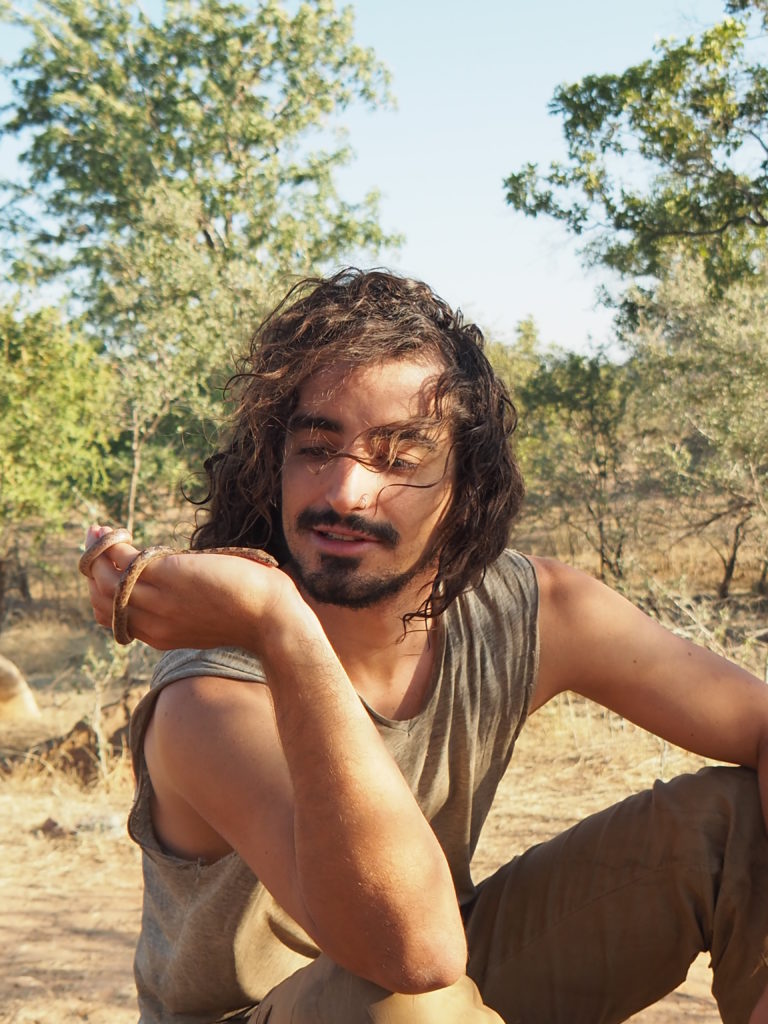
“I arrived in Porto Alegre in August 2016 to study my second year of IMAE at the UFRGS. Despite my experience here was preceded by episodes of working/studying in different European countries that had already shaped me considerably, this year was without any doubt life-changing. For someone coming from an opposite part of the world, the contrasts I experimented here pushed me to break several bounds on the way I conceive live, nature and society, opening my mind to unprecedented levels and consolidating my motivation to actively contribute to environmental conservation through my personal and professional life.
The warm inclusion I received from the different statements of the university, particularly from the Herpetology Lab where I was affiliated but extended to the whole Biosciences Institute, was the baseline for this experience having turned out extremely positive. Since the beginning, I was involved in the student dynamics, spending most of my time exchanging thoughts and exploring new experiences with who in the blink of an eye became my close friends. With such support and positive vibrations, good things came alone.
Perhaps the most differentiating factor as an IMAE student at UFRGS compared to my previous studies was the countless chances I had to assist my colleagues in fieldwork. While immersing in the local working culture, this allowed me to gain first-hand practical skills with different study systems far beyond any prior field experience. Besides, I learned to appreciate the unique fauna and biomes from southern Brazil, from the open landscapes of the pampas to the symphonic communities of the Atlantic forest, but also to become aware of the conflictive context of dramatic environmental destruction that imperils their perpetuation.
Another main aspect that positively surprised me was the quality and diversity of the courses I undertook as a post-graduation student at the Ecology and Zoology Departments, and in general the state-of-art, conservation-driven research that is conducted herein. This training, together with the overall IMAE journey, constitutes a core basis of my scientific knowledge and principles. Besides, it also acted as a springboard to obtain a PhD position directly related to conservation. In this PhD, I am sampling vertebrates in the Sahara-Sahel and dealing with big-data analyses to understand the biodiversity patterns of the largest desert on Earth, yet highly subjected to the most basic knowledge shortfalls that preclude the progressive implementation of efficient conservation measures.
No doubt about it, my experience as IMAE student at UFRGS was excellent and had a massive impact on my career and personal life. The motivation to develop my current research, which involves fieldwork in extreme environments and build partnerships with local NGOs and academics, cannot be explained without considering what I learned and lived here. If I could go back, I would repeat this year one thousand times.”
André Vicente Liz
Full name: Julia Migné
Current affiliation: Director at Conservation Optimism (https://conservationoptimism.org/)
Period as IMAE/UFRGS: 2014 – 07/2015 (12 months)
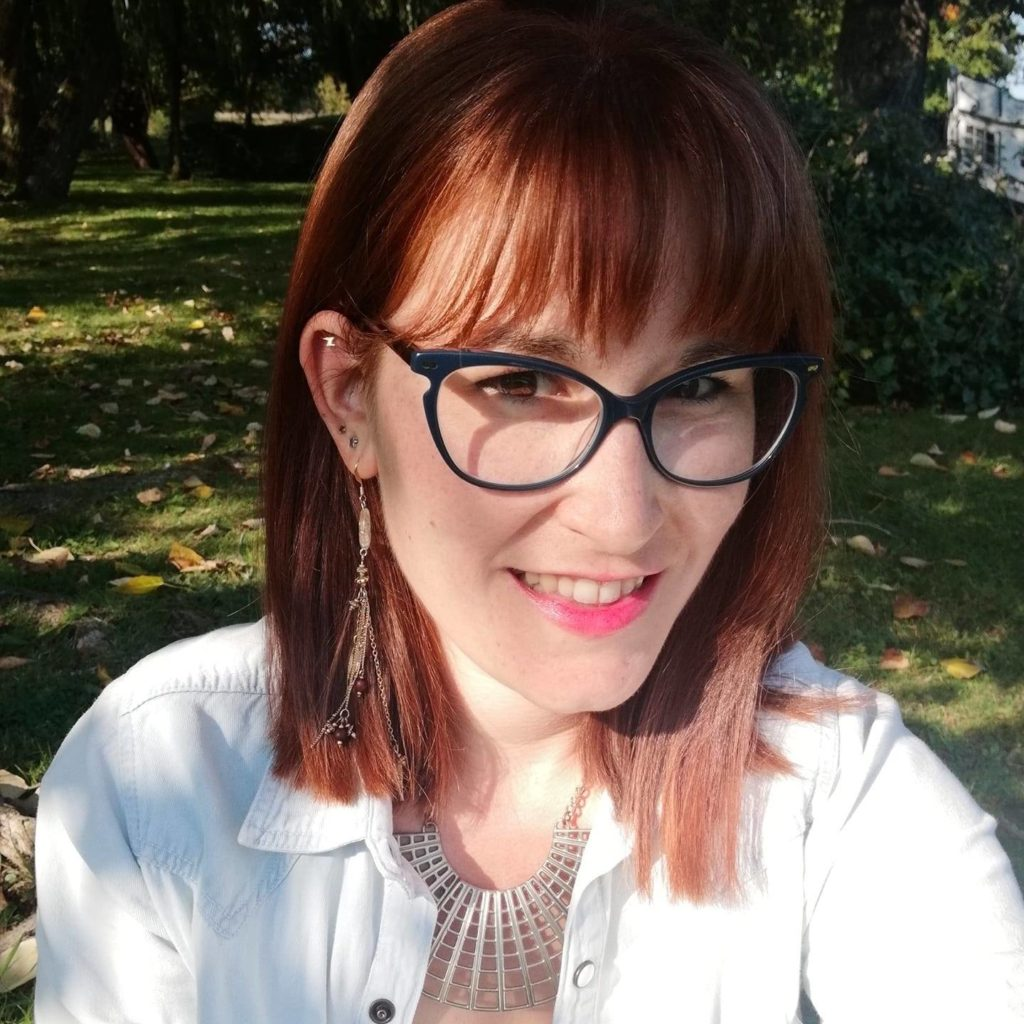
“As the very first IMAE student coming to study at UFRGS I was very excited to come to Porto Alegre and do a one-year project for my dissertation on the topic of sea turtles distribution and abundance. I was lucky enough to join the lab of herpetology and was warmly welcomed by the team there. Throughout my year at UFRGS, I had the opportunity to help some students from the lab with their fieldwork. That meant that I could on one day run after lizards in the dunes and on the next hear all about a colourful toad.
My year as a student in UFRGS wasn’t all easy though. I had the misfortune to end in the hospital for two weeks due to a mysterious infection. I will never forget the kindness that everyone from my lab and the broader university team showed me. People created an Excel spreadsheet to make sure that someone always was with me at the hospital 24/7! I can never thank everyone enough for that and will always be grateful to the friends I made there.
That year also turned out to be quite an important pivot in my life. I decided to follow a module on science communication as part of my degree and I can now say that this module changed the course of my career. On the advice of the professor running that course, I applied to do a master’s in journalism the following year. Fast forward to now and I’ve been working as a science communicator for the past four years!“
Julia Migné
Full name: Susan Ellen McKinlay
Current affiliation: English instructor in the British Institute and researcher at Universidade de Milão
Period as IMAE/UFRGS: 2014 – 07/2015 (12 months)
“My experience at UFRGS was great. It enabled me to grow both academically and personally. I learned a new language and met a new culture. Moreover, I learned a lot about ecology and did fieldwork in the incredible and highly diverse ecosystems of Brazil.
The herpetology lab at UFRGS and my supervisor Márcio Borges-Martins were very supportive throughout my thesis and helped develop my research skills”
Susan Ellen McKinlay
Full name: Ramya Roopa
Current affiliation: Analyst Co-Lead and Researcher with the Counter Wildlife Trafficking Program at Wildlife Conservation Society-India
Period as IMAE/UFRGS: 2016 – 07/2018 (12 months)
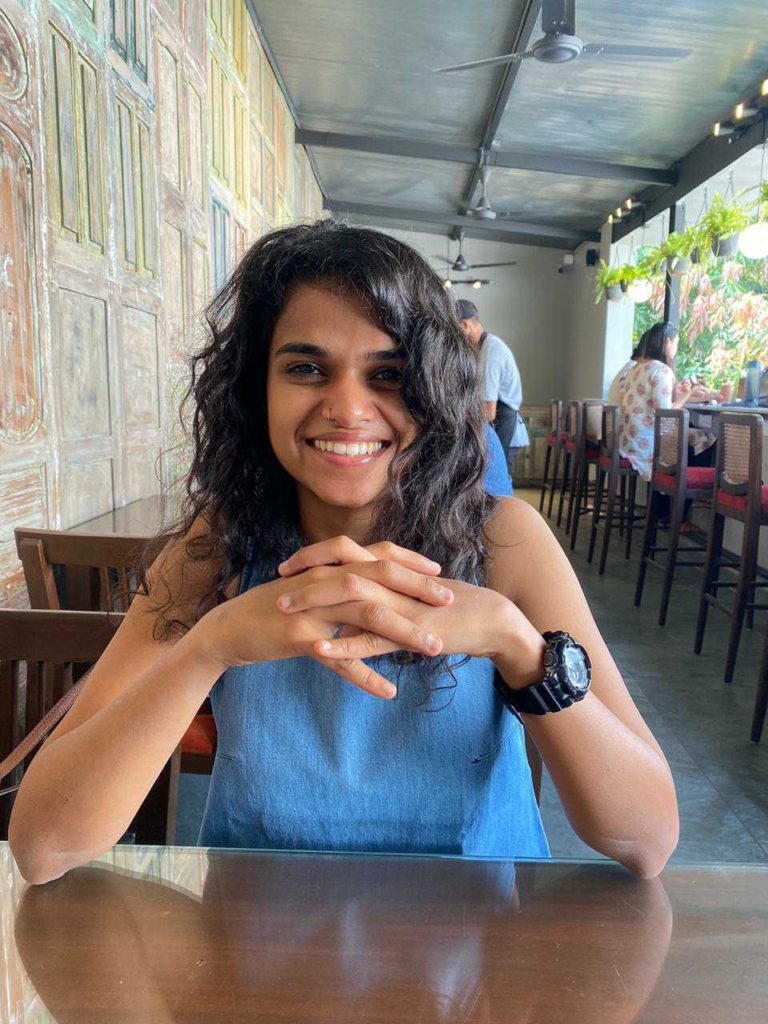
“I am Ramya, currently working as an Analyst Co-Lead and Researcher with the Counter Wildlife Trafficking Program at Wildlife Conservation Society-India. I did my Masters from the Erasmus Mundus – Internal Master in Applied Ecology between 2016 and 2018, with a specialization in Zoology from UFRGS. And hands down, that was the best year of my Masters.
One of my fondest memories at UFRGS and Porto Alegre was the level of integration – both cultural and academic. We were 6 IMAE students who joined the specialization at UFRGS that year. Over the course of the year, we not only became inseparable amongst each other, but also with many of our lab mates and class mates from Porto Alegre, itself. Before the beginning of our program, I remember being unaware of the fact that the courses in Brazil was almost completely delivered in the local language, Portuguese. In fact, I was thrown into field work, while I could barely say ‘good morning’ in Portuguese! However, within, 3-4 months of spending time at UFRGS, these initial hurdles hardly seemed to matter, since I and all of us IMAE students for that matter, were already fluent in the language. Something that would have not been possible without our supervisors and labmates, who patiently accommodated us, while we were still learning our way around.
One of the greatest strengths that I had perceived at UFRGS and the Herpetology lab, specifically, was the level of inclusivity and desire to help each other. I conducted my field work in the restingas, a sand dune habitat of the Atlantic forest complex, in the peak of the summer season. It was arduous at best! However, some of my wonderful colleagues – lab mates and friends, ensured that I finished my field work in as smooth a way as possible. Even relationships with supervisors were neither strictly rigid nor professional. We often discussed project ideas, one-researcher-to-another. Being a South Asian student, this was a much welcome change for me. Academic courses, specifically, for me the ones on univariate statistics and hierarchical modelling, were not only rewarding in terms of my thesis, but still finds applicability in my current job as well. While I loved the lab culture in UFRGS, something that I missed having was weekly lab meetings so as to discover and discussed latest research, applications to our own work and so and so forth.
In my opinion, UFRGS presented us the best of both worlds – personal and academic. And I would not have wanted it any other way.“
Ramya Roopa
Full name: Amrita Menon
Current affiliation: Nature Conservation Foundation, India
Period as IMAE/UFRGS: 2016 – 07/2018 (12 months)
“Arriving in Porto Alegre, in July 2016, knowing literally two portuguese words ‘Tudo bem?’, was daunting. I had no clue how I was going to find a place to stay and complete my masters in this language. During the course of my bachelors and IMAE, I have mostly studied abroad, away from my home country but in mostly english speaking countries. This was the first time I felt completely lost without knowing the language. I stepped into UFRGS and the feeling of being outside of my comfort zone vanished. The faculty, administration staff and my colleagues made me feel at home so quickly. Maria João and everybody from my new lab were so welcoming and helped with everything.
Learning in portuguese was a challenging task but it took me less than a month to pick up the intricacies of the language and participate in class discussions. A field trip to São Paulo with zoology undergraduates and I was speaking portuguese with so much ease. Also, this trip gave me the opportunity to visit some of the most breathtaking parts of the Atlantic forests and experience the biodiversity first hand. Once I got a hang of the language, Porto Alegre and UFRGS felt like home.
The courses offered by the ecology and zoology department were extremely diverse covering a wide range of topics. I was extremely impressed by the weekly seminars that were held by the ecology department which encouraged discussion based interactions and feedback for the audience and speakers respectively. The ease with which one could approach professors at UFRGS was very encouraging. We had frequent lab discussions about new publications in relation to our subjects. The supervision I received from Maria as well as my lab mates during the course of my master thesis was exceptional.
During my time in Brazil, I had the opportunity to assist my lab mates in their field research, where I worked with frogs in Parque Nacional Lagoa do Peixe and birds in Parque Nacional de Aparados da Serra. The field component which is part of the IMAE program at UFRGS is by far the best and most intensive field course I have done. At Floresta Nacional de São Francisco de Paula, we were given the opportunity to devise a study based on an ecology-based hypothesis using any species as a model organism enabling us to work on a different project everyday. This course really instilled the foundation behind ecological studies and the basic thoughts that must go into designing a study.
Overall studying at UFRGS, especially in portuguese, was such an enriching experience. It made me realise the amount of information/ideas that gets lost in translation and the importance of following research in languages other than english. The cultural exchange of ideas was an added bonus. One thing I miss about Brazil is the belongingness you feel when sharing chimarrão with a group of people.“
Amrita Menon
Full name: Victoria Graves
Current affiliation: English Teaching, Spain
Period as IMAE/UFRGS: 2018 – 07/2019 (12 months)
“I attended UFRGS for the academic year 2018 – 2019 as part of the IMAE programme and conducted my thesis as part of the Bird and Mammal Systematics, Evolution and Ecology Lab under the supervision of Dr Maria Joao Pereira and Dr Flavia Tirelli. My colleagues in the lab and in PPGEco were all very kind and patient, even with my complete inability to communicate in Portuguese at the beginning. I consider myself very lucky to have been part of such a group, as everyone was very supportive, and the constant flux of ideas and knowledge between lab-mates made for a lively and nurturing atmosphere, which had a positive influence on myself and my thesis project.
I thoroughly enjoyed my time there and gained a wide range of desk-based and field research skills, while learning about the ecology of one of the most biodiverse countries on earth and experiencing the rich culture and incredible natural places that Brazil has to offer. The courses offered cover a wide range of topics and provide both a solid foundation in theoretical ecological concepts and develop practical field and statistical skills that are directly applicable in research. I especially enjoyed the Introduction to analytical methods in spatiotemporal ecology and Field ecology modules, as both taught me valuable skills which I made use of in my thesis and hope to utilise in the future.
I have very fond memories of my time in Porto Alegre and I truly believe that the skills and knowledge I gained during my time there, will benefit me throughout my future career. Not only that, the friends I met and the memories we made, will stay with me forever.”
Victoria Graves