Ecological and Evolutionary Morphology
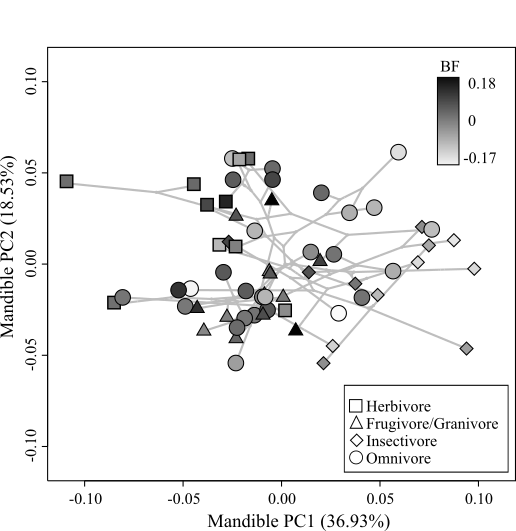
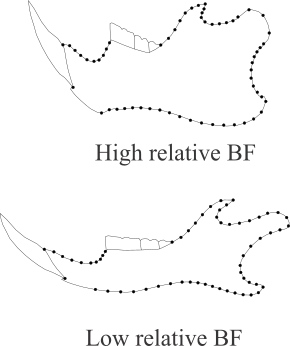
Morphologies evolve through size and shape changes that are influenced by ecological and evolutionary forces. Identifying which ecological factors are important to morphological evolution, and thereby influences an organism’s shape during its development is a primary research agenda in our lab. We seek to approximate micro and macroevolution by studying ecomorphological variation from the intraspecific to the interspecific level. Multivariate morphometric methods applied to museum specimens are frequently used to quantify shape variation.
Macroevolution
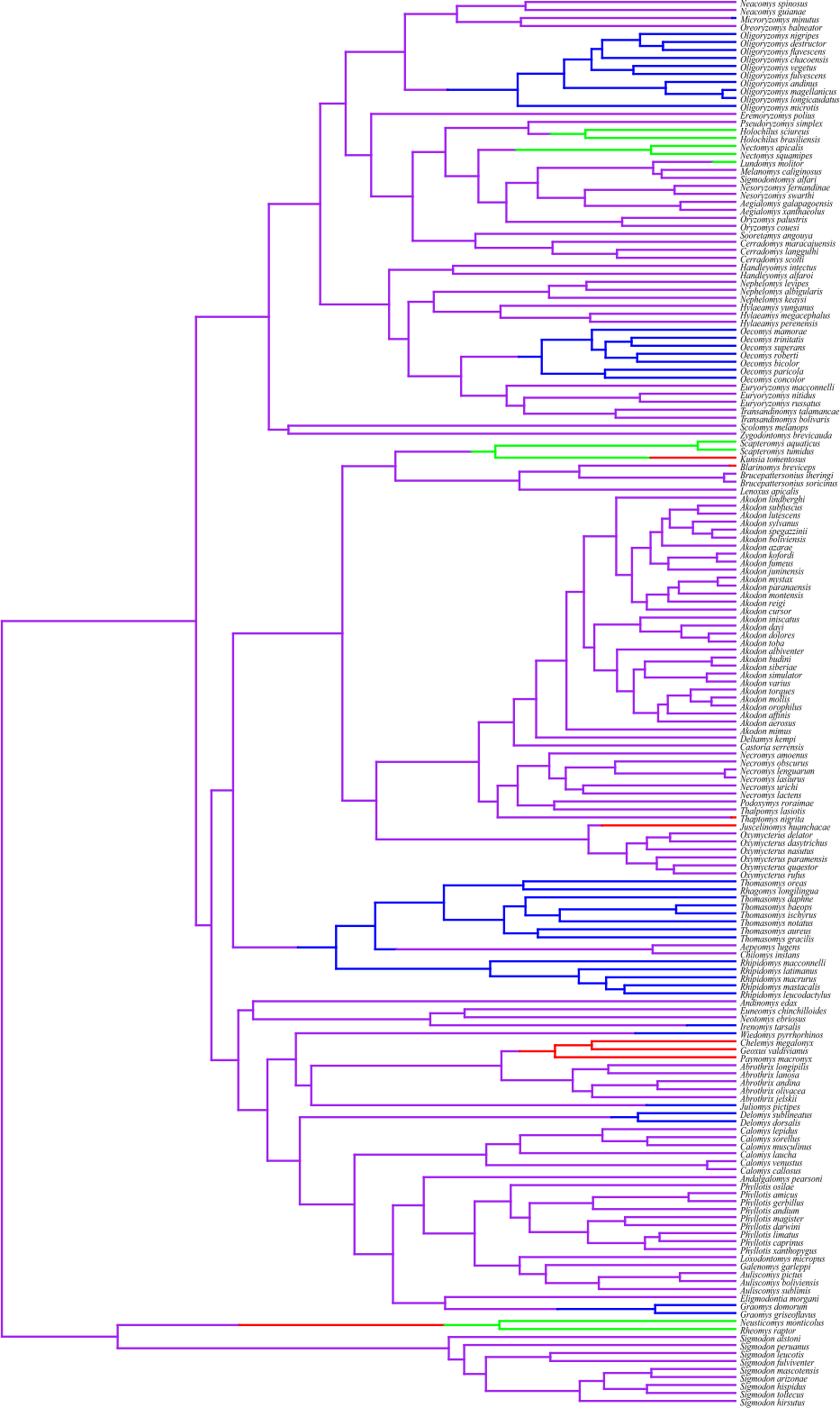
We are interested in documenting the patterns and infer the processes responsible for shape and size changes on long time scales. Current research focuses on examining evolutionary rates and the tempo and mode of rodent evolution, and how ecological factors such as diet have acted as selective optima during rodent diversification. Modern phylogenetic comparative methods have been applied to understand phenotypic and ecological diversification in evolutionary radiations.

Macroecology of complex phenotypes
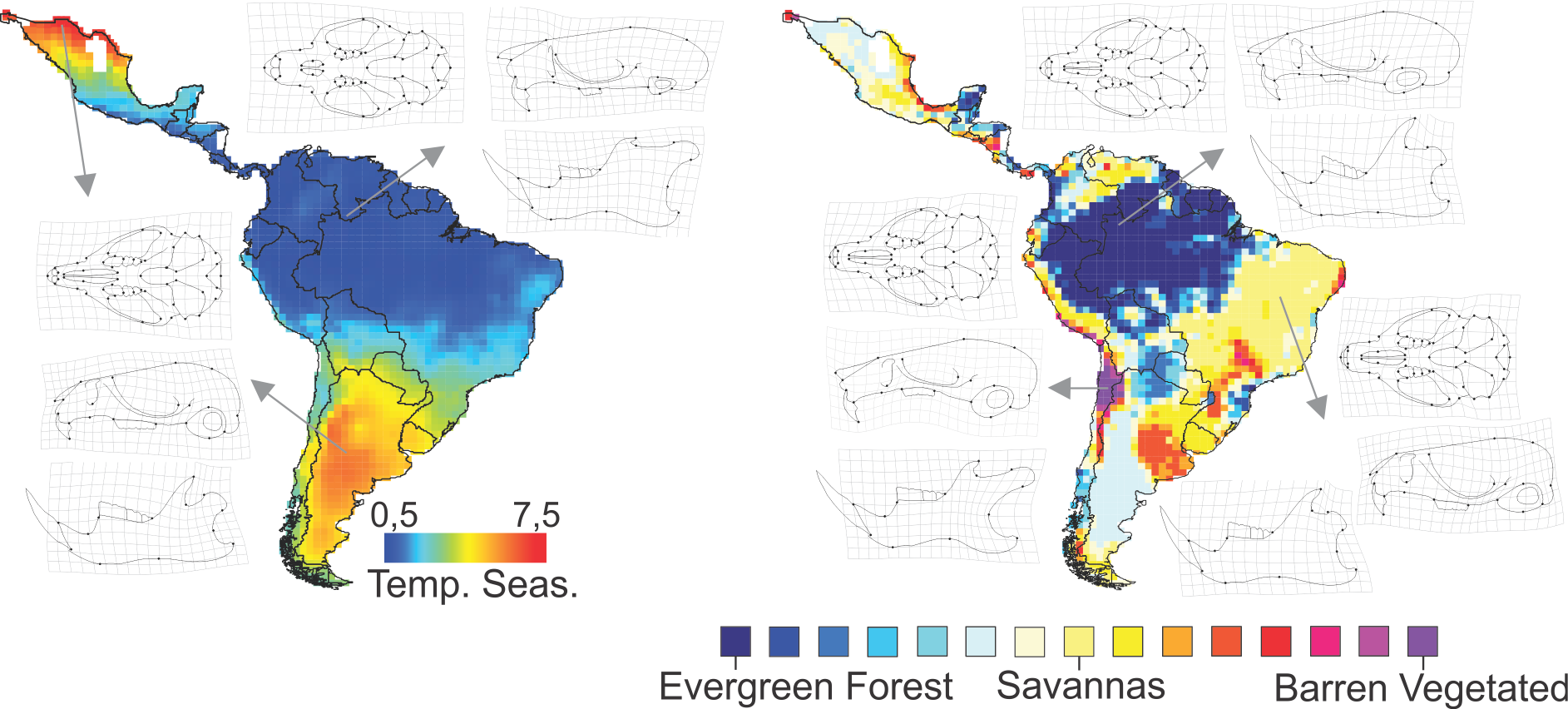
Morphological evolution occurs in a spatial context. Only by understanding how historical and ecological forces influenced the current distribution of species we will be able to explain why phenotypes are non-randomly distributed across assemblages. We commonly use phylogenies to understand clade distribution across space and the role of ecological variation on current diversity patterns. Moreover, macroecological studies of phenotypic variation usually investigate univariate traits (e.g., body size) and how those are distributed across assemblages. Our research focuses on how multivariate traits form spatial patterns and which processes are responsible for the formation of these patterns.
Parametric biogeography
Understanding the geographical distribution of species and their phenotypes is only possible within a historical framework. We seek to integrate macroevolutionary and biogeographic approaches to understand the current and historical distribution of species and clades – parametric biogeography. We have been using phylogenies to understand phylogenetic clade distribution and then the historical processes responsible for diversification and dispersion of lineages.


