RESEARCH – Plant Ecology & Systematics Lab

Phylogenetic and Functional Community Ecology
Species distribution and the structure of plant communities are directly influenced by environmental gradients and evolutionary-historical processes. More than a tool for understanding the structure of communities, the phylogenetic and functional coexistence patterns allow exploring the biogeographic patterns that form biotas on a macro-scale. With the advance of statistical tools, robust phylogenetic hypotheses for diverse plant families, traits and species distribution databases, there is a great opportunity to explore macroevolutionary and biogeographic patterns of plants at different spatial and temporal scales. I am available for proposals of prospective students for working in this research area. I am interested in climbing plants (see the project below) and plant dune communities but I am also available for projects with other life forms at any spatial scale. Take a look at the Join the Lab page for opportunities.
Climbing Plants of the Atlantic Forest: Evolutionary, Functional, Spatial, and Temporal Patterns
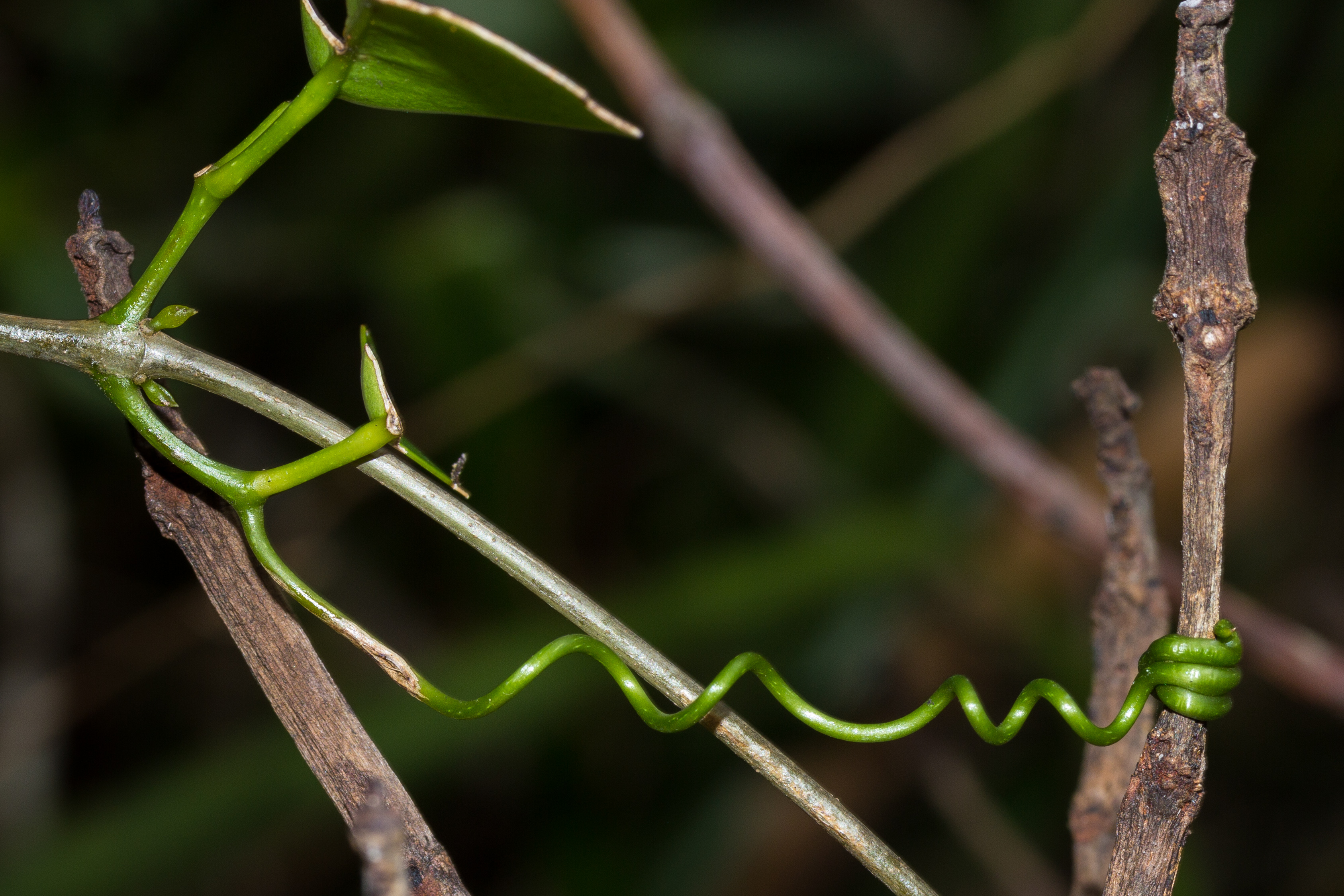
The Atlantic Forest is considered one of the most vulnerable hotspots of biodiversity to landscape and climatic changes. Despite the recent advances of macroecological studies, little is known about plant diversity patterns beyond trees. Climbing plants are one of the most remarkable life forms in forest dynamics, contributing to biomass, plant diversity, affecting mortality and growth of trees, and collaborating with treefall gaps. Furthermore, climbing plants show a diversity of climbing mechanisms (e.g. twiners, tendrils, hooks, adhesive roots, scramblers) to reach the best productive position. In this project, we are investigating the large-scale patterns of community structure along the Atlantic Forest. The project aims to: i) assess the phylogenetic and functional structure of communities along the different vegetations types composing the Atlantic Forest, ii) develop florist surveys at critical hotspots in South Brazil, iii) describe the reproductive phenological patterns of communities, and iv) project the changes in taxonomic and phylogenetic diversity of climbing plants communities in the face of climate change scenarios.
Systematics, Taxonomy and Biogeography of Neotropical Apocynaceae
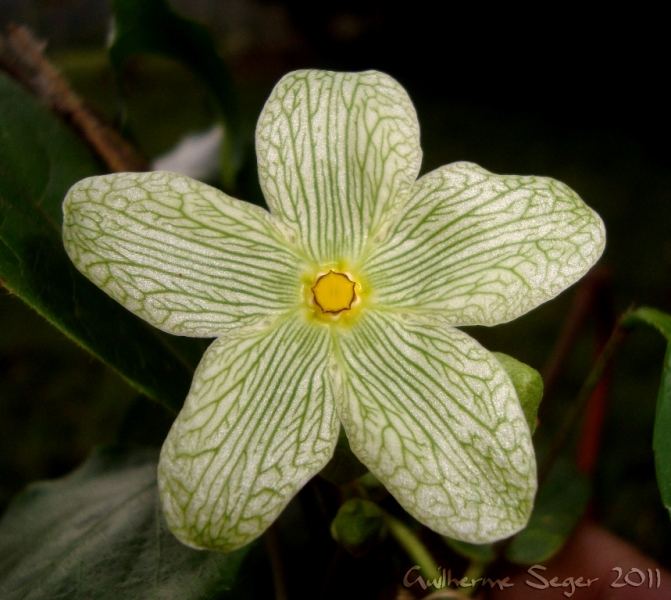
The Apocynaceae family (popularly known as milkweeds) is one of the biggest families of climbing plants in the Neotropics. Its peculiar flower morphology, the co-occurrence of cryptic species, and the lack of taxonomic studies are a challenge for species identification in South Brazil. In this project we aim to: i) describe the species occurring in South Brazil, ii) investigate the phylogenetic relationships and biogeography of understudied clades.