
 By Dr. Alexandre Arenzon – 07/10/25
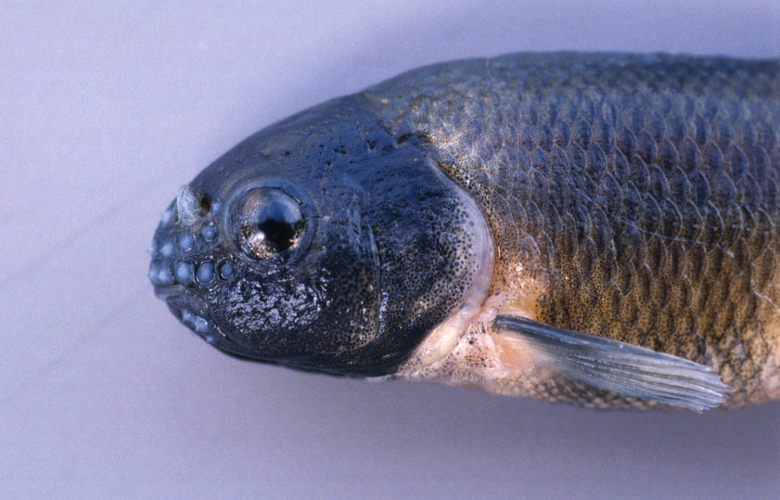
It may not be a beauty model, but it is undoubtedly an outstanding model organism for toxicity testing.
In aquatic ecotoxicology, selecting the right model species can make all the difference, either because its sensitivity reflects that of other aquatic organisms or because it enables the use of diverse standardized test methods that yield representative and regulatory-relevant results.
Native to North America and well adapted to laboratory conditions, the fathead minnow (Pimephales promelas) plays a crucial role in understanding the effects of chemical substances on freshwater ecosystems. Its relevance stems from a series of well-documented attributes: short life cycle, ease of laboratory maintenance, sensitivity to contaminants, and a comprehensive toxicological database.
Although widely adopted in regulatory frameworks across North America, where it serves as a cornerstone species for environmental risk assessment, Pimephales promelas still faces challenges for broader use in Brazil. Two Brazilian technical standards (ABNT) recommend its use in acute and chronic toxicity tests. However, being a non-native species, its importation is subject to strict regulatory procedures. This contrasts with the zebrafish (Danio rerio), an Asian species also included in ABNT standards, but freely traded in Brazil.
The cultivation protocols for P. promelas are well established and feasible for implementation in laboratory settings. This enables efficient production of test organisms to meet the demands of various types of ecotoxicological studies.
From a regulatory standpoint, the United States Environmental Protection Agency (USEPA) routinely employs both acute toxicity tests (survival) and chronic tests (survival and growth) with Pimephales promelas. In addition, standardized methods are available for early-life stage testing, reproductive toxicity, and assessing the effects of endocrine-disrupting chemicals. The robustness and international acceptance of these protocols reinforce the scientific credibility of the data generated with this species.
At the Ecotoxicology Laboratory of UFRGS, we continuously improve the culturing methods for Pimephales promelas, achieving higher hatching and survival rates of the produced larvae. We are also implementing early-life stage test protocols and developing behavioral assays that are simple to apply—contributing to the expansion of this species’ use in ecotoxicological studies in Brazil.
References:
-
Ankley, G.T., Jensen, K.M., Kahl, M.D., Korte, J.J. and Makynen, E.A. (2001). Description and evaluation of a short-term reproduction test with the fathead minnow (Pimephales promelas). Environmental Toxicology and Chemistry, 20: 1276–1290. https://doi.org/10.1002/etc.5620200616
-
Ankley, G.T., Villeneuve, D.L. (2006). The fathead minnow in aquatic toxicology: past, present and future. Aquatic Toxicology, 78(1): 91–102. https://doi.org/10.1016/j.aquatox.2006.01.018
-
U.S. Environmental Protection Agency. (2002). Method 1001.0: Fathead Minnow, Pimephales promelas, Larval Survival and Teratogenicity Test; Chronic Toxicity. EPA-821-R-02-013.
-
U.S. Environmental Protection Agency. (2002). Fathead Minnow (Pimephales promelas) Larval Survival and Growth Toxicity Tests. EPA-821-R-02-013.

 In Brazil, toxicity began to be considered, explicitly, as a legal environmental parameter in 2005. Obviously, toxicity already existed and was already monitored before this date. But the word “toxicity”, as a parameter to be monitored to determine compliance with legal environmental requirements, began to be used after the creation of CONAMA 357/2005 Resolution. According to this Resolution, to Brazilian surface water bodies maintain their classification (based on the uses assigned to these environments), a series of parameters (physical, chemical and biological) should be met, among them, the toxicity level. This monitoring process, according to Brazilian legislation, must be carried out by public authorities, that is, by the Brazilian environmental agencies. One must imagine, then, that there are regional differences in this aspect, considering the resources made available by each State for environmental issues.

 By Dr. Alexandre Arenzon – 12/20/22
 Following the special session held at the 14th SETAC LA Congress in 2021, which was entitled “Evaluation of Effluents in Latin America”, a regional workshop was organized: “Effluent Ecotoxicity – Preparing the foundations for a future regulation in Latin America”. The event was organized by the Society of Environmental Toxicology and Chemistry – Latin America (SETAC LA), in Buenos Aires, Argentina, from November 29 to December 2, 2022.