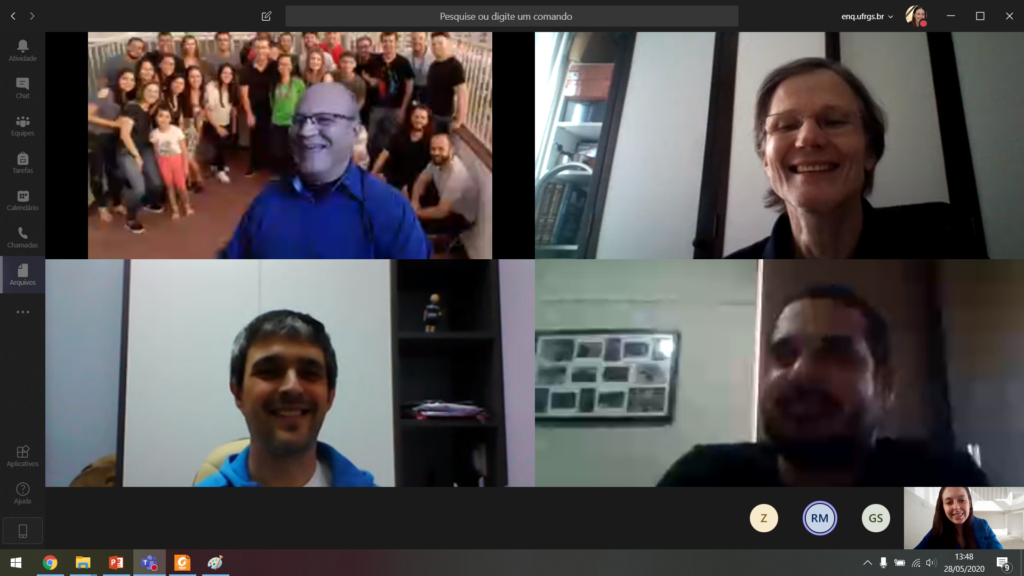
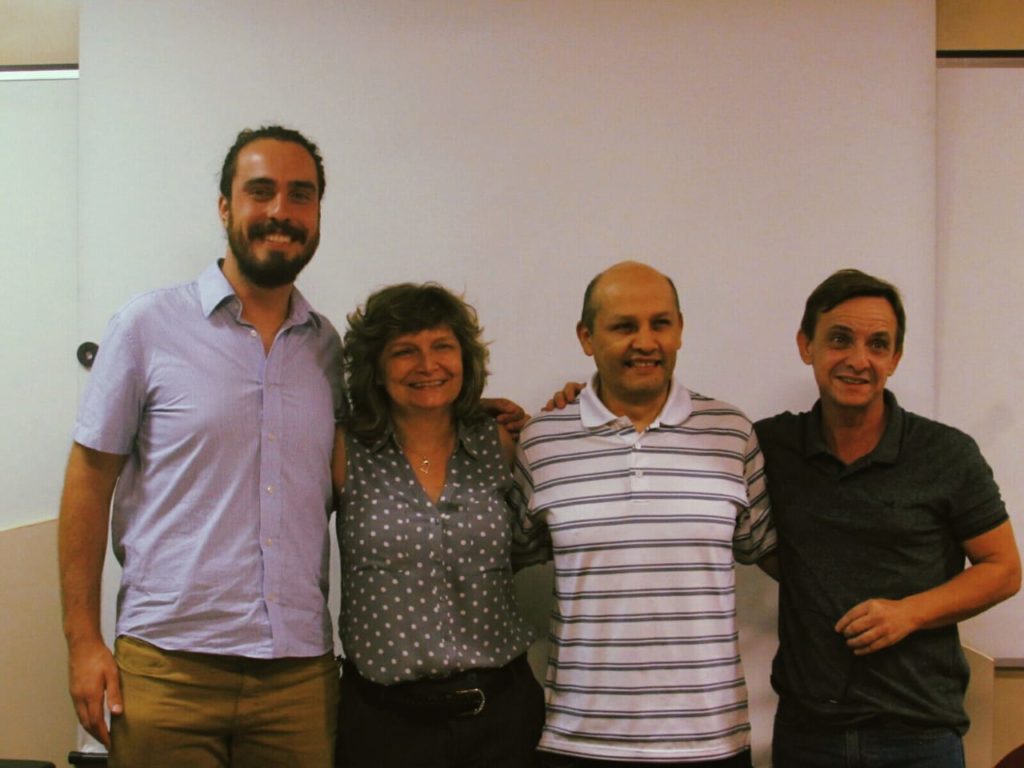
Andressa Apio received her PhD degree in Chemical Engineering at GIMSCOP/UFRGS with the work REAL TIME PARAMETER AND STATE ESTIMATION THROUGH KALMAN FILTERS WITH SOFT ROBUST WINDOW AND NON-LINEAR STATE ESTIMATORS.
Olívia Paniz Fleig received her Master’s degree in Chemical Engineering at GIMSCOP/UFRGS with the work “STUDY OF CONTINUOUS TOASTING OF RICE HUSK AS PRE-TREATMENT FOR RAPID PYROLYSIS”
PhD qualifying exam of Lucas Manique Raymundo in Chemical Engineering at GIMSCOP/UFRGS with the work “DEVELOPMENT OF THE PROCESSING BY RAPID PYROLYSIS OF RICE HUSK AND LIGNO-CELLULOSIC WASTE”.
PhD qualifying exam of Caroline Trevisan Weber in Chemical Engineering at GIMSCOP/UFRGS with the work “SWEET POTATO BIORREFINARIES: A CIRCULAR ECONOMY MODEL”.
Watch Carol’s presentation:
Abstract:
In 2030 it is estimated that the world population will have reached the level of nine billion people. Among the consequences of global population growth is the high amount of food waste generated. It is estimated that around 1.3 billion tons of food are wasted per year, representing approximately one-third of the edible parts of food produced for human consumption. These residues are traditionally used for animal feed, fertilizers or landfilled with other residues. However, the growing demand for environmental protection coupled with the desire to conserve resources is encouraging a more efficient recovery of these residues for the production of higher added-value food ingredients, chemicals and biofuels. The Brazilian production of sweet potatoes is the 16th in the world ranking, with a production of 776,285 tons in 2017, with Rio Grande do Sul standing out, responsible for approximately 24% of the country’s production. The global amount of sweet potato waste in 2011 represented about 7% of the entire harvest, which in Brazil would represent about 55,000 tons of sweet potatoes wasted annually. In this context emerges the concept of sweet potato waste biorefineries, aiming at economic viability and sustainability within the concept of circular economy. Previous studies at GIMSCOP have shown the technical and economic feasibility of producing ethanol and distilled beverages from sweet potatoes. The objective of this work is to expand the range of marketable products made from sweet potato waste, allowing the entire use of this food residue. The tuber unsuitable for human consumption, when going through the processes of hydrolysis, fermentation and distillation, generates the products ethanol, distilled beverage and residual fermentation cake. Another aspect that has so far been little explored is the use of the sweet potato above-ground part, which through drying generates the product sweet potato leaf tea, rich in phenolic compounds (19.62±0.42 mg EAG.g-1, on a dry basis) such as chlorogenic acid and caffeine, that bring benefits to human health. Sweet potato leaves tea was approved in sensory analysis with an overall acceptance score of 7.05. The fermentation of this tea by the association of acetic bacteria and yeasts called SCOBY allows the production of kombucha, which is the fastest growing product in the functional drinks market. Sweet potato leaves tea and green tea were mixed in different blends (0, 25, 50, 75 and 100%) for the production of kombucha. Preliminary results show formation of acetic acid in all blends, showing the potential of using sweet potato leaves tea for the production of kombucha. Sweet potato leaves can also be used to produce bio-oil, biochar (coal) and biogas through the rapid pyrolysis process. Initial tests showed the production of bio-oil with basic pH (9-10), indicating the possible presence of compounds of interest with high added value, in addition to causing less corrosion in equipment than conventional bio-oils that have acid pH. The last product to be evaluated is the quantum carbon dots, which can be used in the construction of customized sensors, necessary for the control of the aforementioned processes.
PhD qualifying exam of Patrícia Rodrigues da Silva in Chemical Engineering at GIMSCOP/UFRGS with the work “MILP FORMULATION FOR MASS INTEGRATION AND PRODUCTION SCHEDULE APPLIED TO THE SYNTHESIS OF HYDROGEN NETWORKS”.
PhD qualifying exam of Andressa Apio in Chemical Engineering at GIMSCOP/UFRGS with the work “DEVELOPMENT OF KALMAN FILTERS WITH ROBUST WINDOW WITH SMOOTHING AND ITS APPLICATIONS”.
Débora Gonçalves Carvalho received her Master’s degree in Chemical Engineering at GIMSCOP/UFRGS with the work “2-D and FTIR FLUORESCENCE SPECTROSCOPY APPLIED IN THE QUANTIFICATION OF TOTAL PHENOLIC COMPOUNDS AND CAFFEINE”
Lara da Silva Brum received her Master’s degree in Chemical Engineering at GIMSCOP/UFRGS with the work “FAST PYROLYSIS OF EUCALYPTUS LEAVES WITH AND WITHOUT MICROWAVE”
Brício Ferreira Barreiros received his Master’s degree in Chemical Engineering at GIMSCOP/UFRGS with the work “STABILIZATION OF OIL PRODUCTION IN GAS-LIFT SYSTEMS THROUGH THE SIMPLE AND EFFICIENT ADJUSTMENT OF PID CONTROLLERS”
PhD qualifying exam of José Eduardo Weber dos Santos in Chemical Engineering at GIMSCOP/UFRGS with the work “KPI ORIENTED APPROACH FOR REAL-TIME OPTIMIZATION”.