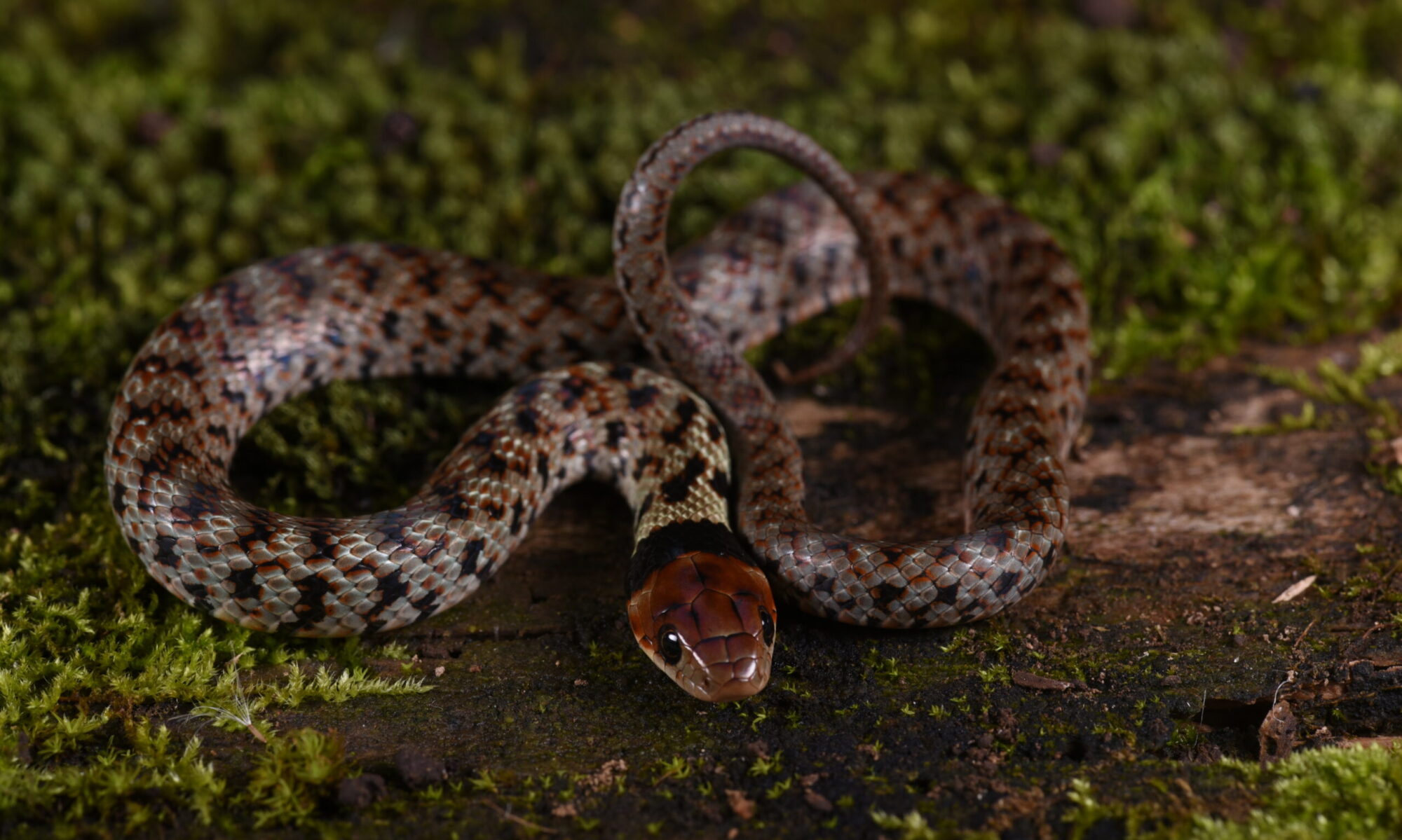
Um estudo do grupo de Pesquisas PPGBAN DEZOO foi publicado essa semana no periódico Journal of Zoology e ilustrou a capa da edição. O estudo foi tema da dissertação de mestrado da Natália Vargas e a foto de capa foi da nossa ex-aluna Valentina Caorsi. Confira abaixo o vídeo de divulgação, explicando o estudo, assim como algumas fotos e o texto explicativo encaminhado para o Journal of Zoology e que será usado no Blog do periódico:
Visualizar o vídeo Como o sapinho-verde-de-barriga-vermelha evita predadores? do YouTube


Anti-predator coloration in red-bellied toads: a new experimental test of long-accepted ideas
Crypsis and aposematism are important forms of anti-predatory strategies. Through cryptic coloration, animals reduce their detectability by matching the coloration of backgrounds, while through aposematic coloration, prey species signal to potential predators their unprofitability by conspicuous coloration. Among amphibians, both strategies are well known.
The Neotropical red-bellied toads (Melanophryniscus spp.) are small bufonids restricted to subtropical and tropical South America. Most of the 29 species of this genus have naturally restricted distributions. These small toads are rare or difficult to find and are usually recorded only during reproductive events. They’re explosive breeders, so reproduction occurs over a short period of time in temporary ponds and streams after heavy rains. Red-bellied toads are diurnal, unlike most anuran species, and have alkaloids as chemical defenses. Alkaloids are sequestered from their diet, rich in ants and Acari.
Most red-bellied toad species present conspicuous coloration, usually with red, orange or yellow marks, against a dark background. Conspicuous coloration may be present both dorsally and ventrally. Moreover, they display these conspicuous ventral colors to potential predators in a weird and poorly understood behavior known as the unken reflex. In this behavior, the toads arch the body and raise the head and the posterior region, exhibiting the ventral conspicuous colors.
The unken reflex and the conspicuous colors have been customarily regarded as warning signals to avoid or reduce predation attempts by visually oriented predators. Although these toads represent an appealing model to study many unanswered aspects of aposematic signal evolution, such as the mechanistic basis of aposematic markings and the form and diversity of warning signals, almost nothing was experimentally explored.
A team of students and researchers, in the Laboratory of Herpetology at Federal University of Rio Grande do Sul, Brazil, have studied many aspects of the ecology and natural history of some threatened species of red-bellied-toads. In an attempt to test the effects of coloration and the unken reflex on predation rates, a series of experiments has been conducted with Melanophryniscus cambaraensis.
The tiny Cambará’s red-bellied toad, Melanophryniscus cambaraensis, is endemic to a restricted area in the Atlantic Forest of southern Brazil. It is a threatened species, officially listed as Vulnerable in Brazil. Only two populations have been found in the highlands of the Araucaria Plateau, and one of them has probably gone extinct in the 1990s. The main threats are habitat loss and fragmentation, but the reasons for the extinction of one of the populations are unknown. This green red-bellied toad is one of the three species of the genus with green dorsal coloration.
In the study recently published in the Journal of Zoology, the team evaluated experimentally if the green dorsal color of Melanophryniscus cambaraensis functions as warning coloration for visually oriented natural predators. Field predation experiments were conducted using clay models, representing M. cambaraensis (noxious, green models) and a generalized cryptic frog (palatable, brown models), to compare attack rates.
The avian attacks were concentrated mainly on the anterior end, suggesting models were perceived as prey. However, attack rates were similar on green and brown frog models. Our results suggest that the green dorsal color of the species does not act as an aposematic signal, but functions as a cryptic color. Although crypsis in poisonous species remains a complex topic, under certain circumstances, the selection pressures imposed by predators may favor a cryptic coloration instead of a conspicuous coloration, even for diurnal species.
