Standards
ASTM D638 – Standard Test Method for Tensile Properties of Plastics
Tie-shaped samples. Ease of sample preparation. Indicated for composites containing particulate reinforcement or short fibres. Not recommended for composites with high traction modulus.
Measured properties:- Tensile strength
- Tensile modulus
Sample

Testing

ASTM D695 – Standard Test Method for Compressive Properties of Rigid Plastics
Dogbone" shaped samples with or without clips. Loads applied at the tips by plates. Not recommended for highly oriented or continuous fibre composites.
Measured properties:
- Compressive strength
- Compressive modulus
- Compressive modulus


ASTM D790 – Standard Test Methods for Flexural Properties of Unreinforced and Reinforced Plastics and Electrical Insulating Materials
Flat rectangular specimens with bending load at three points. Failure can occur by tensile, compression, shear or combinations. Suitable for random, dispersed or continuous fibre reinforced material.
Measured properties:
- Flexural strength
- Flexural modulus
- Bending stress-strain response


ASTM D885 - Standard Test Methods for Tire Cords, Tire Cord Fabrics, and Industrial Filament Yarns Made from Manufactured Organic-Base Fibers
ASTM D7269 - Standard Test Methods for Tensile Testing of Aramid Yarns
Method used to determine the tensile properties of strands with and without aramid.
Measured properties:
- Tensile strength
- Tensile modulus
- Percent elongation
- Toughness


ASTM D2344 – Standard Test Method for Short-Beam Strenght of Polymer Matrix Composite Materials and Their Laminates
Samples in the form of small rectangular bars with bending load applied at three points. Intended primarily for quality control, comparative data and evaluation of environmental effects.
Measured properties:
- Resistance to shortbeam (Shear)


ASTM D3039 – Standard Method for Tensile Properties of Polymer Matrix Composite Materials
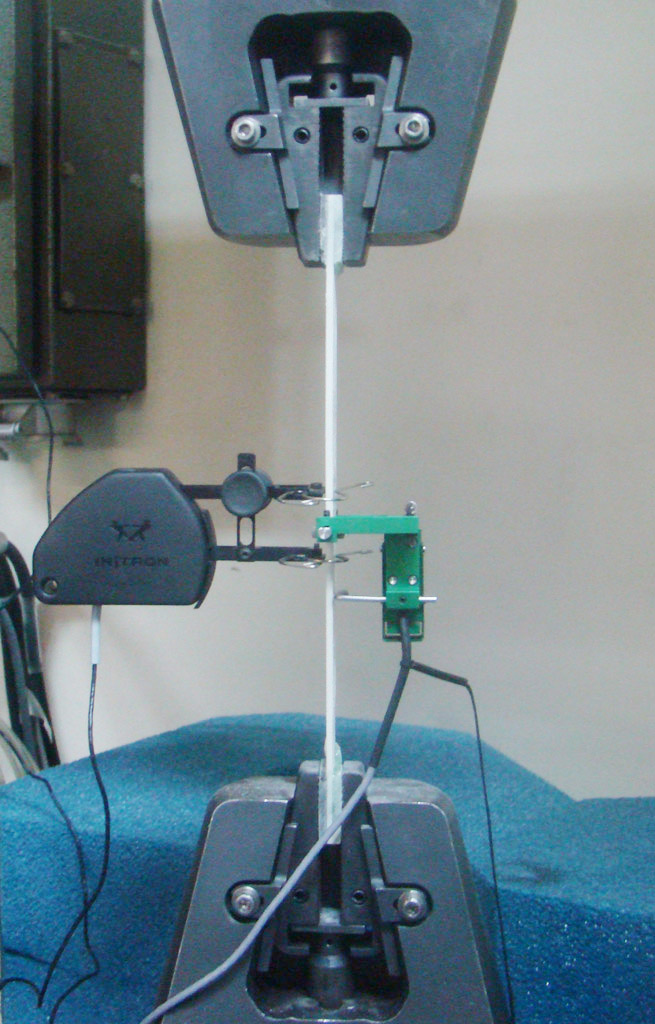
Straight specimens. Can be used for continuous and staple fibre composites. Use of tension or displacement transducers is required. Preferred for a variety of uses. Limited testing for laminates that are balanced and symmetrical with respect to test direction.
Measured properties:
- Tensile strength
- Tensile modulus
- Poisson ratio
- Stress-strain response

ASTM D3518 – Standard Test Method for In-Plane Shear Response of Polymer Matrix Composite Materials by Tensile Test of a ±45° Laminate
Simple test sample and simple method, layered at +/- 45° for stress testing. Widely used due to its simplicity and low cost.
Measured properties:
- Shear modulus
- Stress-strain response
- Maximum shear stress


ASTM D3846 - Standard Test Method for In-Plane Shear Strength of Reinforced Plastics
Used in the reinforced plastics industry to evaluate reinforcement-resin bond strength in polyester, vinyl ester, and epoxy resin composites. Suitable for determination in laminates or other plastics reinforced with randomly dispersed reinforcing fibers.
Measured properties:
- Planar shear force


ASTM D5083 – Standard Test Method for Tensile Properties of Reinforced Thermostting Plastics Using Straight-Sided Specimens
Only straight-sided samples without clips. A straight-sided alternative to D638.
Measured properties:
- Tensile strength
- Tensile modulus


ASTM D5528 – Standard Test Method for Mode I Interlaminar Fracture Toughness of Unidirectional Fiber-Reinforced Polymer Matrix Composites.
The ASTM D5528 test, also known as DCB test, aims to evaluate the mode I interlaminar fracture toughness ( G_Ic ) of unidirectional composites under longitudinal loads. The samples are characterized by a unidirectional composite between 3 to 5 mm thick with a thin non-adhesive film located in the central plane of the laminate, in order to generate a pre-crack of the material.
The sample with the crack is then subjected to increasing stress until the crack propagates forward in a brittle fashion. Propagation occurs when the strain energy release rate reaches a critical value, which is usually referred to as the material's fracture toughness.
The specimens are usually 125 mm long, 25 mm wide and 3 to 5 mm thick.

ASTM D6641 - Standard Test Method for Compressive Properties of Polymer Matrix Composite Materials Using a Combined Loading Compression (CLC) Test Fixture
Method used in the determination of compression and stiffness properties of polymer matrix composite materials.
Measured properties:
- Laminar compressive strength
- Laminar compression modulus
- Poisson coefficient of compression


ASTM D7078 - Standard Test Method for Shear Properties of Composite Materials by V-Notched Rail Shear Method
Method used in the determination of shear properties of high modulus fibre reinforced composite materials, in specimens with "V" notches.
Measured properties:
- Shear strength
- Shear deformation
- Modulus of elasticity


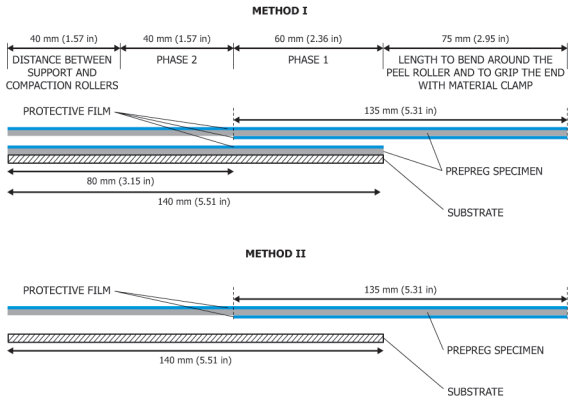
D8336 − 21 - Standard Test Method for Characterizing Tack of Prepregs Using a Continuous Application-and-Peel Procedure.
This test method covers measurement of adhesion between partially cured composite prepreg and a substrate in a peel test, under specified conditions.

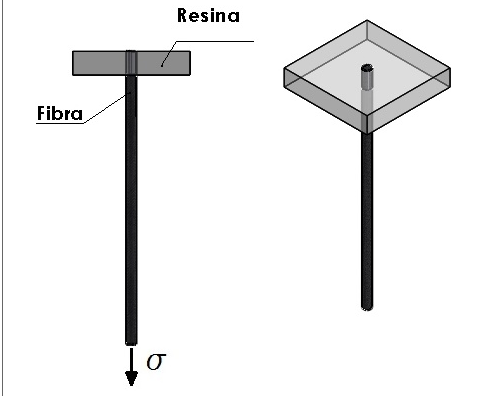
Pullout - Apparatus used to measure the shear stress at the interface of the fibre/cordon and the resin capsule, by means of a "pull-out" test.
Measured properties:
- Shear stress