
Visual arts | Anna Carolina and Dery Ohanna, undergraduate students in Art History, investigate the female narratives of an artist whose trajectory is marked by invisibility
*By: Anna Carolina and Dery Ohanna
*First published: May 2, 2024
*Photo: PBSA/UFRGS archive – Reproduction
What used to be considered necessary to make a female artist achieve full recognition at the beginning of the 20th century? Would it be having her own studio? Receiving important awards? Having her work showcased in relevant events? Or would a marriage with a male painter be the quickest route to such prominence? These are some of the questions we faced during the research on the painter Haydéa Lopes Santiago (1896–1980).
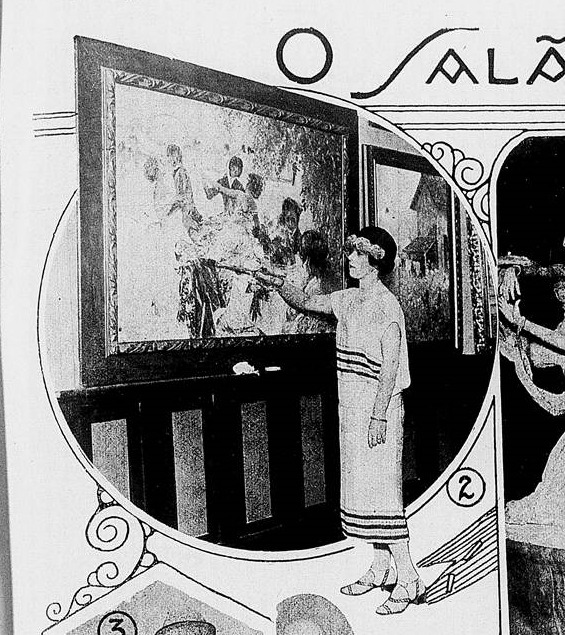
Photo: Reproduction/Revista da Semana, n. 35, p. 21, Rio de Janeiro, 1925
In the book Profissão Artista: Pintoras e Escultoras Acadêmicas Brasileiras (EDUSP, 2008), Ana Paula Simioni highlights that, in the 19th century, women managed to boost their artistic careers and make art their livelihood. This change was driven by factors such as favorable family contexts which provided financial and emotional support, access to academic artistic education, and opportunities that arose from these circumstances.
In Brazil, women could only enroll as regular students at the School of Fine Arts (Escola de Belas Artes, former Escola Nacional de Belas Artes – ENBA), in Rio de Janeiro, from 1900 onwards. Before that, artistic education used to be mainly offered through vocational or further education (FE) courses and classes in private studios.
Within this context, the carioca Haydéa, known for her urban and still life scenes, spent part of her childhood in Porto Alegre (RS). Her aptitude for drawing caught the attention of her parents, who were art enthusiasts. They then decided to move to Rio de Janeiro, aiming to invest in her artistic education.
While in Rio, Haydéa attended vocational courses at ENBA and was a student of Modesto Brocos (1852–1944) and Rodolfo Amoedo (1857–1941). She participated in exhibitions in Brazil and abroad from 1921 to 1966, showcasing her work at the Salon des Artistes Français (1931), and at the 1st Women’s Art Salon (1º Salão Feminino de Arte, 1931), in addition to giving lectures on women’s experiences.
In Porto Alegre, she participated in group exhibitions, including the 1st and 2nd Fine Arts Salons of Rio Grande do Sul (Salões de Belas Artes do Rio Grande do Sul) (1939 and 1940), where she received a silver medal and won the Aquisição Cidade de Porto Alegre award, with her work Flores (1934) – which later was integrated into the collection of Pinacoteca Barão de Santo Ângelo.
Haydéa had a studio in Rio de Janeiro, where, in the early 1920s, Eliseu Visconti (1866–1944) taught a private painting course for three years. One of his students was Manoel Santiago (1897–1987), a painter from Manaus who later married Haydéa. They lived together in Paris from 1928 to 1932.
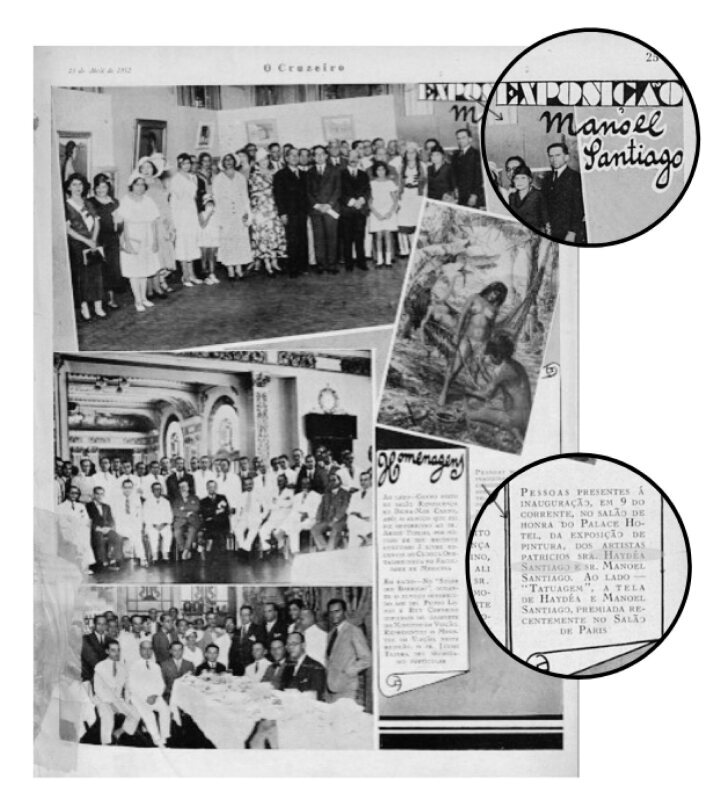
Source: Reproduction/Revista O Cruzeiro, 25th ed., p. 25, Rio de Janeiro, 1932
Despite the recognition among her peers, Haydéa’s story is marked by invisibility. Most periodicals, interviews, and catalogs inextricably associate her with her husband, which results in a shortage of information about her life and work. Furthermore, the texts dedicated to the painter are usually brief and incomplete, contrary to the observations in thearticle of Paula de Souza Ribeiro.
At the beginning of the 20th century, female artists encountered other challenges in the pursuit of recognition. They faced categorizations imposed by art critics and the institutions that assessed their works and careers within the dominant patriarchal structure, as was the case with Haydéa.
In this case, the designation of the female artist as “someone’s wife” exemplifies the constant subjugation of women within the system they were part of. Her trajectory, much like the trajectories of other artists, highlights the historical tendency of prioritizing male narratives.
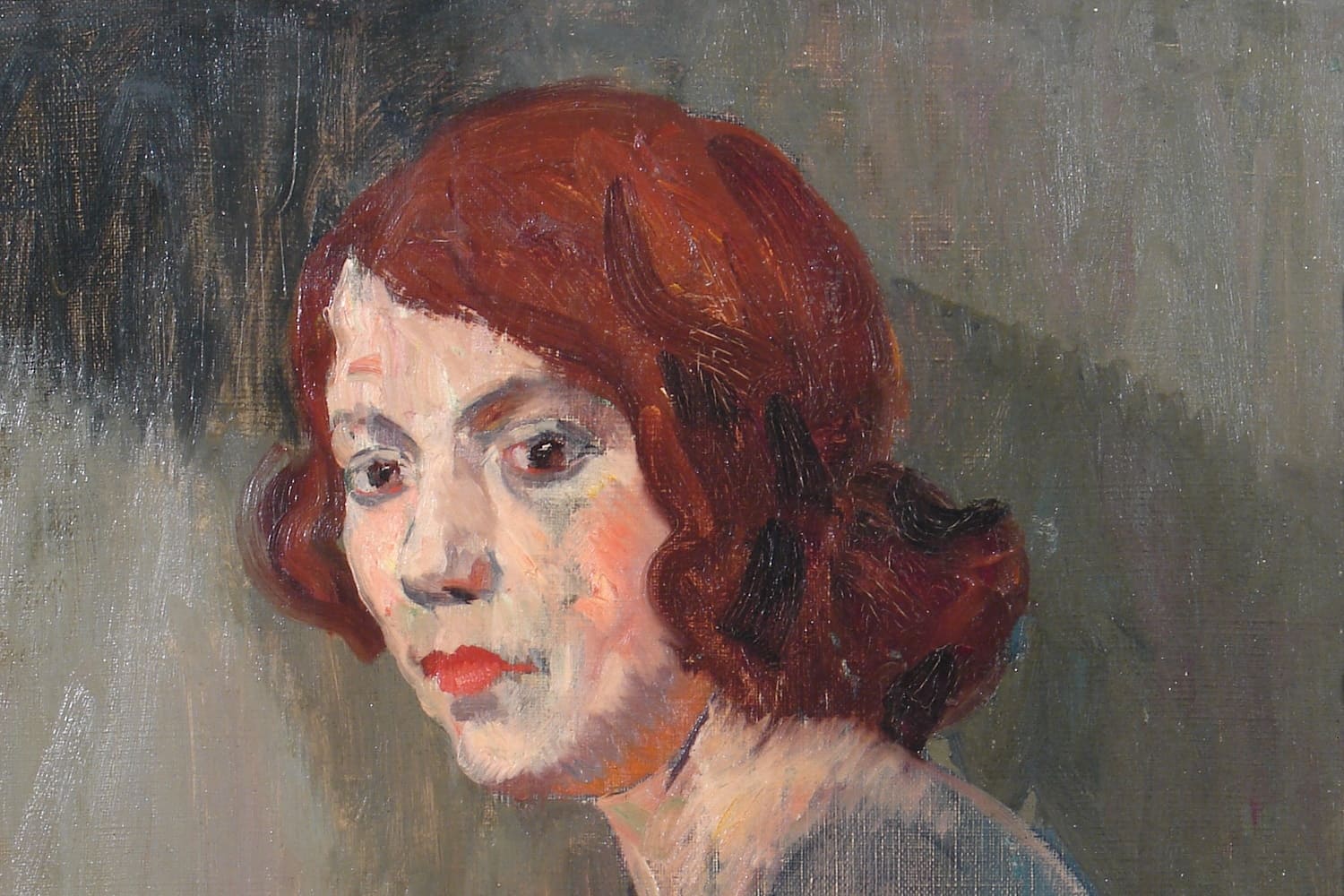
Although there are few records of the artist, in an interview with O Jornal (RJ) in 1926, Haydéa expressed her dissatisfaction with the artistic canons established by previous generations, claiming that everything was too conventional, from the nude colors to the arrangement of landscapes. This perspective is especially reflected in the work Retrato (1934), also part of the Pinacoteca Barão de Santo Ângelo collection.
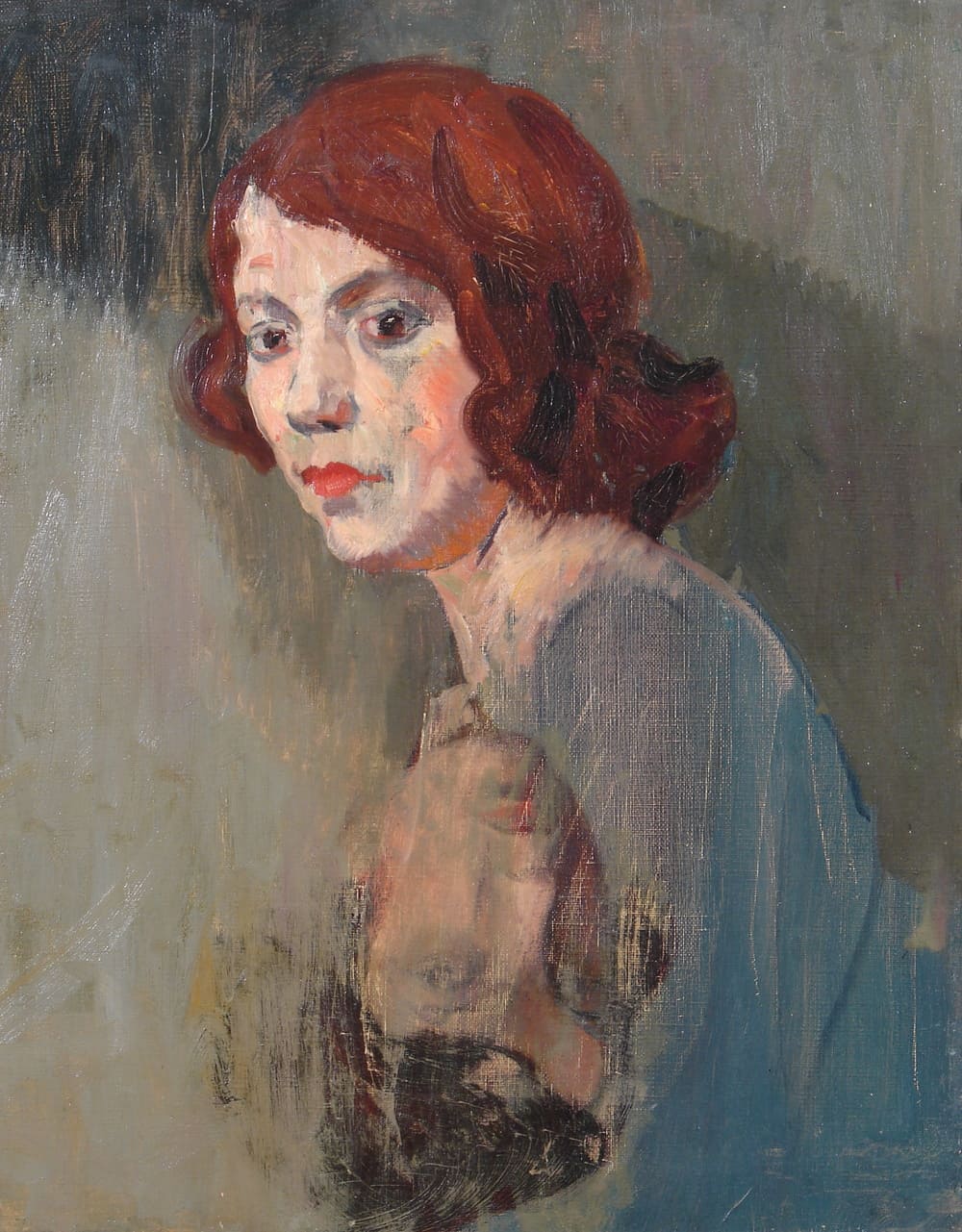
Retrato, 1934
Oil on canvas, 55 x 46 cm (21.65 x 18.11 inches)
Pinacoteca Barão de Santo Ângelo, Porto Alegre
Source: Reproduction/Pinacoteca Barão de Santo Ângelo
In a way, the work Retrato evokes how women have been portrayed throughout the history of art: a female figure emerges amid scratches and erasures, carrying a duality between presence-absence, recognition-forgetfulness.
* PROBIC – Institutional Program for Scientific Initiation Scholarships
** FAPERGS – Foundation for Research Support of the State of Rio Grande do Sul
Anna Carolina Florentino is a student of the Undergraduate Program in Art History. Currently, she is a PROBIC*/FAPERGS** research fellow and works on the research, cataloging, and incorporation of the Ângelo Guido collection into the Historical Archive of the Institute of Arts, under the coordination of Paula Viviane Ramos.
Dery Ohanna Bruna Heldt is an undergraduate student in Art History. Currently she participates in two research groups on perspectives of art in Brazil: Artists, Historians, and Critics: a perspective of art in Brazil through artistic and documentary collections (Artistas, Historiadores e Críticos: uma perspectiva da arte no Brasil a partir de acervos artísticos e documentais), and Artists, Historians, and Critics: a perspective on the work of South Rio-Grandense artists (Artistas, Historiadores e Críticos: uma perspectiva da produção de artistas Sul-Rio-Grandenses a partir do acervo da Pinacoteca Barão de Santo Ângelo), both under the coordination of Paulo Gomes.
Every two weeks, students and researchers showcase works from Pinacoteca Barão de Santo Ângeloexploring them from different perspectives. The section is curated by Camila Monteiro Schenkel.
Translated into English by Letícia Wronski Todescatto, undergraduate student enrolled in the course “Supervised Translation Training II (English)” of the Undergraduate Program in Language and Literature, under the supervision and translation revision of Professor Elizamari R. Becker (P.h.D.) – IL/UFRGS.