Health | After analyzing 132,000 cases of 17 types of cancer, researchers observed better prognoses in private healthcare patients, but they point out that many variables influence this outcome
*By: Carolina Paz Comerlatto
*First published May 2, 2024
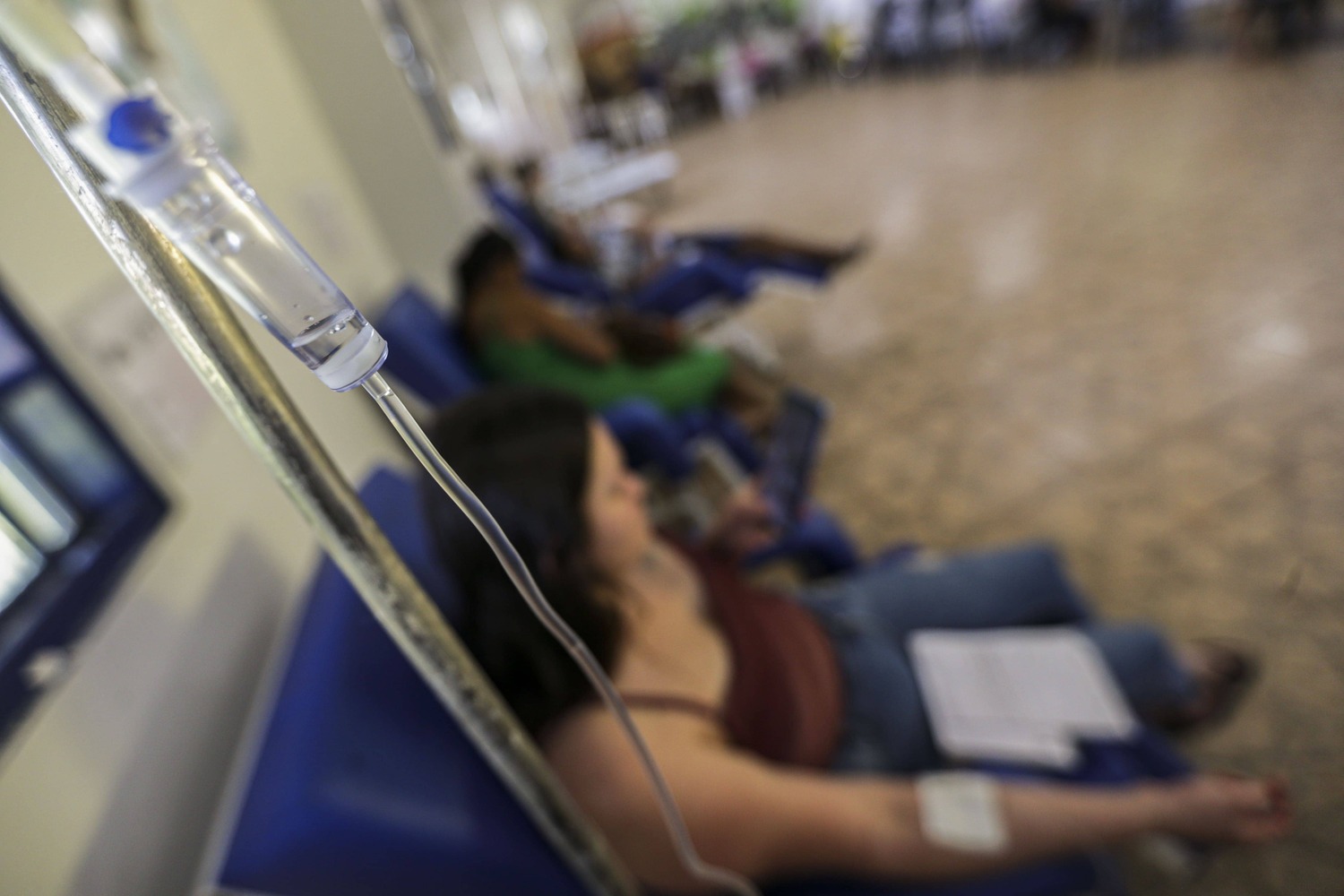
*Photo: Marcelo Camargo/Agência Brasil
“We thought, at the time we initiated the research, it would be easy to obtain the results since it was a project involving pre-collected data.” This is how Patricia Klarmann Ziegelmann, UFRGS faculty member of the Graduate Program in Epidemiology who holds a P.h.D. in Statistics, begins her account. In narrating her leadership of an innovative project on cancer research, Ziegelmann also paints a picture of the importance and challenges of doing science in Brazil.
In a context of scarce Brazilian data on cancer patient survival, the researcher teamed up with Juliana Giacomazzi, a biomedical scientist and colleague in the same postdoctoral training program, to develop a groundbreaking study. The goal was to estimate the survival rate of individuals undergoing cancer treatment within a five-year period in both the public and private healthcare systems in Rio Grande do Sul, using pre-existing data from hospitals to analyze the 17 most common cancers in the country. However, this initial phase turned out to be much more complex than anticipated.
Initial Obstacles
Cancer Hospital Registries (RHCs) are centers for the collection, storage, processing, and analysis of information on patients diagnosed with cancer at a hospital. Although the operation of an RHC and the regular submission of data are mandatory for hospitals involved in the specialized oncology care of SUS (Brazil’s Unified Health System), researchers faced several challenges in processing this data.
According to Ziegelmann, hospitals’ access to their own data is hindered — either due to a lack of staff, outdated equipment, or insufficient internal systems. In some institutions, the wait time to obtain medical records took up to two years. Furthermore, even after the data had been extracted, many errors had to be addressed and corrected for the information to be eligible for the study.
For her, part of the obstacle arises from lack of understanding within institutions about the relevance of these materials. The Ministry of Health itself states that the primary function of this monitoring is clinical. Therefore, valuable information may be treated merely as bureaucracy. “Since there is no feedback, institutions do not realize the importance of such data in improving patient care,” Ziegelmann points out. “Medical records have not been created to estimate survival, but they can be used for that purpose.”
In Practice
Overall survival refers to the time between diagnosis and death from any cause. A study that includes this estimate is important because even the most promising clinical studies generally focus on a very specific group of individuals. Therefore, working with “real-world data” has become a significant innovation in health research. As Ziegelmann explains, “clinical studies continue to be valid, but it is also important to see what happens in practice — our project is about that.”
To make this estimate, data from 19 of the 27 hospital-based cancer registries available at the time in Rio Grande do Sul were integrated with data from the Mortality Information System (SIM), analyzing individuals diagnosed between 2005 and 2017, with adjustments for age, gender, and economic status. Among more than 132,000 cases, it was found that for, 13 of the 17 cancer types studied, the five-year survival rate was significantly higher for patients treated in the private system compared to those treated through the SUS. For prostate cancer, for example, the survival rates were 86.3% and 77%, respectively.
Analyzing the Data
Co-author of the study, oncologist Rafael José Vargas Alves from Santa Casa de Porto Alegre, cautions against drawing conclusions too hastily. According to him, one should not fall into the fallacy that SUS-provided treatment is inferior.
“There are many other variables that are not visible in the database but contribute to the worse prognosis of the [SUS] patients,” says Rafael José Vargas Alves.
It is important to highlight that disadvantaged segments of the population are exposed to more risk factors. For instance, the difference in access to early diagnosis may be closely tied to lack of access to information and difficulty in seeking medical care. In this regard, a recent study by the World Health Organization (WHO) predicts a 77% increase in cancer cases by 2050. The organization points out that tobacco, alcohol, and obesity are the main factors behind this increase, and that “the rapidly growing global cancer burden reflects both population ageing and growth, as well as changes to people’s exposure to risk factors, several of which are associated with socioeconomic development.”
New Perspectives
In light of this, Sheila Schuch Ferreira, a co-author of the research and oncologist with the State Health Department, emphasizes that “we cannot just focus on treatment. We must implement actions that reduce risks.” She believes that the study’s data is “extremely relevant due to the insights it provides for planning and structuring public health strategies.” This aligns with the main objective of the researchers when they began the study: “to ensure that survival rates are given due importance in evaluating patient care and assistance.”
The study is ongoing and has even larger plans for continuation. For now, the results can be found in the Journal of Clinical Oncology. Ziegelmann believes that the legacy of the study should not be the discrepancies found, but what can be done to change this appalling reality. The researcher also hopes that the data already collected will be more carefully examined. “We do academic research because we believe that, in some way, it can change people’s lives,” she concludes.
Translated into English by Jennifer Folharini Mesquita, undergraduate student enrolled in the course “Supervised Translation Training II (English)” of the Undergraduate Program in Language and Literature, under the supervision and translation revision of Professor Elizamari R. Becker (P.h.D.) – IL/UFRGS