
Research estimates that only two of the eight species analyzed would be able to expand their areas of occupation in 2070
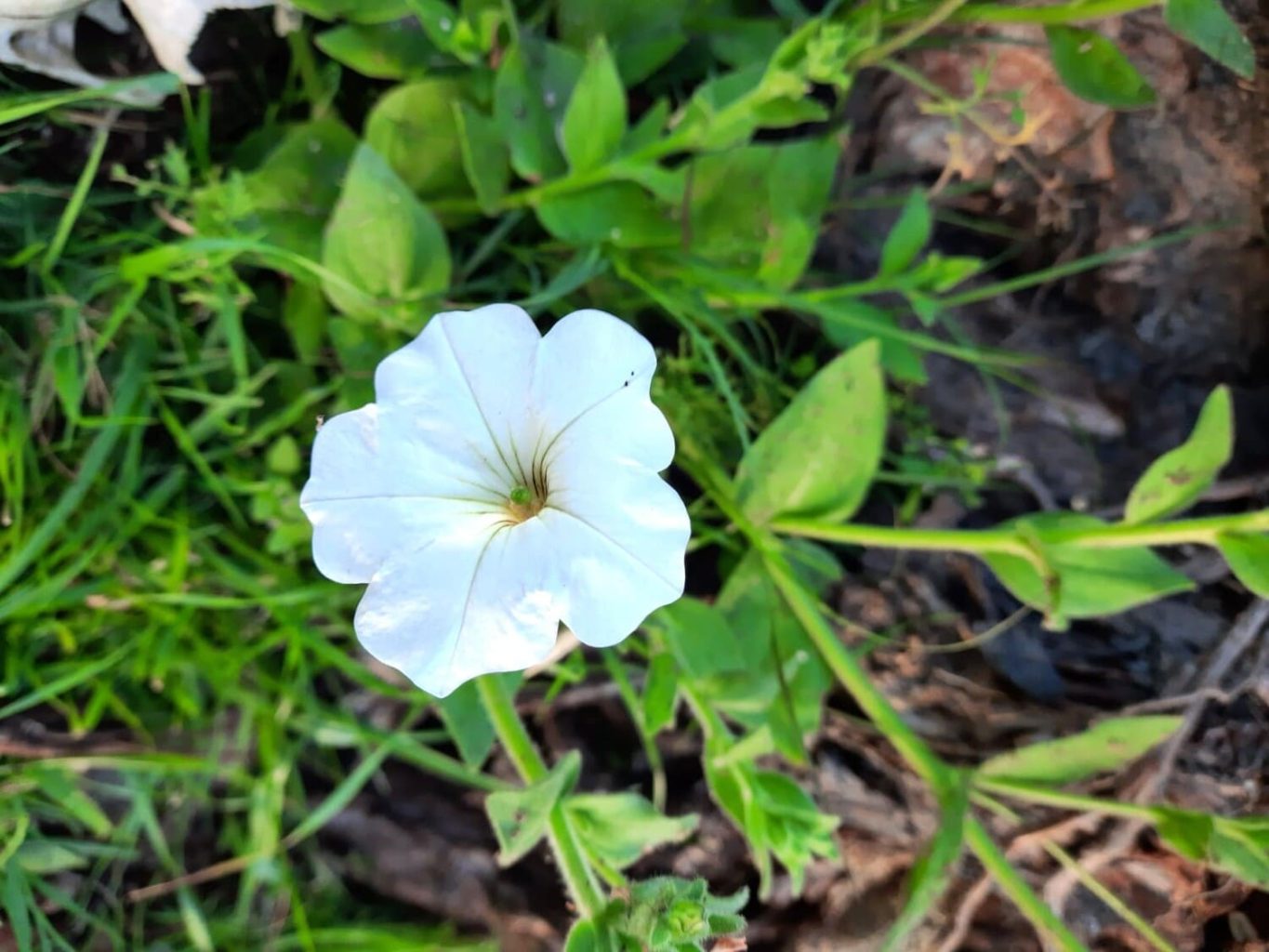
*One of the species analyzed, white petunia (Petunia axillaris), is likely to migrate to the coast of Argentina and Uruguay due to climate change (Photo: Isadora Quintana)
Pampa is a grassland ecosystem, composed mostly of grasses and herbaceous, i.e., small and medium sized plants. It is estimated that only 3% of the biome area is currently protected and at least 50% of the ecosystem global area has been degraded in some way.
In addition to human action, factors such as temperature, solar radiation, and rainfall can affect the biodiversity of these spaces. New research from UFRGS’s Graduate Program in Genetics and Molecular Biology (PPGBM) selected Pampa flora species to understand how territorial distribution can be affected by climate change.
Researcher Isadora Quintana designed the species’ area of occupancy in two future scenarios, based on situations already estimated by the Intergovernmental Panel on Climate Change (IPCC). One is the moderate forecast (CPR 4.5), where the temperature of Earth increases between 2 and 3°C (35.6°F – 37.4°F) to 2100. The other is pessimistic (RCP 8.5), indicating that the concentration of greenhouse gases causes a temperature increase of 4.3ºC in the same period.
In the 2070 maps, climate change harms most plants, which lose habitat in both projections. For six of the eight species studied, the area retraction is accentuated in the pessimistic scenario (RCP 8.5). Two of them, however, suffer the opposite effect: the expansion of the occupation area.
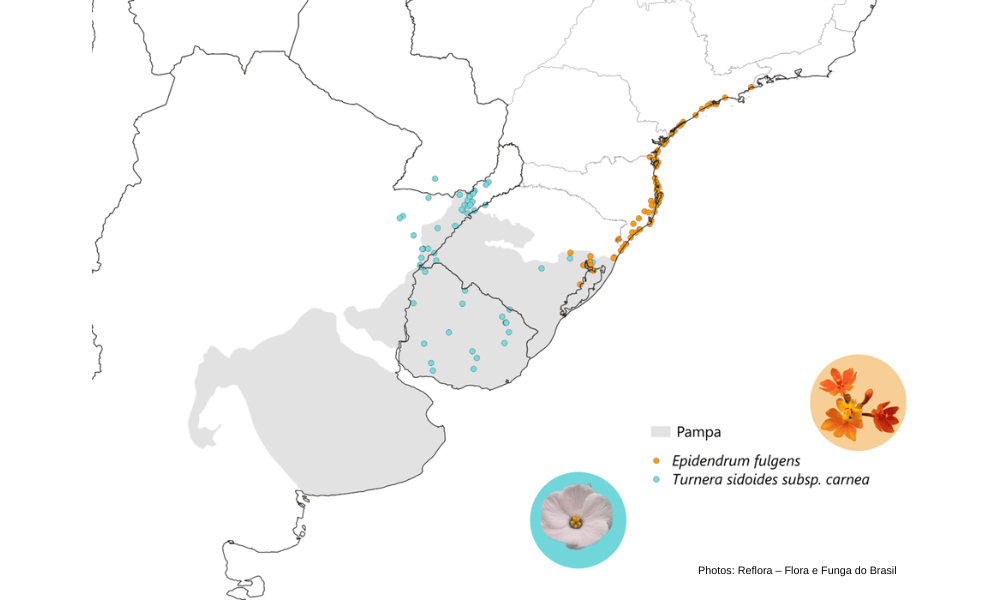
Results show that the beach orchid (Epidendrum fulgens) and Turnera sidoides subspecies carnea would be able to adapt to environmental conditions even in the worst projections, then occupying the center of Rio Grande do Sul and Uruguay, respectively.
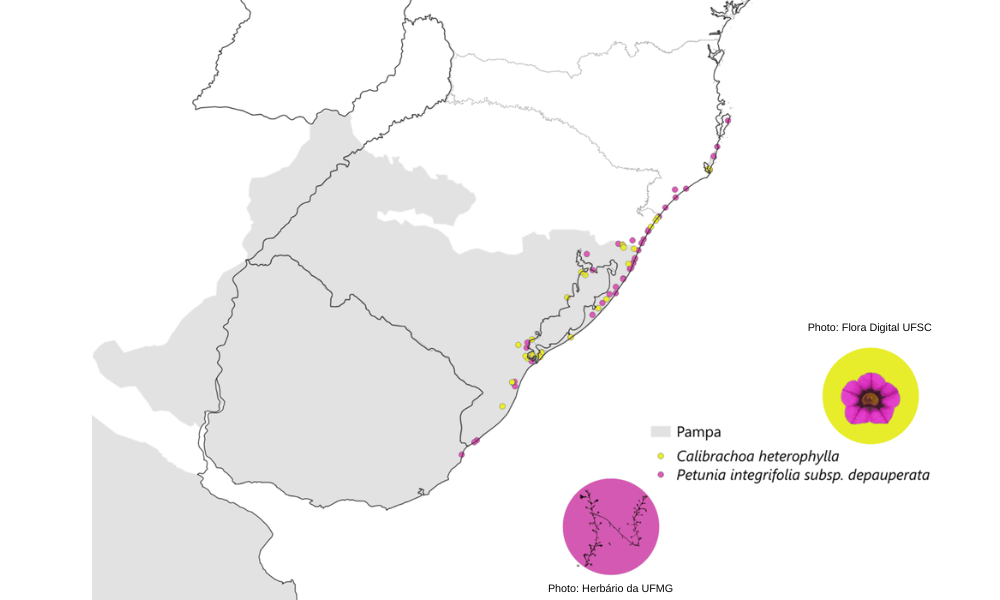
The species Petunia integrifolia subsp. depauperata and Calibrachoa heterophylla, common in the coastal plain of Rio Grande do Sul, will probably suffer habitat fragmentation, splitting into places which are inadequate for their existence.
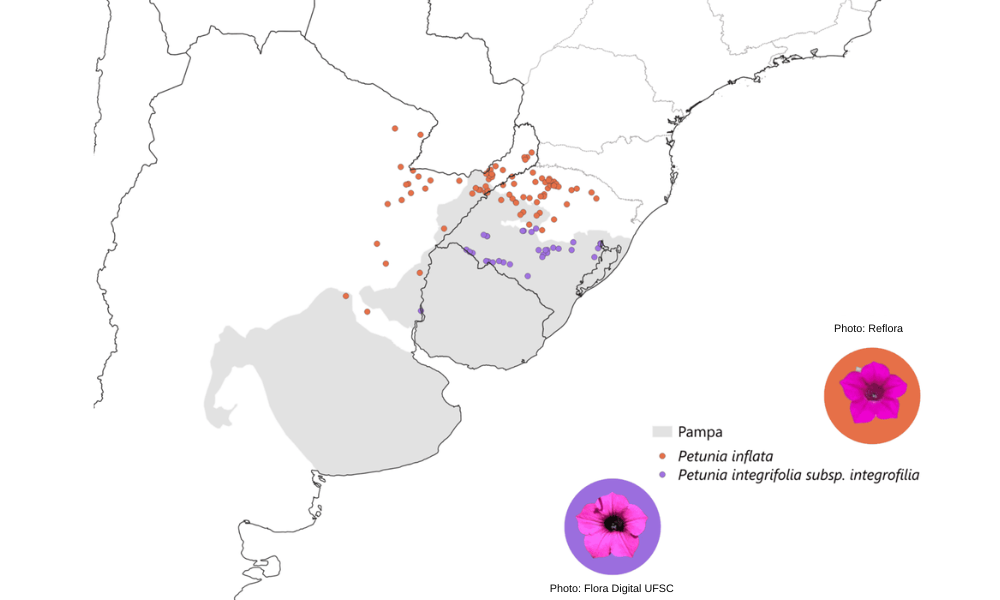
The plants Petunia inflata and petunia-perene (Petunia integrifolia subspecies integrifolia) would find less favorable new regions, but would still be able to migrate to other parts of the Pampa. The first would almost disappear from Brazil, then inhabiting the southwest of the state and Uruguay, while the second species would migrate from the center of Rio Grande do Sul to the north of the State and northeast of Uruguay.
Finally, the white petunia (Petunia axillaris), found in the State of Rio Grande do Sul and in the two countries bordering it, would seek refuge on the coast of neighboring countries, as the areas suitable for the species in Brazil are almost nonexistent. And the Herbertia pulchella plant, found in the southeastern and eastern Uruguay mountain range, would not fail to occupy the spaces which it already inhabits, but would significantly lose the suitability to the habitat.
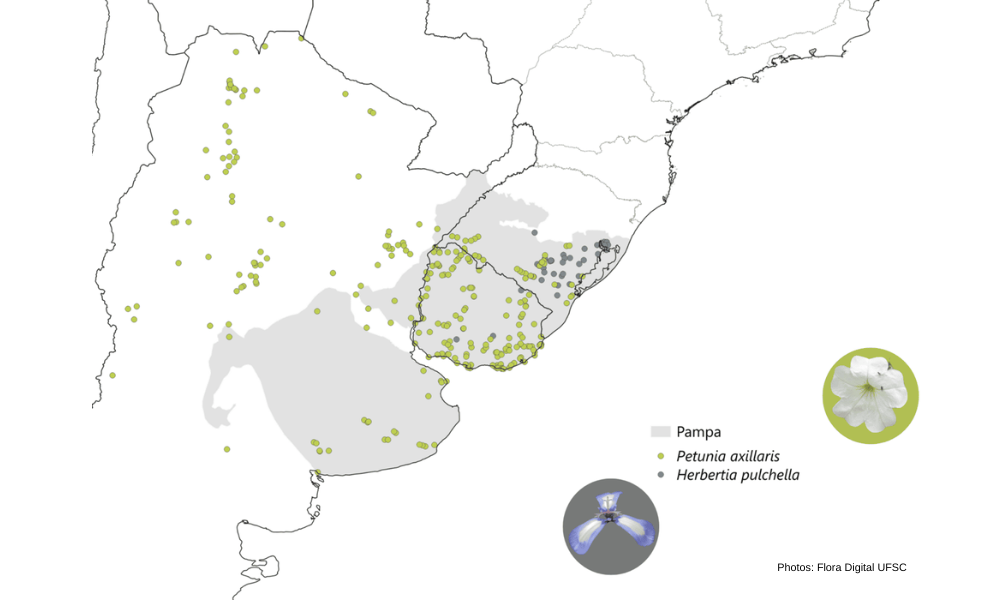
“Even if species can move to a more favorable place, it doesn’t mean that this projected environment on the map is going to be available to them. There could be a city, a desert, a dump or anything there,” Quintana explains. The level of degradation of the environment can also affect the existence of these living beings, and therefore, the site could become unfit by 2070.
The biodiversity of Pampa
In order to understand the influence of climatic conditions on biodiversity the biologist elaborated the second part of the research, investigating the distribution of the same pampa species in past periods. Quintana found that, once again, each species responded differently to environmental changes.
Using the Species Link and Global Biodiversity Information Facility (GBIF) databases, she simulated the occurrences of living beings in three periods: Last Interglacial (about 125,000 years ago); Last Glacial Maximum (about 22,000 years ago); and early Holocene (about 6,000 years ago).
During the Last Interglacial period, conditions were unsuitable for nearly all of the species analyzed. The exception is the white petunia, which managed to adapt to the northwest of Rio Grande do Sul and the Paraguayan Pampa.
During the Last Glacial Maximum, the plant species currently found in the interior of the Pampa and coastal regions (Petunia perennial, P. inflata, H. pulchella) experienced a reduction in their distribution areas. In contrast, the pasture species of the Río de la Plata region, such as the white petunia and T. sidoides subsp. carnea, showed an expansion in their range of occurrence and possibly developed greater adaptability to the habitat conditions of that period.
The environments currently occupied by the analyzed species were only colonized at the beginning of the Holocene. Today, these species have reached their highest level of climatic adaptability.
In addition, research points out that the areas of greater climate stability, that is, that have changed less since the Last Interglacial, are not the spaces with the greatest genetic diversity. Only two species demonstrated to have this proportional relationship: beach orchid and Petunia integrifolia subsp. depauperata, both from the Coastal Plain.
“The climate from the past is not exactly what defines the biodiversity of the Pampa. It is a present factor, but it has other factors related to soil and pollinators that may be the main delimiters of the Pampa biodiversity”
Isadora Quintana
According to the biologist, understanding how the Pampa flora reacted to different climatic periods is essential to anticipate vulnerabilities and see possibilities to resist the new challenges generated by climate change.
As the projections of the past and future indicate different reactions in the 8 species, the solutions developed need to consider the particularities of each living being. Conservation efforts must take into account all levels of biodiversity, from the smallest plant species to the entire biome.
Isadora’s master’s dissertation and spatial distribution maps will be available at UFRGS’s Lume – Digital Repository soon. In the journal Perspectives in Ecology and Conservation, it is possible to access an article published by the author on the diversity of flora in the Campos Sulinos, a region that covers the Pampa and part of the Atlantic Forest.
Translated into English by Wagner da Cunha Donat, undergraduate student enrolled in the course “Supervised Translation Training I (English)” of the Undergraduate Program in Language and Literature, under the supervision and translation revision of Professor Rozane Rebechi (P.h.D.) – IL/UFRGS.
:: Read in portuguese