
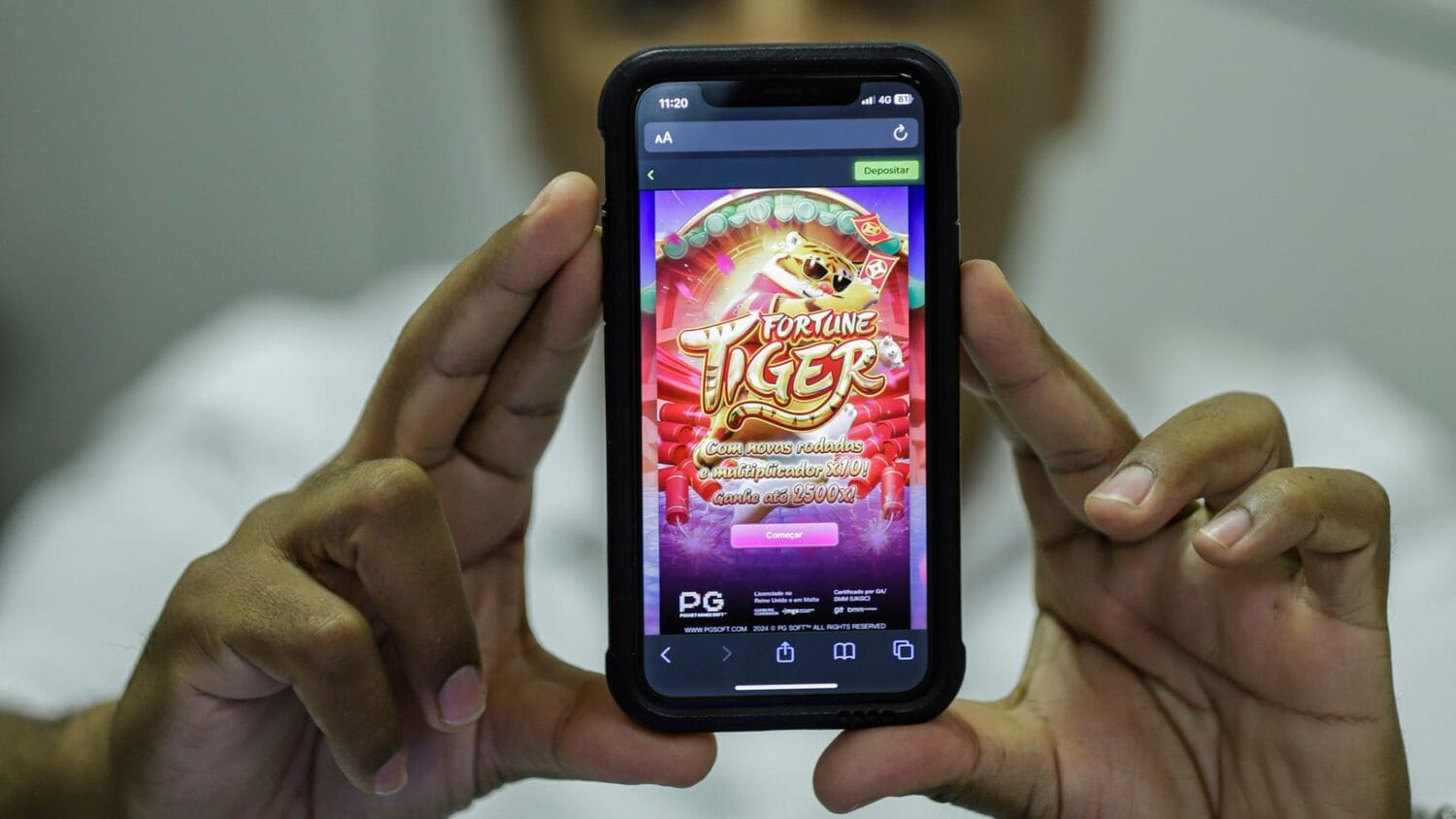
Society | The online environment has made betting a public health matter, while the lack of financial education and the popularization of the idea of “easy success” intensifies this behavior, which can turn into an addiction
*By Amanda Veríssimo
*First published in February 13th, 2025
*Photo: Joédson Alves/Agência Brasil
Have you ever noticed that shopping centers rarely have windows? That’s because, in addition to the stores, the structure of this environment is carefully designed to engage all senses. Lighting is a key part of this process: the lack of windows prevents visitors from noticing the time passing – and consequently they don’t notice when it’s getting dark and that they have already been there for many hours. Besides all that, shopping centers tend to have soft, well-distributed lights, creating a more comfortable environment for customers. The same goes for the carefully chosen sounds and aromas.
Other logistical aspects are also considered such as security, parking, spaces for kids, etc., making this an environment that is not only pleasant, but completely adapted to the customer, evoking in the consumer the peace of mind needed to visit and stay in that space. After all, the longer the person stays there, the more likely they are to consume.
And it’s not just shopping centers that are designed this way, but also many other commercial spaces. Casinos, for example, have similar strategies. They are meticulously designed so that customers spend money over and over again on a single visit, which occasionally leads to addiction.
According to André Queiroz, a professor at the Federal Institute of Education, Science and Technology of Mato Grosso do Sul (Instituto Federal de Educação, Ciência e Tecnologia de Mato Grosso do Sul (IFMS), casinos in the United States historically began with a very different concept from what we know today. Initially, these spaces used to be designed to be claustrophobic and even a little dirty. However, some studies have suggested that the concept should be rethought to create more cozy and luxurious environments which would keep gamblers there for longer.
“The games are mathematically structured so that players lose as time goes by. Although the player may feel like they’re winning, the more they play, the more likely they are to lose.”
André Queiroz
However, despite this effort dedicated to physical spaces, there is an emerging trend in Brazil – especially after the pandemic – which is the popularization of online betting. Considering that the logic for making a profit based on the length of time spent there remains the same, the question is: how do you keep users playing when they do so from their own homes?
Fortune Tiger: neuromarketing and the “tangerine effect”
There are many online casino platforms today, but let’s stick to Fortune Tiger – which perhaps, given its popularity in Brazil, needs no introduction. Developed by the company Pocket Games Soft, based in Valleta, Malta, the game has a simple layout and a childish theme, illustrated mainly by the animation of a tiger holding a card.
Such graphic design recalls childhood and innocence and is one of the tools designed as a gateway to promote game joy and retention, conveying the idea that the game is harmless, and softening the perception that it is a serious form of betting with real financial risks.
In addition to the tiger in the layout, the game is also made up of three independent columns, with three horizontal levels, working by betting on slots, popularly known as “slot machine games”, where the aim is to line up three identical figures. In total, the game has seven figures and each one has different payout percentages. For example, tangerines award 60% of the amount you bet for each combination of three figures, fireworks recover exactly the amount you bet, red envelopes pay 1.6x the amount, and so on. In other words, each combination of identical figures offers specific prizes.In an article published last year, Queiroz and researcher Fábio Mendieta, from the Federal University of Santa Maria (Universidade Federal de Santa Maria (UFSM), identified a phenomenon in which players, in winning rounds, receive audiovisual indications of winnings such as colors, sparkles, sounds and messages, which reinforce the feeling of victory regardless of the outcome. For example, with a line-up of three tangerines, the player only receives 60% of the amount they bet, but the visual stimulation suggests they won. The researchers found out that if the player continues to bet, there is a constant illusion of winning. The victory sign continues to appear, but most of the time the player only recovers the amount invested (with the fireworks combination) or obtains a negative balance, receiving only 60% of the amount initially bet (with the tangerines combination). Other prizes – with real financial returns – happen more sporadically, often after several rounds without a win or with wins from combinations of tangerines or fireworks. So, although some prizes seem to multiply the amount people bet, this significant return only occurs after a sequence of financial losses.
One hypothesis that emerges from the research is that the sounds and color changes that occur in each round of Fortune Tiger can create an atmosphere of prosperity and connect with gamblers’ emotional systems. And this ends up generating cognitive effects and sensations such as excitement, enthusiasm, happiness, and optimism. This finding converges with the theory of psychiatrist Marc Potenza, from Yale School of Medicine, who believes that, from the perspective of neurobiological sciences, games of chance affect neurotransmitters (linked to the nervous system) and numerous brain regions.

Betting on easy success
In an interview given to TV Cultura last year, screenwriter Manuela Dias provoked reflection on the relationship between the new generations and the job market and money. In her speech, she said: “A twenty-year-old is so immersed in the Internet, witnessing influencers earning, I don’t know, 15, 20, 50 thousand to take a picture… How are we going to explain to this person that they need to study for four years (referring to the average length of time to get a university degree), graduate, think about a career plan and start earning… 1,800 reais? How are we going to insert this perspective of time and progress into a world in which nothing else offers them this reference?”.
The answer to this question is complex and won’t be given in this article (just as it wasn’t given by Dias) and perhaps there isn’t even a definitive answer. As Queiroz points out, one consequence of this new reality is that, influenced by examples of easy success shown on social media, “people have been looking for quick ways to make money. Often, the luxury lifestyle of influencers and YouTubers are accompanied by advertisements for games of chance, such as Fortune Tiger, reinforcing the idea that it is possible to achieve financial success without the continuous effort that a traditional job requires”.
For those who are opposed to betting, but are still inevitably exposed to the lifestyle of influencers, there is another betting trend that has proved just as popular and harmful as casinos: sports betting.
Although less seductive when it comes to neuromark eting, as it doesn’t feature a child-like layout or ludicrous visual stimulation in victory, this practice has been gaining momentum in a dangerous way online, especially in Brazil, the land of soccer. This happens because many people, confident in their sports knowledge, end up confusing betting with investing, and become hostages to the euphoria that betting provides, driven by the possibility of winning more after a win or recovering what they have lost after a loss.
In this case, and just like casinos, sports betting can also lead to addiction. However, the nature and mechanisms that determine its results are completely different. Sports betting is directly linked to real events, such as soccer matches, fights or other sports. The odds (probabilities that determine the profit margin) calculated by betting houses are based on analysis and statistics of the event, but the conclusion of the event itself does not depend on an algorithm – the ultimate outcome is determined by the performance of the athletes. The platform will always have a mathematical advantage over the gamblers, but it is the actual event that dictates the outcome.
As for Fortune Tiger, it is the system that controls the odds of winning, and players bet on a “game” whose outcome has been defined in advance by the algorithm regardless of any external factors. Even if some people manage to win, the majority will lose because the odds are programmed to ensure that, over time, the betting house or the game’s creator always comes out on top.
These aspects are important when it comes to measuring the final profit of those who operate these platforms, as there is a much greater variable in the case of sports betting, considering its unpredictability. They are, however, of little relevance when we look at the damage that these different media have caused in the lives of those who suffer from gambling disorder. Regardless of the platform and the type of bet, the symptoms are the same.
Too many losses and not enough gains
For clinical psychologist Maria Paula Magalhães, the path of a gambler begins in an innocent way, often as a joke between friends. “You bet on soccer, you win some money, you get excited and you bet again. Then you lose and want to win it back. So, wanting to get back on the platform to recover is a sign. Starting to think about all the matches, when you’re going to bet, spending part of the day thinking about what you’re going to bet on, hiding from people the fact that you’re betting, getting angry when you can’t play, missing it or betting when you’re a bit depressed to see if it will cheer you up…” she says.
“The result is often to start getting into debt because of betting. But in general, there are several characteristics that can show that there’s something wrong with it”
Maria Paula Magalhães
This cycle of gains and losses can develop into a dangerous addiction as the individual becomes more dedicated to betting. “If the person is having problems, but it’s only a few of them, we’re going to say that they’re a problem player. We’ll say they’re abusing that practice. But when a person has a series of problems that are affecting their studies, their work, their personal life, that’s when ludopathy or gambling disorder is diagnosed,” says Magalhães.According to a survey by the Locomotiva Institute (Instituto Locomotiva), 25 million people in Brazil started to bet on sports on electronic platforms in the first seven months of 2024, an average of 3.5 million per month. The survey also reveals that 86% of players have debts, 64% of which are negative at SERASA (credit platform which identifies and rates people who have unpaid debts). Regarding games of chance, including online betting, a report published in November 2024 in The Lancet Public Health points out that 450 million people worldwide suffer harm related to such activities.
Although there is still debate among experts as to whether sports betting should be classified as games of chance, the report does include them. The document reveals that 15.8% of adults and 26.4% of adolescents who were involved in online betting activities, such as Fortune Tiger, in 2023, had a gambling disorder. For sports betting, the rates of involvement with disorders are 8.9% among adults and 16.3% among adolescents – despite the fact the games are theoretically prohibited to people under 18.
Marcelo Mello, a professor in the Sociology department at the Fluminense Federal University (Universidade Federal Fluminense), points out that by migrating to online platforms, betting has become more accessible and, consequently, more dangerous.
“Gambling is no longer an activity restricted to physical locations, such as casinos or bingos, but it is now available 24 hours a day and within reach of anyone with a phone in their hand. As a result, it has attracted a young audience, who often don’t understand the risks involved”
Marcelo Mello
The sociologist also reflects on the lack of critical education that contributes to many Brazilians becoming addicted to betting. “Many of these gamblers have no knowledge of probability or statistics, but even so they don’t see betting as a risk, but as an investment in which they believe they have technical knowledge,” he analyzes. This creates a false sense of security, leading many to believe that they can control the game – when, in reality, they are losing.
The very belief that this financial application is an investment is, according to Queiroz, problematic. “What happens in these games is not an investment, but a loss of money disguised as an “opportunity”. Unfortunately, many players who bet on games like Fortune Tiger have never invested in safer alternatives, such as securities or investment funds, but still believe they are getting a good deal. This misguided view is linked to a lack of financial education, a deeper problem in Brazilian society”.
Ludopathy can be treated, including via SUS
Ludopathy, a medical condition characterized by compulsive gambling, has been recognized by the World Health Organization (WHO) since 2018, although it is much older than that. In Porto Alegre, the disorder is treated at the Hospital de Clínicas, which is administratively linked to the Ministry of Education (Ministério da Educação (MEC) and, academically, to UFRGS.
As psychiatrist Anne Orgler explains, addictions can be chemical (related to the use of substances), or behavioral (when the patient becomes dependent on behaviors, such as addiction to gambling, shopping, etc). Currently, the hospital already treats patients with these addictions within its program, even though the procedures used are not specific to behavioral disorders. However, the hospital plans to offer this service in a specialized way soon.
The treatment currently offered focuses on addictions in general, such as substance and behavioral addictions. Patients seeking care are usually referred by basic health units, and the hospital adopts a high-intensity approach with individual appointments with psychiatrists supervised by a preceptor. During these appointments, well-known treatment techniques are used, such as motivational interviews and relapse prevention.
Plus, the treatment program includes participation in therapeutic groups, which brings together patients with different types of addiction. According to Orgler, the aim of the therapeutic groups is not only mutual support, but also the use of psychoeducational techniques to help patients understand their disorder.
“There are also groups focused on emotional regulation, since controlling emotions is essential for reducing compulsive behaviors, as well as groups for developing social skills, aiming to reintegrate the patient into society in a healthier way,” explains the psychiatrist. This involves encouraging physical exercise, returning to work and strengthening relationships with family and friends.

Orgler points out that when patients arrive, it is important to identify those at high risk. “Psychotic patients or those at risk of committing suicide or assaulting others require intervention, which may involve calling in their family or guardians, regardless of the patient’s authorization,” she says. In cases where issues like these are not imminent, involving the family in the treatment requires previous authorization. Although many patients initially refuse their family participation, the psychiatrist said that over time, they come to understand the benefits of involving them. In this context, the family also participates in individual consultations and specific therapeutic groups to support treatment.
Place your bets: can the Ministry of Finance (Ministério da Fazenda) manage on its own?
In 2018, fixed-odds betting (where the amount to be earned is known before the bet is placed) on sporting events was legalized in Brazil through Law 13.756/2018. The legislation, however, established one requirement: the regulation of the activity should take place within two years, with the possibility of an extension for the same period.
But that is not what happened. It wasn’t until 2023 that betting began to be effectively regulated in Brazil. That year, the Presidency of the Republic (Presidência da República) sent a Provisional Measure (Medida Provisória (MP) to Congress with the aim of improving the 2018 law. In this context, the Chamber of Deputies and the Federal Senate also included games – such as Fortune Tiger and the like – among legalized betting, which, together with the Provisional Measure, resulted in the creation of Law 14.790/2023.Aragon Dasso Júnior, a professor at UFRGS’ Business School (Escola de Adiministração da UFRGS), recalls that at the beginning of studies on the subject, the situation was far from the current reality. “At the time, Law 14.790 didn’t exist yet, and it seemed to be a debate that was a long way from being resolved. Today we have more than ten ordinances regulating the law, which are necessary administrative acts to make everything more organized,” he says. With this new law, the Ministry of Finance became responsible for this regulation, creating the Secretariat for Prizes and Betting (Secretaria de Prêmios e Apostas (SPA-MF) in 2024, whose mission is to make sure the sector operates in a controlled and regular manner.
An example of a measure implemented concerns the anti-money laundering policy: players now have to identify themselves by presenting documents and through a facial recognition system as proof of life. Also, they are required to register a bank or payment account in their name, and it is forbidden to make deposits from unregistered accounts. The legislation also prevents deposits or prize payments from being made in cash or in a bank slip.
Despite these advances, Dasso says that the regulation of betting must go beyond the work of the Ministry of Finance.
“It’s not just a question of collecting taxes or regulating betting houses. The Ministry of Health (Ministério da Saúde), for example, needs to get involved because gambling addiction is a serious problem and can develop quickly without people realizing it”
Aragon Dasso Júnior
The professor also emphasizes the importance of the participation of the Ministry of Development and Social Assistance, Family and Fight against Hunger (Ministério do Desenvolvimento e Assistência Social, Família e Combate à Fome), since “many people who depend on assistance programs end up getting into debt by spending social benefits [such as Bolsa Familia] on bets”. He believes that even the Ministry of Sports (Ministério dos Esportes) has an important role to play in the issue, due to possible fraud in the sports sector – when a player, for example, fakes an injury in a game in order to get another yellow or red card in the game.
He emphasizes that the impact of this industry is much greater than we imagine. “A large portion of the population has been affected; it’s something that is becoming endemic. It has therefore become not just a matter of regulation, but a concern that involves numerous areas of the government,” he concludes.
Translated into English by Ana Carolina Silveira Almeida, undergraduate student enrolled in the course “Supervised Translation Training I (English)” of the Undergraduate Program in Language and Literature, under the supervision and translation revision of Professor Elizamari R. Becker (P.h.D.) – IL/UFRGS.