
Science | As Data Science consolidates, the use of statistical methods and tools has become a qualification requirement for areas such as Health and Humanities
*First published March 10, 2025
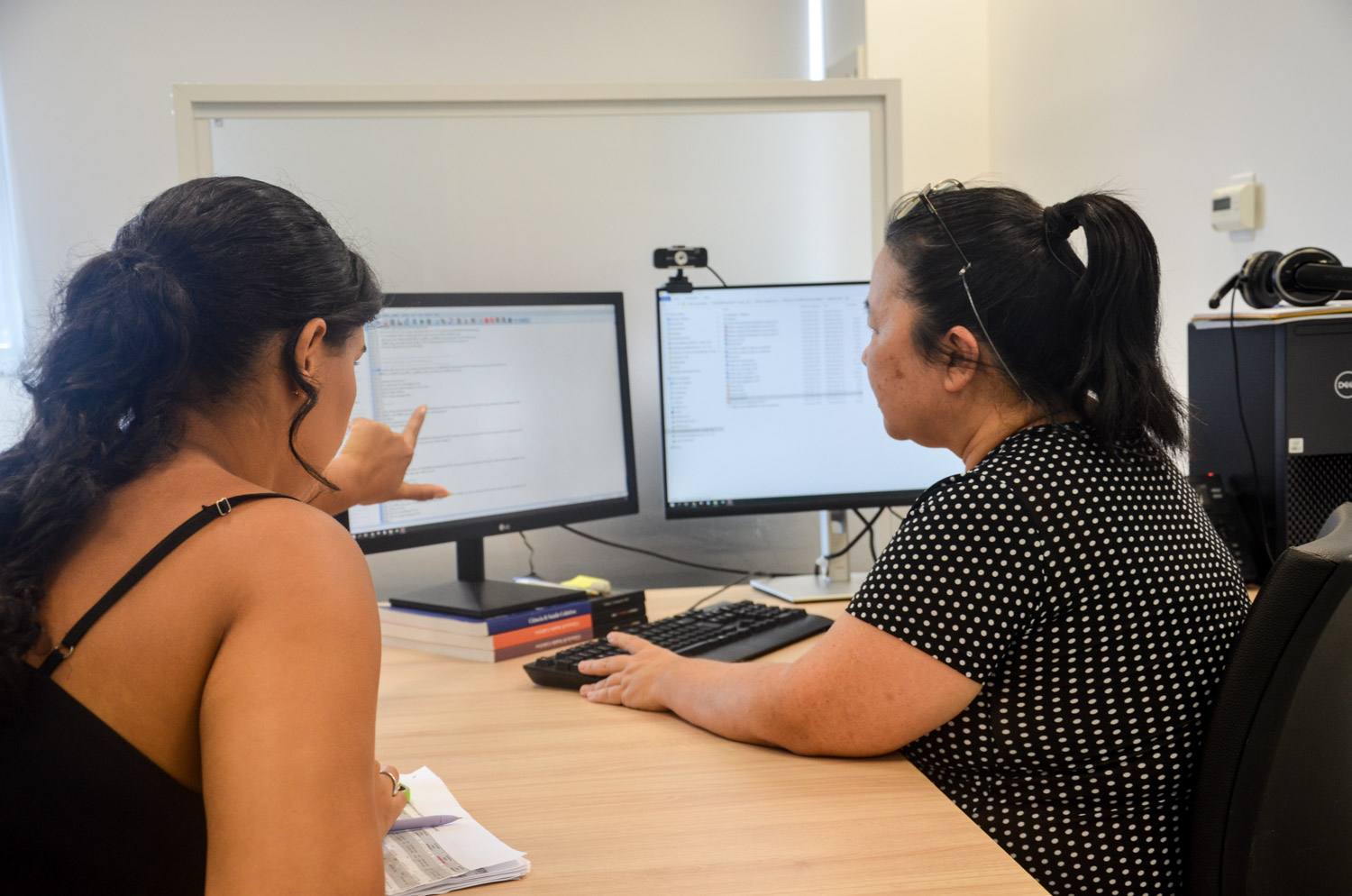
*Photo: PhD student in the Graduate Program in Cardiology and Cardiovascular Sciences from the Federal University of Rio Grande do Sul, Édina Ribeiro (pointing at the screen) has developed a data analysis methodology for her doctoral dissertation with the assistance of Vânia Hirakata from the Biostatistics Unit of the Research Directorate of the Hospital de Clínicas de Porto Alegre (Pietro Scopel/JU)
The production and processing of statistical data is one of the biggest challenges in academic research. Having had an academic training essentially focused on more qualitative methods, Humanities researchers often find themselves at a crossroads when they need to develop an analysis that incorporates quantitative studies. However, as a result of the consolidation of Data Science, the debate on the use of mixed methods has become deeper and changed the requirements for designing and developing any scientific project, especially affecting those who are still unfamiliar with the subject.
The promotion of Data Science has been actively presented as a state policy. The Ministry of Management and Innovation in Public Services defines this science as a multidisciplinary structure in which large datasets are combined to provide more in-depth analyses and solutions to complex problems using computational, statistical, and mathematical techniques, among others.
The Jornal da UFRGS (JU), the news media division at UFRGS, has interviewed two professors who teach quantitative methods and statistics at UFRGS and a professional who provides consulting services to health researchers at the Hospital de Clínicas. Additionally, JU sought to learn more about the experiences of two UFRGS PhD graduates who are currently conducting research focused on Data Science.
Pathways to research training
Holding a PhD in Political Science, Maurício Assumpção Moya, teaches both undergraduate and graduate courses in Quantitative Research Methods at the Institute of Philosophy and Human Sciences of UFRGS (IFCH). He is a faculty member in the Social Science and Public Policy programs, as well as in the Graduate Program in Political Science. According to the professor, students’ lack of skills in using statistics is dependent on the curriculum of each program. He points out that it is important to remember that a person’s difficulty with Maths precedes their undergraduate and graduate training.
Maurício mentions that knowing the basics of languages like R, Python and Pandas allows access to a great number of data sources. However, this access is determined by the user’s knowledge, as the formats and languages used are specific to each area. Likewise, data interpretation depends on the research design and objectives, because the data do not stand for themselves. “Anyone who doesn’t bring a map or a compass, that is, prior knowledge, can easily get lost in the hugeness of the databases,” he emphasizes.
The professor considers that the use of statistics in scientific research is not mandatory, but it is a very powerful and widespread tool. On the other hand, a lack of knowledge can preclude relevant aspects from being addressed.
“There are extremely important issues and events that can only be fully understood by obtaining and then analyzing a massive amount of data after applying appropriate statistical procedures. The development, monitoring, and evaluation of public policies make good examples of such data treatment: vaccination coverage, school dropout rates, school performance, and public safety are areas that can only be fully understood by examining large databases and using statistical analyses.”
Maurício Moya
Professor Suzi Camey, faculty member of the Statistics Department at UFRGS, works primarily with the application and development of statistical methods in Epidemiology. Her class attendees in the Graduate Program in Epidemiology are medical students and others from health-related fields, such as Pharmacy, Physical Education, and Public Health.
Suzi recognizes that in-depth knowledge of data analysis is essential for a career in science. Furthermore, the consultation services and overall support offered by statisticians on research projects can lead to rewarding partnerships.
“The best-case scenario is when a statistician gets involved with a data analysis, ends up becoming part of the group and participating in other research projects.”
Suzi Camey
To improve research qualification, Suzi recommends that every professor and supervisor seek knowledge about data analysis. Teaching qualification would also be a way to optimize training of new researchers focusing on Data Science. She encourages the academic community to look for experts that can provide support for research design. According to her, another interesting initiative would be to expand the availability of Statistics courses to the graduate programs.
Knowing how to seek for help
Maurício Moya highlights that, if a researcher is found lacking a certain knowledge, they can seek help from a statistical consultancy. The professor emphasizes that the outcome depends both on the professionalism and expertise of the consultant and the researcher’s ability to adequately explain and request what they need.
“Contrary to what many people think, good scientific research is a collective effort that relies on human and financial resources, as well as time. In scientific terms, it is not wrong to ask for help, inside or outside the university. There are consultancies and mentoring services offered by university departments or centers – there is no impediment to using them, it is quite the opposite.”
Maurício Moya
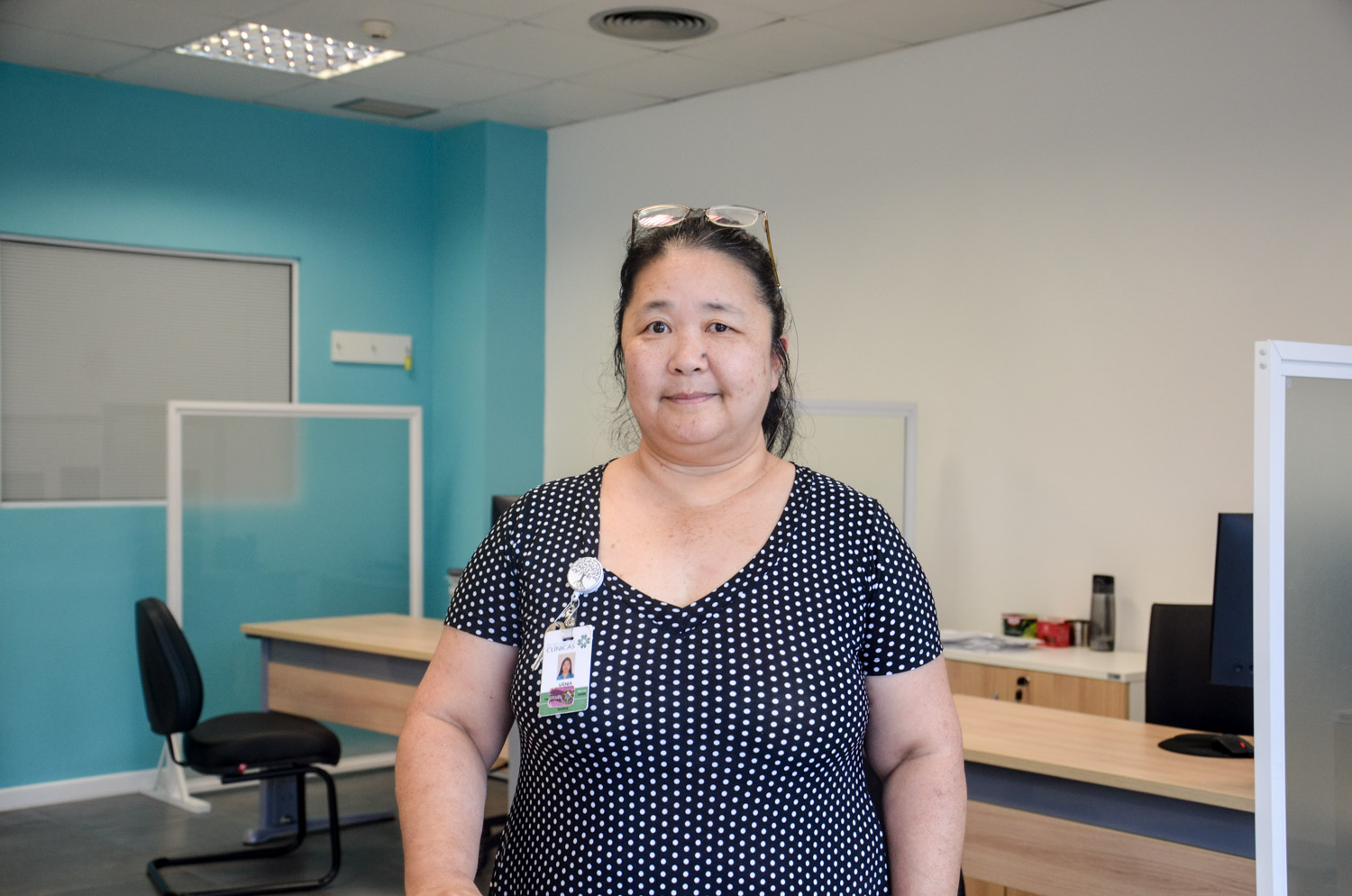
Such collective effort is found in the Biostatistics Unit of the Research Directorate of the Hospital de Clínicas de Porto Alegre (Dipe/HCPA). Since 1989, the sector has been supporting various studies and research projects developed by researchers and partners of HCPA, what includes participating in a wide range of tasks, from the planning of new projects to the publication of the work.
The team consists of three statisticians, two professors of Statistics from UFRGS, and an engineer. The coordinator, Vânia Naomi Hirakata, explains that in-person or remote consultations are pre-scheduled. The target audience is mainly composed of graduate students and residents from the multidisciplinary area who develop their projects at HCPA. With the pursuit of embracing Data Science, she has noticed an increase in demand for the service.
“Our assistance comes in during the planning stage, especially in the sample size calculation, the major Achilles’ heel of research projects.”
Vânia Hirakata
In addition to consulting services, the work of the Biostatistics Unit is linked to ethical issues involving risk management in research projects. This is due to the fact that an adequate calculation must take into account the strictly necessary number of patients involved, a figure which should be defined before data collection. “When students contact us, our role is about making sure grad students understand what is relevant to their area of analysis,” says Vânia.
Aside from the Biostatistics Unit, the Núcleo de Assessoria Estatística (NAE) (Statistical Consulting Center – SCC) aids both graduate students and professors with research projects at UFRGS. As part of the Institute of Mathematics and Statistics, the Center helps determine the best technique and statistical package for the project under study. Furthermore, they assess whether the research instrument (questionnaire, measurement scale, or checklist) aligns with the objectives aimed by the researchers. Also, they provide guidance on sample size, database design, graphical presentation of the research, and writing of the findings.
Research experiences
Moisés Kopper holds a PhD from the Graduate Program in Social Anthropology (PPGAS/UFRGS) and is an assistant professor at the Institute of Development Policy at the University of Antwerp, Belgium, where he heads the InfoCitizen interdisciplinary data laboratory, funded by the European Research Council (ERC).
The project team consists of anthropologists, sociologists, historians, geographers, and specialists in Latin American and African studies. Moreover, they have support of a broad network of external academic collaborators and partnerships with NGOs and data labs. InfoCitizen focuses on new citizenship practices and technologies for the production and circulation of data in Brazil, Portugal, Germany, Tanzania, and Kenya. These countries were chosen considering the local development of model initiatives for capturing data – produced by experts, citizens, and institutions alike.
“We are witnessing the development of new grassroots strategies that challenge official statistics by creating their own tools and numbers, using them to make inequalities visible and condemn exclusions. Several of such strategies seek to mobilize citizens and engage researchers to produce their own population data and thus have more detailed information to make sure rights and public policies are observed.”
Moisés Kopper
For Moisés, Humanities researchers need to understand how data become “real” and part of everyday life, how they intersect with urban issues (space, class, race, gender, sense of belonging) and how experts and citizens reshape their identities through the “lenses” of data. In favor of approaching numbers from a thoroughly critical perspective, the use of qualitative techniques in the InfoCitizen project, such as ethnography, is incorporated with quantitative methods.
The goal is to observe what happens to the data and the people who mobilize them beyond the technopolitical arenas of their production. “Therefore, this means having to ask different questions, such as: for marginalized communities, what does it mean to produce, live, and engage with data that have now turned to be promising in the improvement of their well-being?” she emphasizes.
Jessica Duarte has a PhD in Political Science from the Graduate Program in Political Science (PPGCP/UFRGS) and collaborates with the World Values Survey Brazil (WVSB) – a research project based at UFRGS that makes available data collected over five-year periods. Also, she is a member of the Imakay Research Hub in Brazil. Currently, she lives in Lyon, France, where she works with Professor Olivier Richard in the application of Data Science to two research projects. The first one is a study on conservatism in American politics. The other addresses the United States elections of 2024 and their connection to a kind of prophetic populism marked by the influence of churches.
Considering that Jéssica’s field of study assesses complex aspects, such as beliefs, values, attitudes, and behaviors in political culture, her research requires mastery of Data Science techniques. For that reason, to develop her doctoral dissertation, she needed to deepen her knowledge on methodologies not tackled in the basic statistics training provided by her undergraduate training in Social Sciences. “I attended two courses during my doctoral training, but I actually learned while writing my doctoral dissertation. I watched many YouTube videos on how to use software and also attended courses that taught how to use mathematics and logic behind the methods,” she says.
With the purpose of making quantitative methodologies more accessible, she taught a course at the Fundação Joaquim Nabuco (Joaquim Nabuco Foundation), where she is also a researcher. In it, she sought to provide practical examples to encourage participants to overcome their anxiety.
“I usually compare the research to a dark room and the method to a flashlight. The method helps you see, but it always depends on which way you focus.”
Jéssica Duarte
Where to look for qualification
A few graduate programs offer courses in quantitative methods. Other ones do not provide their own courses, but recommend courses from different programs. There are also universities that offer courses open to the public, mostly during vacation periods. “The best-known course is MQ, usually offered in July by the Federal University of Minas Gerais (UFMG),” recommends Maurício.
The Governo Digital platform offers free online training in statistics, data analysis for decision-making, Python and R programming languages, data visualization related to digital transformation, Power BI for management improvement, storytelling with data, and data governance in digital transformation.
The IFCH of UFRGS offers a mini-course on YouTube about the use of R in social and political research. The course is taught by Professor Bruno Marques Schaefer and organized by Professor Maria Freitas Moritz and is available on the IFCH YouTube channel.
The Biostatistics Unit of the Research Directorate of the Hospital de Clínicas de Porto Alegre (Dipe HCPA) offers in-person and remote courses exclusively for the HCPA staff.
Multiple resources and possibilities
R is a language and environment for statistical computing and graphics, available as free software. It provides a variety of statistical (linear and non-linear modeling, classical statistical tests, time-series analysis, classification, clustering) and graphical techniques.
Python is a programming language widely used in fields such as web development, data analysis, artificial intelligence, and task automation.
PANDAS is a software library written for the Python language for data manipulation and analysis. It offers data structures and operations for manipulating numerical tables and time series.
Bash is a command-line scripting language used in Unix and Linux systems. It allows for the automation of routine tasks and the efficient manipulation of files and directories.
SPSS is a decision support system that includes analytical applications, data mining, text mining, and statistics. It is a proprietary product.
- Book recommendation: the book “Estatística Aplicada às Ciências Sociais,” by Pedro A. Barbetta, is the result of several years of experience teaching statistics in Social Sciences and Humanities programs. Published by Editora da UFSC, it is available in the UFRGS Library System.
Translated into English by Mariana Carletti Rodrigues, undergraduate student enrolled in the course “Supervised Translation Training II (English)” of the Undergraduate Program in Language and Literature, under the supervision and translation revision of Professor Elizamari R. Becker (P.h.D.) – IL/UFRGS.
:: Read in Portuguese
Conhecimento de métodos quantitativos é um diferencial para a formação de pesquisadores