Literature | Tiktok app community that gathers content about books raises sales, but may favor the dismantling of the publishing production chain by directing users to large retailers
*By Samuel Ruiz Anklam
*First published December 15th, 2022
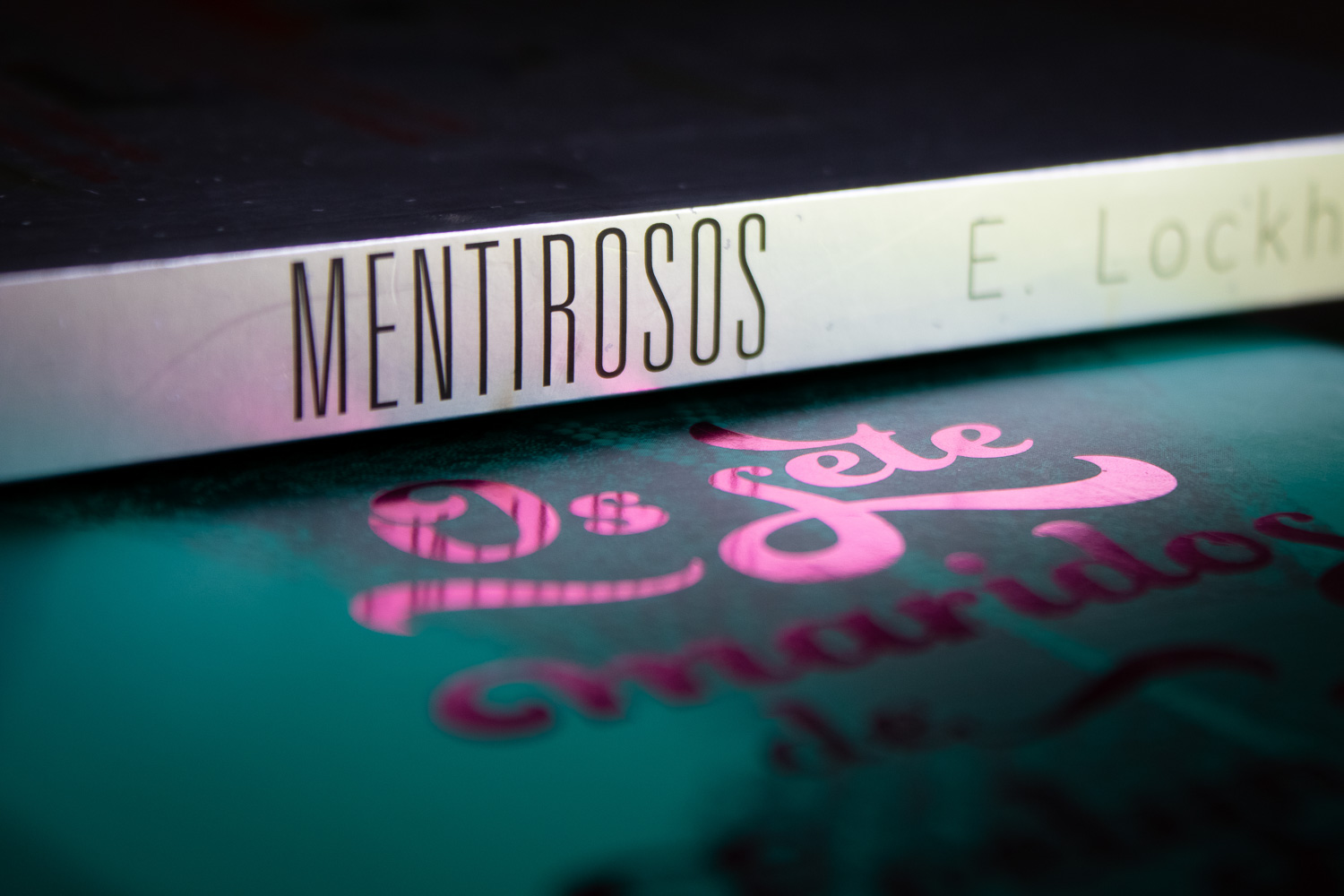
*Photo: Ana Terra Firmino/JU
Booktok, the literary community on the TikTok app, has become a phenomenon, captivating millions of users with its book recommendations, reviews, and engaging content about literature. With over 95 billion views, the hashtag #Booktok has emerged as one of the main pillars of this rapidly growing social media, fueled by an accurate algorithm with short videos and customized content.
Originally launched as Musical.ly, TikTok made its debut in September 2016 in China before expanding to Brazil in 2018. This social media platform gained worldwide popularity during the pandemic, giving rise to numerous communities shaped by algorithms that guide users towards specific “bubbles” based on their interests.
“Booktok Efect”
A sudden increase in sales occurred in mid-2020 for the novel “We Were Liars”, written by the American writer E. Lockhart in 2014. The book made its appearance on bestseller lists in the United States thanks to the hashtag #wewereliars, which gathered videos of people reading the book and recording their reactions. Currently, the hashtag has surpassed the mark of 128 million views on the app.
After the success of the novel, the author published a prequel story called “Family of Liars” in May 2022. In an interview to Forbes, E. Lockhart mentioned that the success of “We Were Liars” on Booktok was crucial for the release of the second book. Other books have also gone viral on the platform years after their initial publication, such as Taylor Reid’s “The Seven Husbands of Evelyn Hugo” published in 2017, and Madeline Miller’s rereading of The Iliad, “The Song of Achilles”, published in 2011. Both books have become major successes within the Booktok community and returned to the bestseller lists years after their release.

Platform Interpersonality and Content Format
The literary community has been striving to occupy digital spaces since the early days of the Internet, through blogs and communities on other social networks services such as Orkut and Facebook. As for visual content, YouTube has always been the main platform for book reviews or in-depth analyses, a trend that continues to this day.
However, TikTok has quickly surpassed other social media in terms of numbers, leading content creators to migrate from other platforms. This is the case for Ana Saraiva (@byanasaraiva), a booktoker from Mossoró, who had been producing content for Instagram and other blogs since 2015 and started creating content for TikTok when the platform gained popularity.
“At the beginning I felt a bit pressured to join Tiktok, because the platform was booming and everyone was there, so I felt compelled to produce content as well. However, today it is the platform I enjoy the most for creating content.”
Ana Saraiva
Despite praising TikTok’s support for content creators, which includes workshops for skill enhancement, Saraiva emphasizes the crucial role of the platform’s algorithm. In blogs and YouTube, users actively search for content, often encountering longer videos or more in-depth texts. In contrast, TikTok’s algorithm, through its “For You Page,” delivers custom-made content according to the user’s interests and preferences. This dynamic model allows users to passively consume content without actively seeking it out, simply watching what the algorithm delivers based on their interests. While the convenience of this approach is appreciated, it raises questions about the level of control the algorithm exerts over users’ consumption habits.
Another important point is how the platform interacts with its users, with fast content that is often more spontaneous and less formal, simulating a conversation with a friend. In addition to reviews and recommendation videos, many booktokers bring more comical contents or trends that have gone viral on the web, such as recording your own reaction while reading the end of a book, as this attracts an audience to your profile and usually results in good views.
Within the app’s literary community there are also several thematic subdivisions. There are those who are more interested in consuming a specific genre, such as fantasy books, horror, romance, LGBTQIA+ works, among others. There are also some who prefer national while others prefer international books, some who prefer classic while others prefer contemporary books. In each case, the algorithm sorts out likes and dislikes and organizes the user’s feed based on each person’s preferences.
The credibility of the referrals is pointed out by Rafaela Cazarré, an undergrad student of Marketing and Advertising at UFRGS who is researching the subject for her undergraduate thesis, as an important factor for Booktok’s success. “It feels like a real person is recommending [the book to] me, as if I were a friend,” said her. Because of the algorithm, the referrals become more and more precise and tend to adapt to the user’s interests. Cazarré exemplifies that she likes to read thriller books, and this is the main topic of the videos that appear in her feed.

The growth of the literary market and the impact of social media
Booktok’s impact on the U.S. literary industry is visible. According to NPD, a company specialized in market data, 2021 was a record year for book sales in the U.S., with 825 million printed works sold, the highest number since the survey began in 2004. The company also points out that genres such as fiction and romance have been heavily impacted by TikTok.
The impact is also seen in Brazil, where the scenario is similar. Book sales in the country in 2021 grew 33% compared to 2020, according to data released by the National Book Publishers Union (SNEL). A survey conducted at the last International Book Biennial of São Paulo pointed out the growth of the influence of social media, such as TikTok, in the interest for literary works – it is no wonder that the hashtag #BooktokBrasil has over 10 billion views.
On Amazon, the world’s leading e-commerce store today, books are tagged with a “TikTok Success” label, indicating that the work is already reviewed on the app. With this, buyers can be directed to the platform to consume content about the book before buying it, or they may even have reached Amazon directly guided by TikTok as well, as booktokers often advertise Amazon promotions and receive a “commission” from the company.
Elis Amancio, a journalist specialized in digital communication and social media, believes that the publishing market is in the “eye of the storm” and that publishers cannot fall back on the practices used before the pandemic, especially when it comes to releasing and promoting new books. The journalist, who is studying TikTok for her master’s research at the Federal Center for Technological Education of Minas Gerais (CEFET-MG), defines that those who work in the publishing market need to understand generational changes and observe the digital market closely.
Despite Booktok’s positive impact on the literary community, it is necessary to appraise its consequences. If a platform has such an influence on the consumption of its users – even more so with the direct links between content creators and the largest virtual retail store on the planet – it may be difficult to find space in the market for books that are not very popular on the internet, particularly domestic literature.
The dismantling of the production chain of the literary market is also among the concerns of those who research the publishing market. With the entry of big techs into the market, it is difficult to compete and sustain bookstores when the user can buy online for a lower price. “The role of the bookseller is historically very important. Bookstore owners know everything about their collections, being able to talk about each-and-every book. This expertise is becoming no longer in alignment with current industry trends,” notes Amancio.
For the researcher, this consumer relationship with online retail weakens the publishing market, as bookstores cannot compete, especially against Amazon – a company that can operate at a deficit, as long as it guarantees an advantage in agreements with publishers and in its position in the competitive market. Thus, the literary market has reached a stalemate between the tempting agreements with large companies and the resumption of a productive chain that is sustainable in the long term. Given this scenario, she reinforces the importance of supporting local commerce. “It is important to be aware of the publishing ecosystem, to understand that there are several professionals involved, such as authors, editors, proofreaders, layout designers, among many others. We should not forget these roles,” she concludes.
Translated into English by Pedro Henrique Marques Sieburger, undergraduate student enrolled in the course “Supervised Translation Training I (English)” of the Undergraduate Program in Language and Literature, under the supervision and translation revision of Professor Elizamari R. Becker (P.h.D.) – IL/UFRGS.