
Ecology | Researcher uses subjective self-ethnographical reports to address ways to preserve ecosystems through resources in artisanry
*By Alexandre Briozo Gomes Filho
*First published April 20, 2023
*Image: Personal Archive
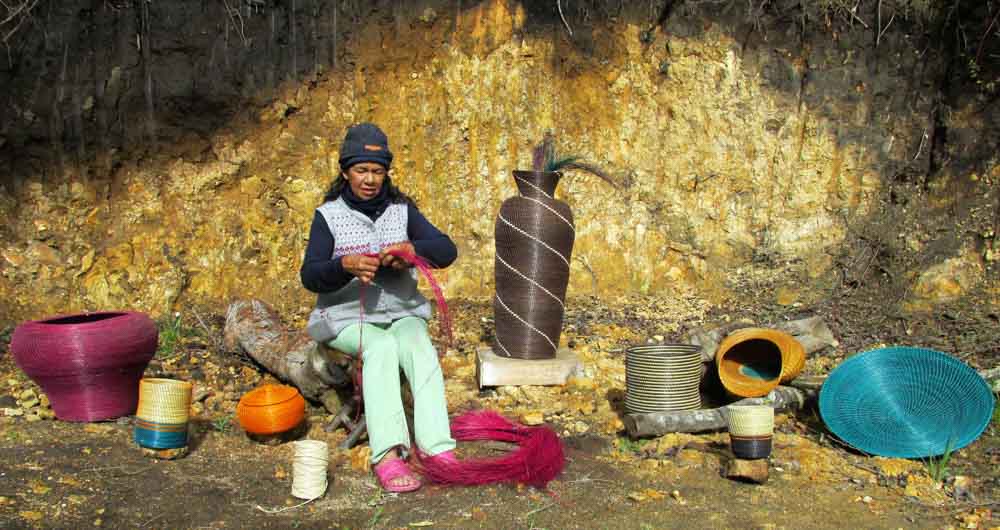
Academic research has standards that aim at objectivity and impersonality to preserve impartiality within a study. Going against these standards, but still managing to be impartial, a study from the Postgraduate Program of Rural Development from UFRGS explored the decolonial art of peasant female artisans from the High Andean municipality of Tibaná in Boyacá, Colombia. The study stemmed from shared experiences between the researcher and her interviewees. It also sought to discuss the self-recognition of these women as peasants.
The agroecologist Jeidi Galeano used her peasant ancestry to build, through a (self) and visual ethnography study, analyses about the intersectionality of race, gender, class, and origin, valuing the thoughts/feelings/actions/experiences of a whole community of female peasant artisans and their importance in the preservation of local ecosystems.
Galeano places these analyses in the intersection between two worlds apart: the pluriversal – the place in which the peasant world is immersed in – characterized by interactions between humans and non-humans (such as mountains, rivers, animals, plants); and the universal, where the predominant social systems – such as capitalism and patriarchy – devalue the pluriversal world’s relations.
The agroecologist says these two worlds are in constant interaction and have a huge impact on the High Andean artisanal reality. “Depending on the subjects, it is possible to establish relations that oppress and that subordinate, but also relations of opportunity, of being and doing different, of reflecting and criticizing,” she explains.
Through the pluriversal world’s perspective, and the adoption ofnterdisciplinary and transdisciplinary methods, Galeano establishes that it is possible to preserve an ecosystem of ancestral origin – a way to conserve nature through artisanry, biodiverse agriculture and small-scale livestock. “The prevailing perspective is that the preservation of ecosystems can only happen if people are removed from these places,” Galeano points out. Defending the opposite view, she goes deep into the relationship peasant artisan women have with the world around them and unveils the positive impact it has to nature preservation.
From San Luis to the Academy
The trigger to Galeano’s research on peasant women may be found in her childhood, in the middle of the Andean Forest in Cundinamarca, alongside her maternal grandmother in a farmlet called San Luis. Her grandmother’s knowledge about planting, cultivating, and harvesting was passed on from mother to daughter and grandmother to granddaughter. Surrounded by the world of ornamental, aromatic, medicinal and spice plants at an early age, the agroecologist found in research a way to produce scientific knowledge from the subjectivity of self-ethnographic reports. “The building of knowledge in context – which requires valuing both subjectivity and ways of living that don’t correspond to the venues of the capitalist world – is not only important but also necessary,” says Galeano.
“Within the decolonial feminist perspectives born in Latin America – from these mixed, indigenous and black women – it is said that true scientific knowledge is the one rooted in subjectivity, and not so much in objectivity.”
Jeidi Galeano
In the beginning of her research, still during the Covid pandemic, Galeano used socioecology as a premise, but felt that something was missing. She figured out what it was later, when she got in touch with decolonial studies and Brazilian feminist authors, such as Conceição Evaristo and Djamila Ribeiro. From there, the researcher became familiar with concepts that address social relationships and aspects of identity, such as intersectionality studies. She also delved into the identities of a community of peasant artisan women whose existences are permeated by matters of race, class, gender, and origin.
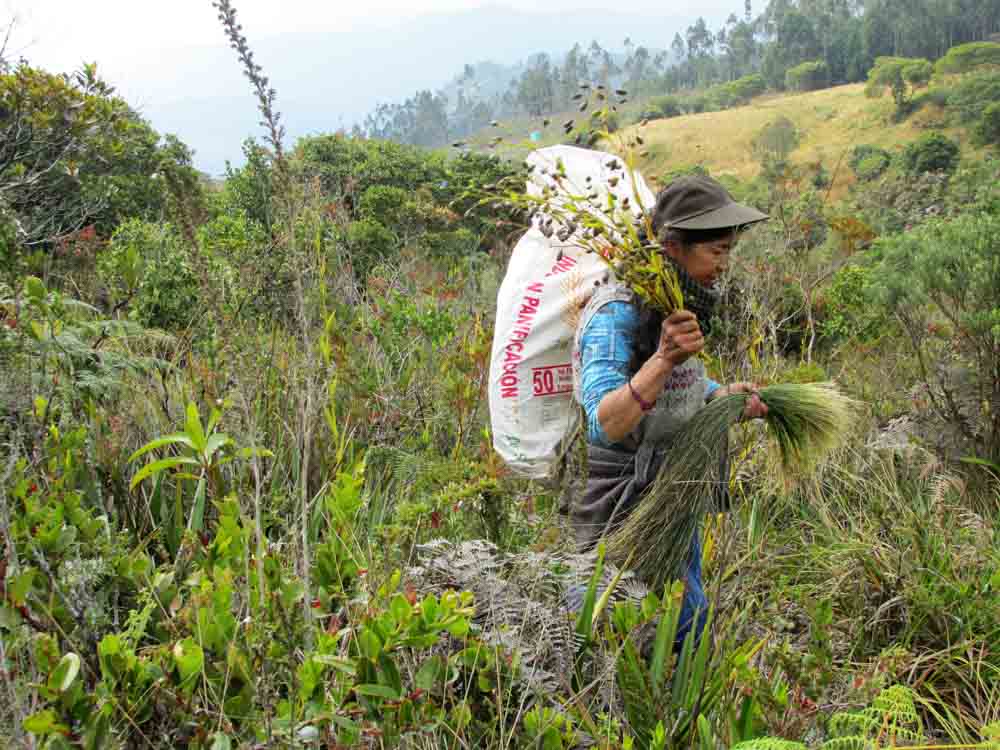
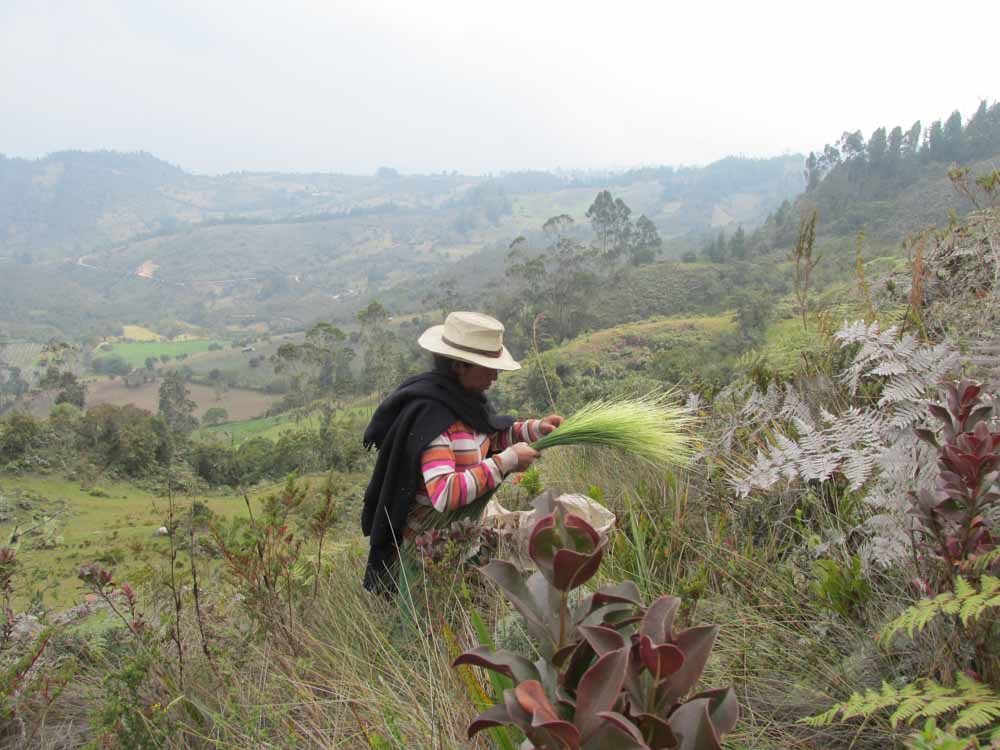
During her field research, Galeano lived with peasant artisans in the vicinity of Andean Forest and Páramo ecosystems – the latter being important to Colombia because of water production. She followed closely their day-to-day routine of their homes: how they take care of their children and husband; how they care for the animals they raise for livestock; cultivate and harvest their crops and collection of natural elements used in artisanry.
“Because of my peasant origin, it was easy for me to adapt to this routine,” says Galeano about the time registered in photos, videos, and field diaries. During this immersive experience, she started to see how deeply peasant women – including herself – are marked by categories of race, gender, and class.
Because Galeano lived between Curitiba and Porto Alegre for 8 years while taking her master’s in Plant Production and doctorate in Rural Development, her perception of her own race suddenly changed. Self-recognized as a peasant in Colombia, she discovered to be black in Brazil. This discovery sent Galeano after studies that would help her self-discovery and placement in the social scientific world from a critical perspective.
“Figuring out I am black helped me understand the awkward situations I had experienced at college, and even on the streets or in marketplaces, where I sometimes used to be mistreated or even chased by security guards,” she points out. Understanding her experience and other studies on the subject, the agroecologist realized that race and class are the bases for the other social categories from colonialism that permeate the whole society, especially in Latin America.
A wave to fellow researchers
Looking to future research, Galeano intends to stay on the same path, valuing biodiversity preservation through artisanry. Her goal is to take to traditional communities in Colombia the concepts she learned in Brazil with her scientific, academic and extramural work focused on socio-biodiversity and biodiversity preservation through use.
To fellow researchers, Galeano suggests giving up disciplinarity and making more use of transdisciplinarity and interdisciplinarity to build knowledge with the aid of people who had never been in the academy, such as quilombola, indigenous and peasant communities.
Translated into English by Luísa de Figueiredo Dias, undergraduate student enrolled in the course “Supervised Translation Training I (English)” of the Undergraduate Program in Language and Literature, under the supervision and translation revision of Professor Elizamari R. Becker (P.h.D.) – IL/UFRGS.