
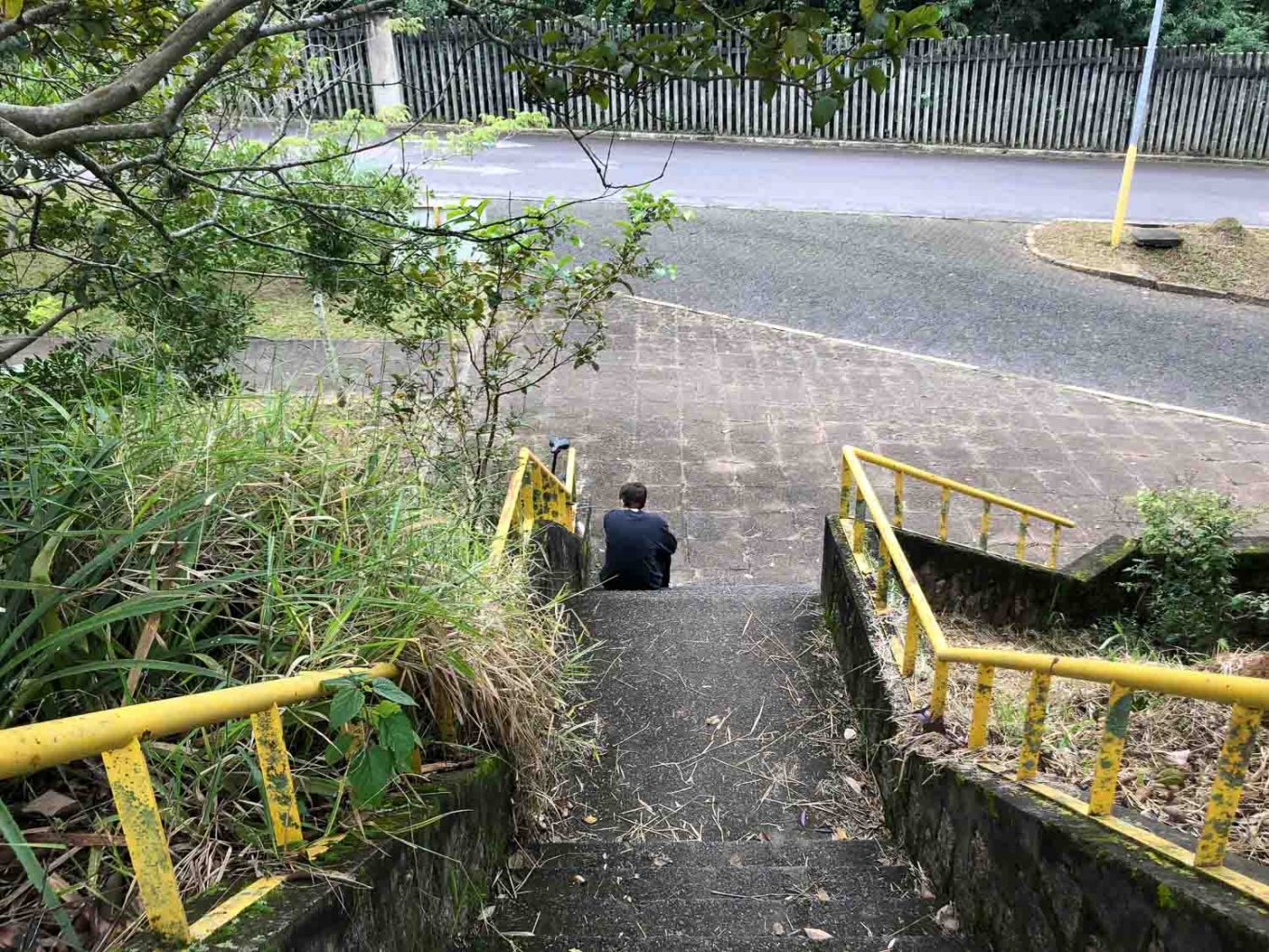
Health | Enrolling in a university usually coincides with adjusting to adult life, while often being away from family and facing economic struggles. Specialists emphasize the urgency of discussing students’ mental health
*By Elstor Hanzen
*First published January 19, 2023
*Photo: Flávio Dutra/07 Jul. JU Archive. 2022
Mental health is influenced by individual factors and collective living conditions. Self-acceptance, level of optimism and problem-solving strategies are personal aspects. Income inequality, interpersonal relations, access to jobs and availability of health care services are social conditions related to mental health. On the part of students, enrolling in a university also involves changes related to the beginning of adult life, the need to take an active stance towards learning, and the mismatch between personal expectations and the reality of higher education programs and the job market. Many students must move to a new city to continue their education, leaving friends and family behind, and need to build a new relationship network. In addition, many students enrolled in universities through affirmative action, bringing the overall profile of university students closer to Brazil’s sociodemographic profile.
Among Brazilians, the occurrence of depression and anxiety has grown: in 2020 alone, depression and anxiety cases had an increase of around 25%, according to the World Health Organization (WHO). Suicide is still one of the leading causes of death worldwide, according to the Suicide worldwide in 2019 report published by the WHO in June 2021. More people die each year by suicide than from HIV, malaria, breast cancer or in wars or homicides. According to the report, among young people aged 15-29, suicide was the fourth cause of death after traffic collisions, tuberculosis and interpersonal violence.
At the University, this also causes concern. According to undisclosed data from a study carried out by UFRGS’s extension program, Education and Mental Health Movement (Medusa), of over 200 students interviewed, more than 10% mentioned suicidal ideation. To the professor of the Department of Social and Institutional Psychology and coordinator of the study, Moises Romanini, this is concerning.
“We need to prepare, as a University, to calmly help these students, hearing them out on their sufferings and suicidal thoughts, seeking to find them the best treatment in cooperation with the health care system”
Moises Romanini
The pandemic significantly worsened mental health disorders among the general population and university students, and institutions have searched for alternatives to solve this issue. According to research by the Medusa project, between March 2020 and December 2021 approximately 40 support activities, including meetings, planning, circle discussions, lectures, and collective and individual hearings were done at UFRGS. From January to December 2022, on the other hand, over 80 activities demanded by the academic community were carried out.
“Many students mentioned feeling insecure in relation to their future and education, as well as an intense fear of being infected with COVID, recurring sadness and anxiety, and a lack of motivation. They also mentioned difficulties to adapt to distance education, the intensification of family conflicts, earning less money, and mourning the loss of loved ones,” says Thais Ferrugem Sarmento, a psychologist of the Division for Promoting Students’ Health of the Pró-reitoria de Assuntos Estudantis (PRAE), UFRGS’ office for providing social, psychological and financial support to students. According to her, when students returned to face-to-face classes, they were usually concerned with the costs and time spent commuting, with negative consequences of interacting with other people, and with the stressful tests and demands of face-to-face education.
“Fear is a first step into courage”
These questions are part of the reality of several university students from different programs and age groups, who face depression, anxiety, exhaustion and suicidal ideation. Born in the state of Minas Gerais, 29-year-old Jonas Rocha moved to Porto Alegre, in the state of Rio Grande do Sul, to study Dentistry at UFRGS. In addition to adapting and building new relationships while being away from family and in another state, he had to overcome challenges that are way beyond the reality of most Dentistry students, such as making money to survive and afford study materials. Enrolled through UFRGS’ racial quota policy and coming from a poor family, Rocha was able to get a scholarship to work in a library in his free time, also working in the application of examinations for civil service jobs and vestibular, in addition to weekend “gigs” in children’s parties, where he received 80 reais (approx. 17 USD) for six hours of work.
He describes feeling exhausted when returning home to UFRGS’s Students’ House, where he lived in the beginning of his studies. Left with no strength or willpower to study, he started drinking alcohol heavily.
“The things that matter the most to me are all outside the classroom, because it’s not just an academic life I have to live, I need to survive and pay my bills. My relatives are very poor, and even with the little money I make, I’m still able to send a small part of it to them”
Jonas da Rocha
To top it all off, Rocha had to deal with the comments of other students, such as: “Jonas doesn’t look like a Dentistry student.” In a university program where many students are the children of dental surgeons and have good socioeconomic living conditions, Rocha understands that comparisons are hard to avoid. “Maybe I’m not the Dentistry type, as they say. I’m glad I’m not, and nowadays I’m proud of it. It’s like you need to appear to be something rather than just being it. And, to have this appearance, you need a lot of money, conditions and even to be white. If this is the logic behind it all, I’m out,” he reflects.
This reality led him to become depressed and consider quitting everything. He received support and mental health guidance from PRAE to face this situation. Today he has overcome despair and is in control of his depression, being nine months away from becoming a dental surgeon. Rocha concludes that he sees a spark in his future and quotes playwright Grace Passô, whose art helped him reach his current state: “Fear is the eve of courage.”
Over 80% of students experience emotional distress
The initial stage of college life is complicated, and a series of risk factors can make students vulnerable during it. Specialists mention the transition to a distinct cultural environment, financial difficulties and varied prejudices as some of these factors. Throughout and in the final stages of a university program, students are pressured to present studies and reports, graduate within the established limit and enter the job market.
A study carried out by Andifes in 2018 on the socioeconomic profile of undergraduate students from federal universities described their emotional distress and suicidal thoughts. Of 424 thousand participants, 83.5% declared having some sort of emotional distress, 63.6% reported experiencing anxiety and 10.8% said they had suicidal thoughts. “23.7% of them mention struggling with their studies due to psychological or emotional distress, with a significant number of these participants being indigenous people living in reservations and disabled people,” Moises Romanini adds.
Ericson da Silva Sanceverino, 28, had an anxiety attack during the presentation of a report in a course in the Geography undergraduate program, which took place even before the pandemic. Because of that, he was not able to finish his presentation and failed the course. “This made me feel really bad; I was ashamed and thought I wouldn’t be able to do that course again or even graduate,” he recalls. At the time, he talked to a friend who had similar problems and was able to help him. “From that moment on, I started to see how important it is to talk about these issues instead of hiding them,” he says. In the following semester, he retook the course and passed with an A. “Which is something I see nowadays as a personal example of overcoming problems,” he adds.
In the second semester of 2022, Sanceverino graduated and obtained his licentiate degree in Geography, and is now enrolled in the 5th semester of the bachelor’s program. Despite having a degree and studying to obtain another, he was not able to enter the job market. “Currently, my main difficulty is financial, since I’m no longer a recipient of PRAE’S financial support due to my graduation in the last semester. Thus, I can’t take too many courses,” reports Sanceverino, who lives in Porto Alegre. Another challenging issue, according to him, was returning to face-to-face classes.
“I feel like I have a harder time focusing on classes, feeling anxious. I sought, during the pandemic, the psychological support offered by PRAE, receiving financial aid to go to therapy sessions, and that helped me a lot with regard to my mental health”
Ericson da Silva Sanceverino
To UFRGS’ psychiatrist and PhD in Psychiatry and Behavioral Sciences Tamires Bastos, it is important that students with symptoms of emotional disorders seek the help of a professional capable of hearing them out with empathy, and also communicate their need of support to trusted persons. “We shouldn’t dwell in comparisons of academic performance either: we all know our own lives; what we see in others are only appearances after all. Life is hard, but it gets better as we learn to deal with it,” she observes.
Considering a collective context, she stresses that the mental health of young people is an urgent subject, because most potentially chronic mental disorders occur in this age group.
“Deeper changes than awareness campaigns are necessary, however, and they need to integrate public policies, adequate financing and quality education, and listen to people who live with mental disorders. The least we can do is to elect leaders who are dedicated to connecting these elements and, it’s never too much to ask, taking care of the planet.”
Tamires Bastos

We need to talk (responsibly) about suicide
Suicide is still a taboo in society, and there are many doubts as to how to approach it adequately, even among health professionals and media. To journalists, the WHO has recommendations to be followed in order to safely discuss suicide. The organization recommends that the press publishes guidelines on risk factors and warning signs related to suicidal behavior, support strategies to deal with suffering, how and where to find help, among others.
The media usually follow the technical and ethical guidelines of health organizations when approaching the subject of suicide. “However, it is still a taboo, and discussions about suicide aren’t always carried out in a careful and responsible way that also encourages prevention,” considers Kelly Vedana, faculty of the University of São Paulo and coordinator of its Center for Education in Prevention and Postvention of Suicide.
In a study published in 2021, Vedana and other researchers from USP analyzed how appropriate Brazilian news regarding suicide were in relation to the recommendations of the WHO. The scientists observed that the recommendations were partially followed: although most articles avoided having undesirable elements, most of them also did not approach the desirable aspects.
Vedana emphasizes the importance of avoiding simplistic and sensationalist approaches that expose the victim or their relative and describe methods, place of occurrence, images or suicide letters. Information that promotes guilt, judging, stereotypes or the view of suicide as commonplace must also not be published. Furthermore, expressions that regard suicide as a “successful” act are also not recommended.
“The media have a great potential for contributing to suicide prevention actions and also need to communicate carefully to avoid stigmatizing the subject, disseminating pro-suicide content, and even causing a contagion effect.”
Kelly Vedana
Always responsibly, suicide must be mentioned, considered carefully and demystified. Naming personal feelings, reflecting before acting and doing regular physical activity are actions that helped A. B., 24, who studies Archival Science at UFRGS. From the city of Três Coroas, she moved to Porto Alegre to escape from family conflicts and to study. “Between 2017 and 2018, I lived in a kitchenette on the 11th floor. I was in a terrible relationship, maybe a reflection of everything that was ‘normal’ in my childhood. I was emotionally dependent and accepted everything, letting people mistreat me. Because of all of this, I really wanted to kill myself. On the day I was certain, I sent PRAE an email asking for help,” she reports.
A consultation was scheduled for the following day. Soon after that, she started exercising and practicing weightlifting. “I, who never had any goals or motivation to wake up in the morning, started having them. I even began competing in sports,” she says, proudly.
Now she attends four courses, works in an internship, studies, trains and goes to psychological counseling sessions. “It’s very weird to see that you can get out of limbo and overcome your disgrace, that you can get better. I can’t say yet that I’m happy and my life is good, but I believe everything is a process,” she concludes.
Same consequences, different causes
The causes for the stress experienced by medical students might be on a different level than those of students from other programs, but symptoms of depression and anxiety and suicidal ideation are common consequences. While social factors such as unemployment and lack of financial resources to live an academic life are major concerns for students from other programs, unemployment isn’t among the fears of medical students. This finding is highlighted by the doctoral thesis “Avaliação da saúde mental dos estudantes de medicina e sua percepção quanto à formação médica ao longo da graduação: um estudo com metodologia mista” by Tamires Bastos, which was the subject of an article published on JU Science in December.
“There are limitations to what we’re able to extrapolate to the other students, who must face different and peculiar stressors in each university program and professional perspective,” says Bastos. On the other hand, according to her, the qualitative phase of the thesis reveals several difficulties that can be common to many university students: adapting to an adult life away from family, experiencing financial difficulties, being overloaded with subjects to study and tests to take. Others might be common among programs in the field of health. “There is, however, an important part of what [medical] students perceive as relevant for remaining healthy that is related to the high competitiveness and conflicting expectations created around the medical profession,” she says.
Among medical students, the quantitative phase of the thesis showed alarming prevalences of symptoms of anxiety (52.1%), depression (49.5%), moderate or high risk of alcohol abuse (57.2%) and suicidality (46.1% seriously considered suicide their whole lives, 11.5% in the last month, and 6% attempted suicide previously). Bastos’ analyses pointed out that variables such as being female, LGBTQ+, having more intense symptoms of depression and worse family relationships are associated with a higher chance of needing mental health treatment. “However, due to the methodology we used, we could not make cause and effect inferences, only hypotheses,” she observes.
Torsion of senses with the pandemic
Based on the contributions of Portuguese philosopher João Pedro Cachopo in his book A torção dos sentidos (translated freely, “The torsion of senses”), Moises Romanini considers it relevant that we understand the torsion of senses with the impact of the pandemic. “This torsion involves neither the way we understand ourselves in the world nor the consideration of the virus as an existentialist metaphor that questions our identities and what we are becoming with the pandemic. Rather, it implies the twisting of the way we imagine ourselves as close or distant in relation to the things and people that surround us,” Romanini explains. According to Cachopo, this stems from a shared feeling: on the one hand, “we feel more distant from those close to us; on the other, we feel closer to those who are distant from us,” resulting in a paradox.
Romanini assesses that this torsion, remedied by technologies and aggravated by the pandemic, invites everyone to take a stand in the face of this event. “We are as subjected to it as we are its subjects.” With all of this, he explains, what is close began to be seen as distant, as seen in daily interactions in the classrooms of the university, “which started being mediated – or remedied – by information and communication technologies, with these being the main tools available to keep the university active.”
In this respect, the torsion of senses caused by this digital remedying pertains more to imagination than perception. Thus, the twisted senses are those whose experiences are based on the recognition of a distance and a proximity that incorporate senses for each person. In Romanini’s words, “they are our classes, meetings, our day-to-day pleasures symbolized by smiles and hugs.” The feeling of not belonging and not being connected to the university was one of the effects of this torsion of senses, of imagination and desire, bringing consequences to the mental health of students.
Situations of vulnerability to suicide:
• previous suicide attempts;
• mental disorders (depression, abusive use of alcohol and other drugs, schizophrenia);
• severe illnesses;
• social isolation;
• anxiety and despair;
• marital and family crises;
• mourning situations;
• losing or having problems in one’s job;
• easy access to suicidal means.
Source: Manual de bolso “Prevenção do suicídio e promoção da vida”, do Centro Estadual de Vigilância em Saúde
A few warning signs:
• being concerned with one’s own death or lacking hope;
• expressing suicidal ideas or intentions;
• isolation;
• other factors must also be considered, if the individual shows other signs of alert for suicide, such as exposure to pesticides, unemployment, political and economic distress, sexuality or gender discrimination, psychological and/or physical aggressions, suffering in the workplace, impaired or absent self-care.
Source: Manual de bolso “Prevenção do suicídio e promoção da vida”, do Centro Estadual de Vigilância em Saúde
Translated into English by Daniel Senna Irgang, undergraduate student enrolled in the course “Supervised Translation Training I (English)” of the Undergraduate Program in Language and Literature, under the supervision and translation revision of Professor Elizamari R. Becker (P.h.D.) – IL/UFRGS.