
HIV | Participants heard by the study report a better relationship with sexuality, but data indicates the need to expand access to the service and ensure the continuity of drug use
*By Gabhriel Giordani
*First published November 30, 2022
*Photo: Everton Cardoso/JU
Since the discovery of the HIV virus, preventive measures have been considered by the academic area as “timid” and “insufficient”, since advertising campaigns focus only on the importance of condom use and standard information about sexuality and behavior.
Being aware of the relevance of working on new measures that recognize the particularity of each individual, a doctoral thesis under development in the Graduate Program in Nursing at UFRGS is examining the impact of pre-exposure prophylaxis of risk to HIV infection (PrEP) on the sexual health of people who use the drug. The work has been supervised by Deise Riquinho, professor at the UFRGS’ Nursing School.
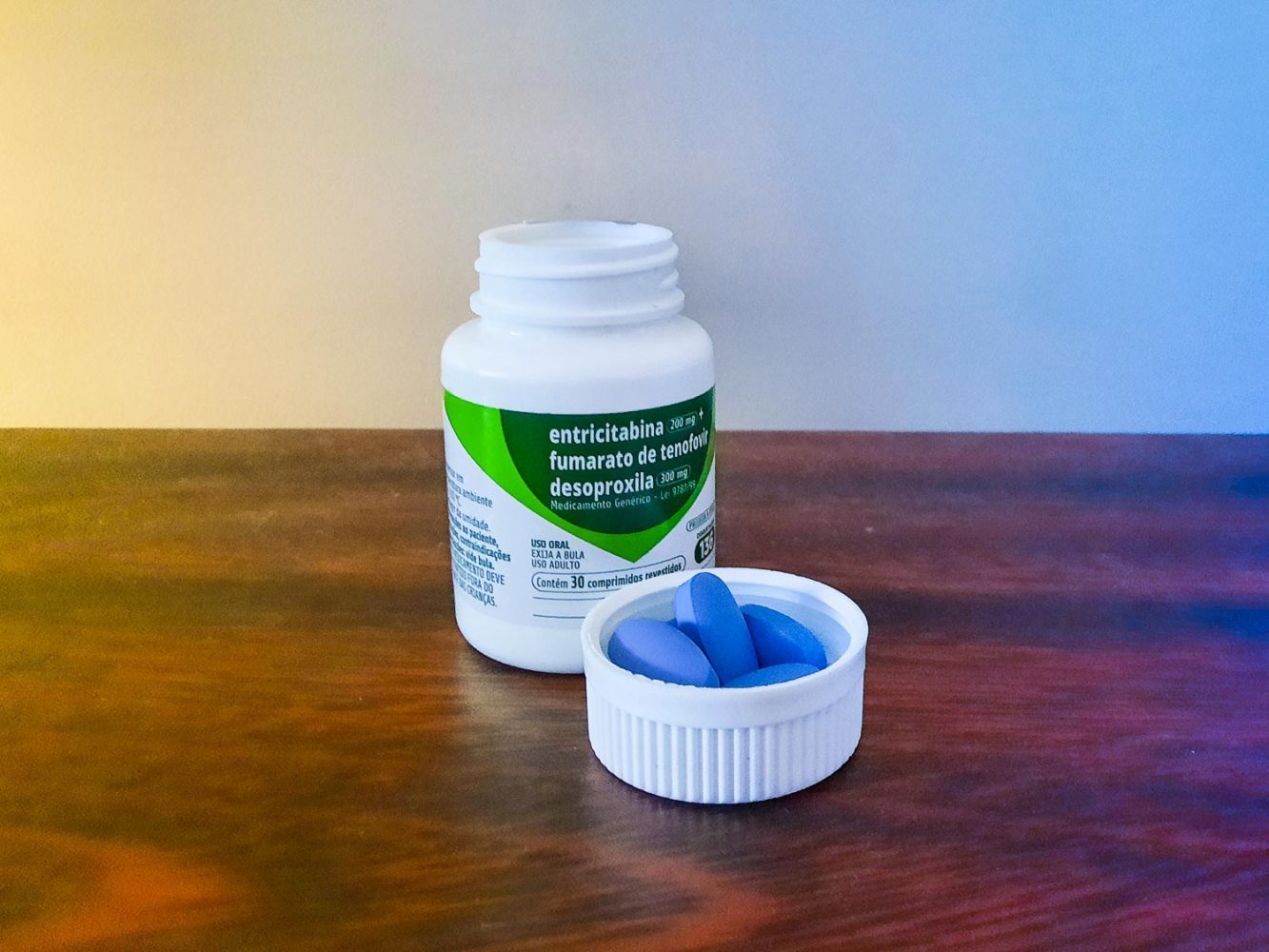
Incorporated into the Unified Health System (SUS) in 2018, PrEP is the combination of two drugs, tenofovir, and emtricitabine, which, used before exposure to HIV, block the “paths” that the virus would use to infect the body.
For the development of the study, the nurse and author of the research, Daila Alena Raenck, worked in two stages: one quantitative, not yet concluded, and the other qualitative. In the first stage, the researcher proposed the creation of a cross-sectional study. In the second, a descriptive and exploratory dynamic was used. The idea is that, in the end, the results of the two stages may be integrated.
“We chose a mixed treatment because we needed to characterize a population using PrEP from a quantitative study, but at the same time do a qualitative study. With this in mind, we were able to bring variables that talk about sociodemographic, behavioral profiles, clinical issues that are involved with these individuals.”
Daila Alena Raenck
Brazilian public
In Brazil, PrEP’s target audience consists of gays and other men who have sex with men (MSM), trans people, and sex workers. In addition, other people can use the medication: individuals who frequently stop using condoms in sexual intercourse; who are partners of untreated HIV-positive people; who make repeated use of post-exposure prophylaxis (PEP); or who have recurrent episodes of sexually transmitted infections (STIs).
One of the results found by Daila is that, in Porto Alegre, there is a concentration of PrEP in use by a specific group: cis, gay or MSM men, white, with a high level of education and in the age group between 30 and 39 years of age. For the researcher, this finding demonstrates the need to build approaches that identify and reduce disparities in access to PrEP and that can tackle issues related to racism and homophobia, for example. Another data obtained is that 40% of users abandoned the use of PrEP, which, for the nurse, shows that it is important to reinsert these people into the service.
To obtain the results and explore different aspects, Daila created questionnaires with four components. The first sought information on sociodemographic profiles. Next, data on prior knowledge about PrEP were collected. The third part addressed risk aspects for PrEP users, such as alcohol, drugs, and unprotected sex. Finally, the researcher observed aspects related to the contraindications of the drug.
The entire research process was carried out in the three Specialized Assistance Services on HIV/AIDS in Porto Alegre. In the quantitative phase, the research obtained data from the Drug Logistics Control System of 894 PrEP users. In the qualitative, 19 people were interviewed.
The researcher says that she exceeded her expectations in interviews with the users of this specific medication. The answers of these people demonstrated that the individual’s relationship with their sexuality has improved, with new prevention findings.
“We understand that we must also include sexuality in the basis of the study, which, in our view, is something unique. It is important for us to hear from people [on this topic],” she adds.
“We were able to translate into voices the numbers seen in the literature”. However, Daila also points out that PrEP should not replace other methods, such as condom use, since the drug does not protect against other STIs.
HIV on the planet
According to the Joint United Nations Program on HIV/AIDS (UNAIDS), 38.4 million people are living with HIV in the world. In Brazil, between 1980 and 2021, more than 1 million cases of AIDS were reported.
According to the Ministry of Health’s PrEP monitoring panel, in October 2022, there were 46,886 PrEP users in the country, of which 2,151 are in the state of Rio Grande do Sul. According to the Clinical Protocol and Therapeutic Guidelines (PCDT) of PrEP, the risk of contracting the virus decreases by 95% with the use of the drug. The document points out, however, the need for continuous monitoring by the health service and laboratory tests to detect whether the medication rates are adequate.
With the results, Daila aims to raise awareness about the use of the medication among health professionals and users, to enhance the knowledge on the subject, to show new perspectives at prevention, and to boost the debate about the importance of sexual health, breaking prejudices, fighting misinformation and increasing the use of this prevention drug. The researcher believes that the improvement of the practice will be reached and the demand of the users will be met once these measures are taken.
For Daila, in order to advance in the studies, it is of paramount importance to be aware of the world scenario of the AIDS epidemic, which continues as a clinical problem that urges new strategies, especially prevention measures, as the one which is the object of her study.
In addition, she states that the Brazilian academy needs more in-depth studies on the reality of the country, since many theoretical bases known in the literature are foreign. Along with the measures that need to be highlighted in Brazil, the author of the research also believes that broader media involvement in the dissemination and strong policy initiatives of public and private sectors with permanent education actions are necessary.
Translated into English by Alex Porto Teixeira, undergraduate student enrolled in the course “Supervised Translation Training II (English)” of the Undergraduate Program in Language and Literature, under the supervision and translation revision of Professor Elizamari R. Becker (P.h.D.) – IL/UFRGS.