
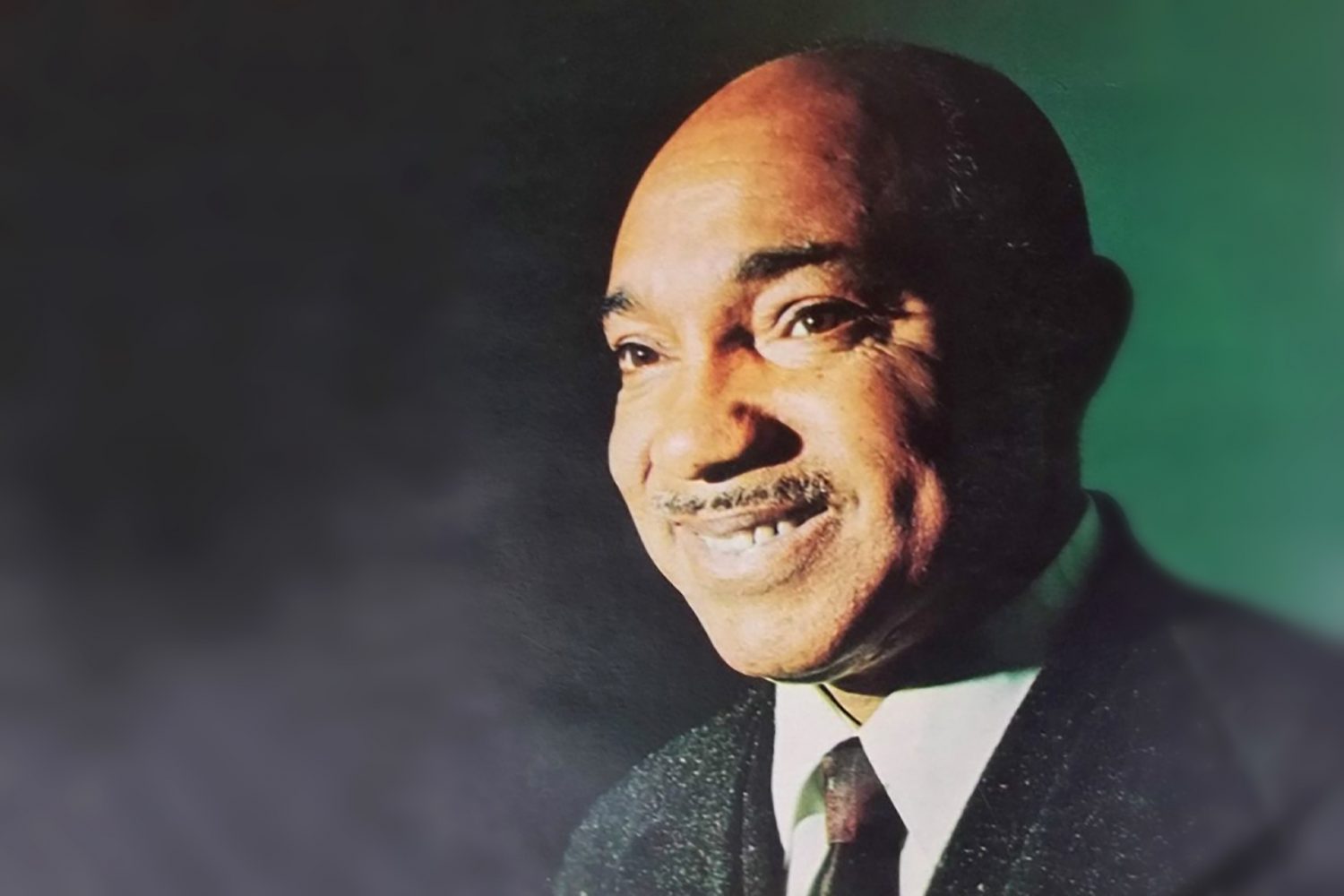
Music | Written as a musical-historical biography, doctoral thesis analyzes the trajectory and the production of the composer and interpreter that is one of the icons of samba-canção music
*By Geovana Benites
*November 17, 2022
*Photo: Clipping of the cover of Dor de cotovelo, one of the most popular albums of Lupicínio Rodrigues (Reproduction)
Intending on writing a musical biography that anyone could understand, Arthur de Faria, musician and researcher, recovered the trajectory and work of Lupicínio Rodrigues (1914 – 1974), composer and interpreter from Porto Alegre, in his doctoral dissertation defended for the Graduate Program in Letras (Languages and Literature) from UFRGS. Supervised by professor Luís Augusto Fisher, the dissertation musically analyzes the work of Lupi in a historical context and highlights Lupicínio’s position as a black, peripheral and bohemian Brazilian resident of Porto Alegre.
Arthur explains that from the very beginning the dissertation was thought out as a biography of Lupi, focused on musical and historical aspects and pictured not only as an academic work, but also as a narrative in the form of a book, so that any reader would be able to understand and have access to it. This idea is reflected in the content of the book as well as in the language used by the author. “I asked Fisher if I could write using the language of ‘common people’ or if I had to write in the academic style, and he said that if not in Brazilian literature, where else would I be able to write the way I wanted? So, there are footnotes and all that but you won’t be seeing any ‘according to so-and-so’. It’s already written in book format,” explains Arthur.
From dor de cotovelo to one-sided love
Born in Porto Alegre and raised where once was the region of Ilhota, now a neighborhood that goes from Praça Garibaldi to Avenida Ipiranga, Lupicínio Rodrigues was a singer and composer known for being one of the great names of samba-canção. He also created the expression dor de cotovelo (literally “elbow pain”, a Brazilian expression about the pain because of an unrequited love) and wrote Grêmio’s anthem.
"Eu gostei tanto
Tanto quando me contaram
Que a encontraram
Bebendo e chorando
Na mesa de um bar
E que quando os amigos do peito
Por mim perguntaram
Um soluço cortou sua voz
Não lhe deixou falar
Mas eu gostei tanto"
I was so pleased
So pleased when they told me
That they found her
Drinking and crying
At a bar table
And that when the comrades
Asked about me
A sob cracked her voice
It didn't let her speak
But I was so pleased
Excerpt from Vingança [Revenge], a song written by Lupicínio Rodrigues in 1951

The main themes of his songs were unrequited love, betrayal and revenge, but always with a hint of sofrência (neologism used to refer to heartache) — very characteristic of this genre — revealed through emotional lyrics that would often revolve around missing someone or missing an unrequited or lost love. “It’s impossible not to talk about his loves, his affairs, his women, because these were central issues in his work. He invested a lot in it, he sang about things that had actually happened in his life,” says Arthur.
"Você sabe o que é ter um amor, meu senhor?
Ter loucura por uma mulher
E depois encontrar esse amor, meu senhor
Nos braços de um tipo qualquer?"
Do you know what it is like to have a lover, sir?
To be crazy over a woman
And then find that lover, sir
In the arms of another
Excerpt from Nervos de Aço [Nerves of Steel], song written by Lupicínio Rodrigues in 1939
"Felicidade foi-se embora
E a saudade no meu peito ainda mora
E é por isso que eu gosto lá de fora
Porque eu sei que a falsidade não vigora"
Happiness is gone
And the longing in my heart still lives
And that is why I like it out there
Because I know that falsity does not prevail]
Excerpt from Felicidade [Happiness], written by Lupicínio Rodrigues in 1932
Besides talking about the life and work of Lupicínio, the doctoral dissertation also looks into the historical context experienced by him, alternating between Lupi’s stages of life and the scenario at that time. Regarding Porto Alegre, the researcher covers the music of the city’s formative years and golden years. He also tells the history of Ilhota, the old neighborhood between Menino Deus, Azenha and Cidade Baixa, known for flooding frequently and for being the musician’s birthplace.
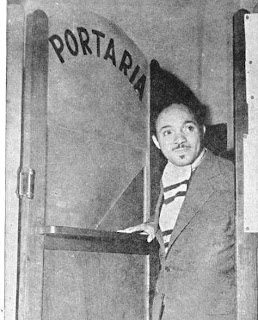
According to Arthur, the Brazilian context and the period when Getúlio Vargas was in power were also important in the composer’s trajectory and that is why they were also included in the research. “I talk about the rise of Getúlio and how, especially during the Estado Novo, he carried out a unification process of Brazil that highly used popular music and how these policies influenced the consecration of Lupicínio. I also talk about the changes in the music industry in the 60s, because everything that happened to Brazilian society and music at that time caused Lupi’s generation to be forgotten, and he, as he died early, never got to see the appreciation that his generation had for him,” he says.
A multitalented person
Musician and journalist, Arthur de Faria started the research around Lupicínio’s life long before pursuing his master’s and doctoral degrees, out of curiosity regarding the artist. Consequently, he collected testimonies from classmates of the same generation as Lupi throughout the years. They talked not only about the composer, but also about some characteristics of the society at the time, especially issues concerning race, social rank, and gender. “One thing that surprised me is that the black men in this context, from the bohemian nights of Porto Alegre, none of them talk about racism. They said things like ‘no, there wasn’t prejudice between us, everyone was equal’. At the same time, black women had their lives stained by racism, and it wasn’t a little less difficult to be a black woman than a black man in this context, it was way more difficult.”
“Lupicínio was very much a portrait of a man of his time and, at the same time, very complex. It is easy to set him as an outsider of his own world, but you can also set him as a symbolic figure of the tackiness of his period. He is not an individual that can be easily reduced to a stereotype”.
Arthur de Faria
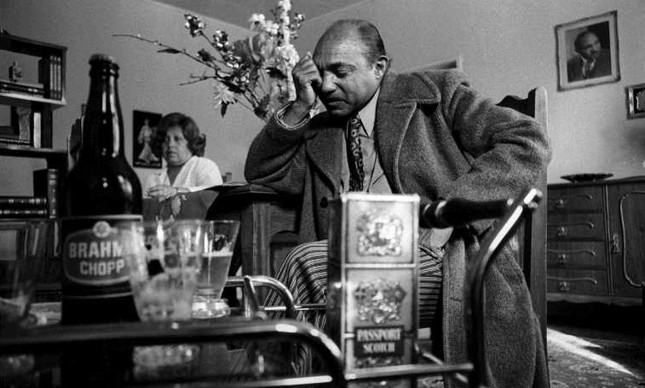
Although Lupi’s popularity peaked in the 50’s, even after his death, in 1974, his work was recorded over and over again, not only by fellow members of his generation, but also by interpreters such as Arrigo Barnabé, Fábio Jr., Elza Soares, Maria Bethânia, Adriana Calcanhotto e Arnaldo Antunes.
For Arthur, being able to translate Lupi’s talent into a simpler language, so that the general audience — not only musicians — could understand, was his biggest challenge, but also a great achievement. “One thing that no one mentions about Lupicínio is the strictly musical geniality of a person who didn’t play any instrument. Perhaps because of that and maybe despite that, he created incredible melodies and unique song structures. They weren’t stanza-chorus-stanza-chorus structures, which is very unusual and original, without being avant-garde”, the researcher finishes.
Translated into English by Bianca Costa Lopes, undergraduate student enrolled in the course “Supervised Translation Training II (English)” of the Undergraduate Program in Language and Literature, under the supervision and translation revision of Professor Elizamari R. Becker (P.h.D.) – IL/UFRGS.
:: Read in portuguese
Pesquisa resgata a vida e a obra de Lupicínio Rodrigues