
Human Rights | Author suggests adding ethical, legal and technological dimensions to the sustainability tripod (environment, society and economy) in the formulation of policies aimed at reducing food waste
*By Alexandre Briozo Gomes Filho
*First published February 22, 2024
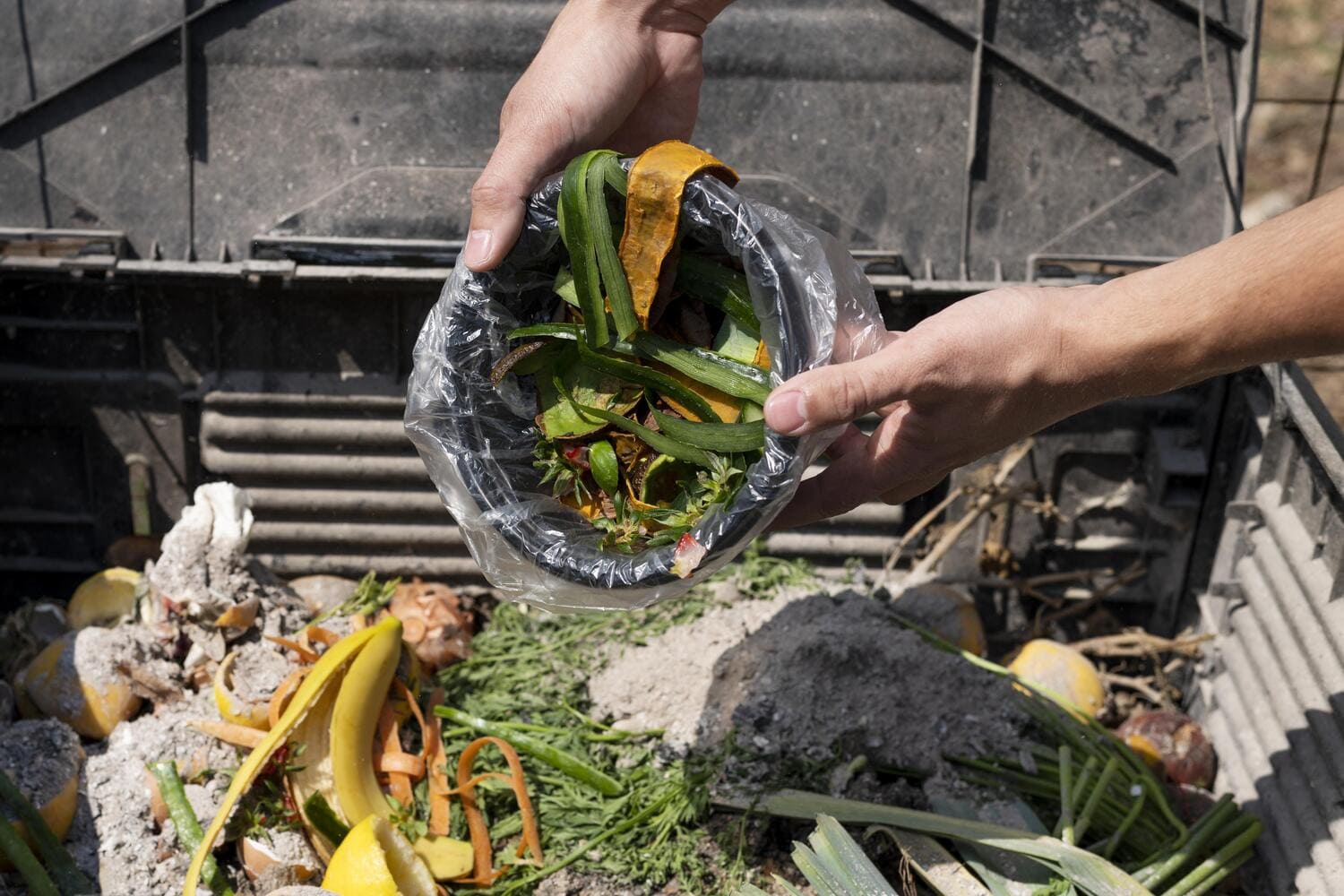
*Photo: According to a survey published in 2022 by the UN,
Brazil wastes around 27 million tons of food annually (Credit: Freepik)
A survey published by the UN in 2022 estimated that Brazil wastes around 27 million tons of food per year. The organization calculates that, of the total food produced for human consumption in the world, around 14% is lost and 17% is wasted. This percentage is enough to feed about one billion people. Also, according to the publication, one of the main solutions to food waste is proper refrigeration from harvest to meal. Food waste not only affects those dealing with food insecurity; it is also responsible for 8% of greenhouse gas emissions.
In the Graduate Program in Agribusiness at UFRGS, a doctoral dissertation proposed a public policy framework to mitigate food waste. Based on the Circular Economy, which deals with waste management, the framework developed by Débora de Azevedo, lawyer and staff member at the UFRGS Faculty of Law, aims to facilitate the conditions for food donation.
Supervised by Kelly Lissandra Bruch and co-supervised by Alessandra Lehmen, Débora proposes that a public policy aimed at reducing food waste should include not only the environmental, economic and social dimensions, known as the sustainability tripod, but also the ethical, legal and technological dimensions. The thesis is made up of four articles, based on a literary review, a law review and a questionnaire with local traders about donating unsold food.
Beyond the sustainability tripod
Since she started her doctorate, food waste was one of the topics that interested Débora. As she was attending the graduate courses, issues surrounding climate change became prominent in the lawyer’s thoughts, whose dissertation until then lacked a defined object. Realizing that food waste is directly related to climate change, Débora combined her two focus of interest and soon recognized she had found the axis of her research.
In the first of the four articles that formed the doctoral dissertation, the lawyer discussed, based on a literary review, the six dimensions to be considered when formulating the proposed framework. “The analysis of the environmental dimension pointed out that food production requires the use of water, soil, inputs, fuels and raw materials. When these foods do not reach the purpose for which they were produced, all the resources used in their production since the beginning of the production chain are wasted,” she explains. Furthermore, food waste contributes to increased food insecurity and climate change through greenhouse gas emissions.
The role of the Circular Economy in reducing food insecurity and increasing access to food – therefore reducing inequalities – is the central concept of the social dimension. The economic dimension addresses the losses from waste and the collapse of the linear economic system, where products are produced only to become waste and be discarded.
The ethical dimension concerns the daily decision to waste food “while the number of malnourished people reaches 820 million,” explains the author. The legal dimension deals with the regulations regarding the human right to adequate food at both national and international levels – in the case of Brazil, the fundamental right to food is enshrined in Article 5 of the Federal Constitution. Finally, the technological dimension encompasses the implementation of a healthy food system, based on the Circular Economy, through the development of new technologies that help reduce waste.
In the second article, the lawyer found that much of the literature on food waste concerns waste management, with food donation being a recurring theme. The third article proposed a review of laws on food donation. “In European countries, legislation regarding food donations has a more environmental focus. And in the legislation of the United States, Brazil and Argentina there is an intention to facilitate donations without holding donors responsible within the required sanitary standards,” explains Débora.
Lastly, through a questionnaire with 20 respondents, it was found that establishments in the central region of Porto Alegre lack actions that establish guidelines, transportation strategies, collection and food storage.
“It was possible to infer that if the State and responsible institutions could generate information and regulate safe food donation strategies, establishments might lose their fear and turn donations a part of their routine”
Débora de Azevedo
At the service of the University
Currently working as a technical-administrative staff member at the Faculty of Law at UFRGS, Débora envisions returning to research in a post-doctoral training, continuing her previous study. “I plan to work on public policies that enable greater agility and formalization in food donation,” she comments. The four articles are being prepared for publication, but the dissertation is already available on Lume – UFRGS Digital Repository.
Translated into English by Carla Victoria Brito de Andrade, undergraduate student enrolled in the course “Supervised Translation Training I (English)” of the Undergraduate Program in Language and Literature, under the supervision and translation revision of Professor Elizamari R. Becker (PhD) – IL/UFRGS.