Advertising | A study focusing on medical students suggests that by using the term “valorization of life” instead of “suicide,” campaigns silence this social phenomenon
*By Alexandre Briozo Gomes Filho
*First published November 1, 2023
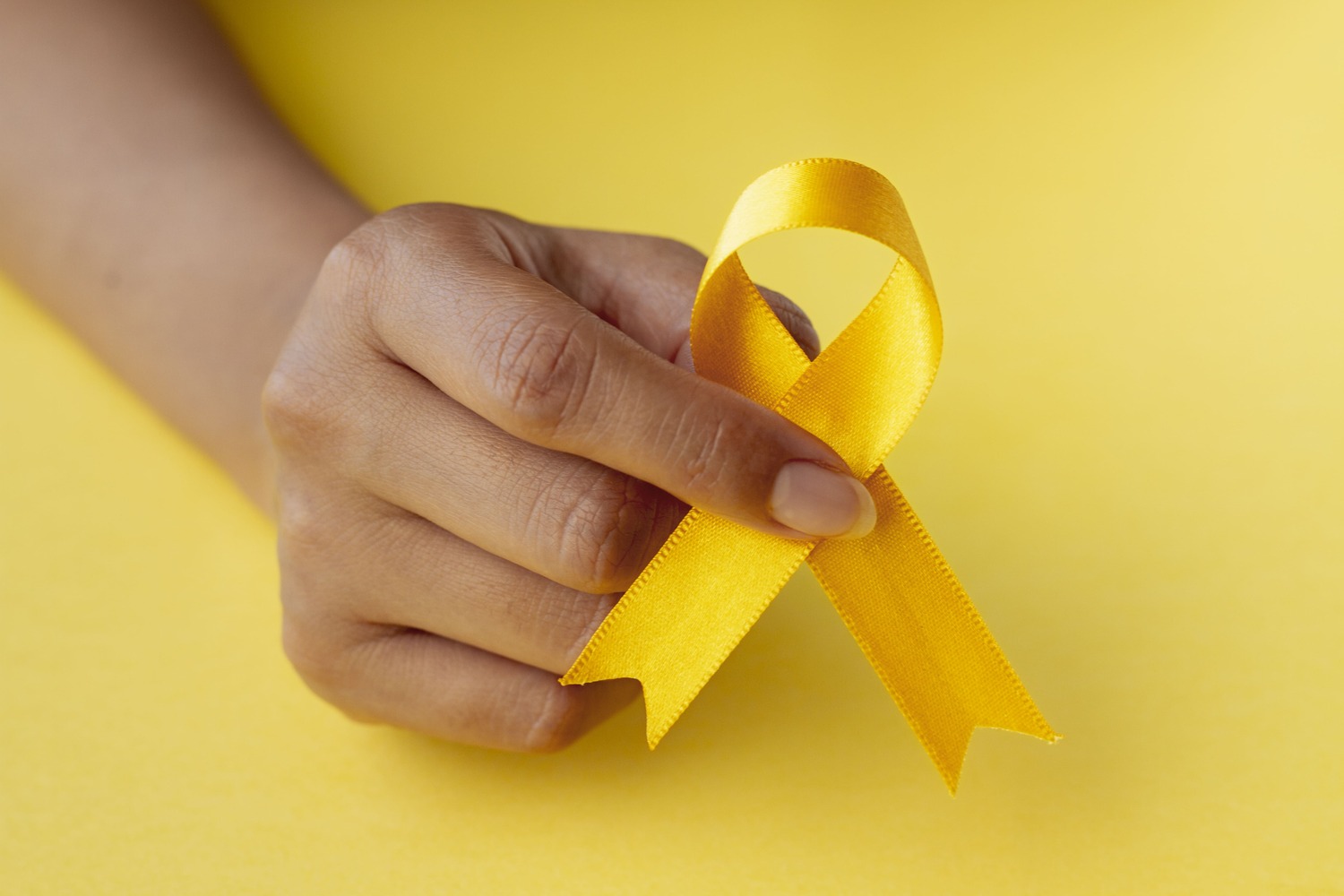
*Photo: In Brazil, Yellow September is the largest suicide prevention campaign, symbolized by the yellow ribbon (Credit: Freepik)
Advertising | A study focusing on medical students suggests that by using the term “valorization of life” instead of “suicide,” campaigns silence this social phenomenon.
If you, the reader, are feeling vulnerable, we suggest seeking support and returning to the text at another time. The World Health Organization (WHO) estimated in a study that around 700,000 people commit suicide worldwide every year. Among men, the suicide rate is double than that of women. On the other hand, suicide attempts among women are double or quadruple compared to men. In the publication “Preventing Suicide,” WHO ruled out relationships between the presence of mental disorders and suicidal ideation, reinforcing the notion that this social (and public health) phenomenon is not just cause and effect and is more complex than it may seem. According to the institution, unlike the rest of the world, suicide rates in the Americas continue to rise.
Among the ways to combat social stigma around suicide, with the aim of preventing its incidence, awareness campaigns have significant reach among Brazilian populations. Yellow September, for example, which began in 2014 through a partnership between the Brazilian Psychiatric Association (ABP), the Federal Council of Medicine (CFM), and the Center for Valorization of Life (CVV), is Brazil’s broadest suicide prevention campaign. However, the effectiveness of such campaigns in their purpose to raise awareness and influence behavior change depends on how they are conducted and whether they are clearly addressing the audience they intend to reach. But this is not the biggest challenge: talking about suicide, using the term itself, is still a problem for the Brazilian society, which is why the phrase “valorization of life” is more commonly used in campaigns.
“The expression is not wrong, but we silence what suicide really is,” says journalist Rômulo Oliveira Tondo, author of the doctoral dissertation from the Graduate Program in Communication at UFRGS that analyzes the reception of suicide prevention campaigns among young university students in the state, focusing on medical students, aiming to understand the meaning-making of Yellow September campaigns. The research mapped suicide prevention campaigns carried out in September 2020 and 2021 in 23 different institutions, on a worldwide, national, regional, local, and federal public university scale in the state (UFRGS, UFCSPA, UNIPAMPA, UFSM, UFPel, and FURG). According to Rômulo, talking about death is already a taboo in the Brazilian society: “suicide goes far beyond that.”
Delimiting the Object
The choice of medical students as the framework for analyzing the meaning-making of campaigns was due to the significant increase in mental illnesses in this university group. Among the universities included in the study, UFRGS and UFSM are the only ones that conducted the campaign in both years corresponding to the chronological cut-off of the research. The others did it only in one of the two years.
The first part of the study conducted a bibliographic review of the state of the art on the topic, while the second part analyzed the reception of suicide prevention campaigns in the mapped organizations. At the very beginning of the research, Rômulo realized that what he was doing was unprecedented: advertising lacks studies on suicide prevention campaigns from the perspective of reception studies. Given this scenario in the national literature on the subject, Rômulo, assisted by his supervisor Elisa Piedras and co-supervisor Pedro Magalhães, has sought what was available in international literature. The search paid off.
Unlike some national campaigns, campaigns conducted outside Brazil use the word “suicide.” In Brazil, not all campaigns do. Some use the term Yellow September, “which suggests that Brazilian organizations believe everyone knows what Yellow September is,” says the journalist. He emphasizes the need to pay attention to different forms of reception of the expression among Brazilian populations. “We need to bear in mind that we have literate people who can read and write, but also people who do not,” he adds.
“A campaign is not just the media product, the card that goes to social media, but rather the entire mobilization of organizations to address the issue at hand.” Rômulo Vieira Tondo
Campaigns should be targeted
To analyze the reception of campaigns, two interviews were conducted with each of the 12 participants (all medical students at different stages of their undergraduate training): one to get to know the subject, where they come from, whether they live alone or with relatives, if they have a support network; the other to find out how the student perceives suicide prevention campaigns. When asked if they are familiar with or have seen any campaigns on the subject, they associate it with Yellow September. The problem in this situation lies in the fact that Yellow September is widely promoted as a month for valorization of life, not suicide prevention, placing this social phenomenon in a place of silence. Rômulo further explains that, unlike Yellow September, suicide prevention campaigns can circulate from January to December.
In the second part of the interview with students, the idea that suicide prevention campaigns should be targeted gains strength. Black students report a lack of identification with campaigns because most of them feature Caucasian people in the ads. “Different populations will have different sociocultural contexts and demands, not only the Black population, but also women and the LGBTQIA+ community,” says Rômulo.
“Targeted campaigns will be able to reach specific audiences and will consequently be more effective than broad, generic campaigns that speak to anyone without reaching everyone.” Rômulo Vieira Tondo
Assistive Technology
Even with his recently defended doctoral dissertation, a post-doctorate training is already on Rômulo’s horizon, with suicide prevention campaigns remaining the research focus. In his next study, the journalist intends to work with assistive technology through glasses that track the user’s eye movement as they view campaign ads. This will make it easier to identify elements that attract more attention from the public and contribute to the desired transmission of meaning, enabling improvement of campaigns in the future.
Healthcare
If you are in distress or know someone who is, you can seek support from the Center for Valorization of Life (CVV), which offers free emotional support. Assistance is provided via chat or by calling 188.
For young people aged 13 to 24, the UNICEF Can Talk service offers free listening and support through a chat. You can also follow their Instagram profile @canal.podefalar.
For information on accessing mental health services in the public network and training centers in Porto Alegre, in the metropolitan region, or in the northern coast, visit the UFRGS Mental Health website.
Translated into English by Lucas Eduardo Camargo, undergraduate student enrolled in the course “Supervised Translation Training I (English)” of the Undergraduate Program in Language and Literature, under the supervision and translation revision of Professor Elizamari R. Becker (P.h.D.) – IL/UFRGS.
:: Read in portuguese
Tese com interface em comunicação e saúde estuda recepção de campanhas de prevenção ao suicídio entre jovens universitários do estado