
Education | Researchers point out the lack of knowledge about the reality of African populations and the imposition of the Eurocentric paradigm among the reasons for the predominance of an educational system over others
*By Elstor Hanzen
*First published May 25, 2023
*Illustration: Mitti Mendonça
African history and culture are often misunderstood and stereotyped, not only in Brazil but in other parts of the world. Looking into the history of African universities and their contribution to global knowledge can help challenge these misperceptions and highlight the richness of African culture and thought. On the one hand, it is recognized that the seed of formal education rose on the African continent in the medieval period. On the other hand, political, cultural, and economic power prevailed when naming the origin of education models, since universities mentioned and expanded as models around the world — such as Bologna (Italy), Oxford and Cambridge (England) and Paris (France) — are of European lineage.
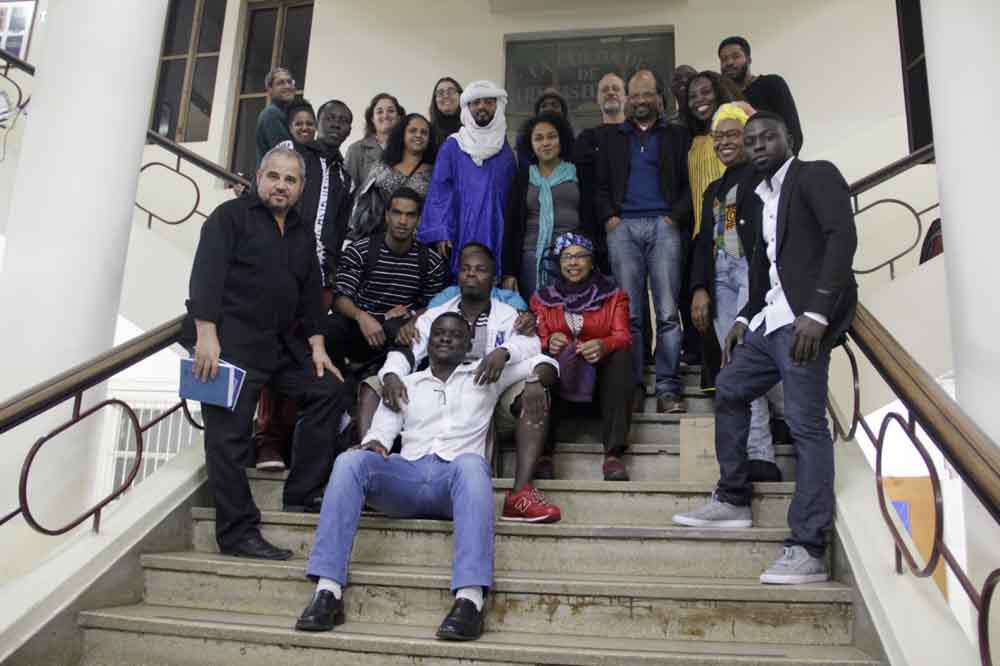
Writer, researcher and professor in the History department of UFRGS, José Rivair Macedo points out similarities and differences in the origin and evolution of higher education institutions in history. “There are factors that contribute to the idea that the first places of education in Europe were inspired by schools of knowledge in North Africa, called madrasas — places of religious formation. Even in Europe, initially, the content taught was of a religious nature, just as the name collegia came from the previous period and from another continent [Europe],” he explains. The historian highlights that there was a process of secularization of the collegia (European educational establishments) based on European white men vision of higher education and training paradigm.
The single-sided story which denied the African continent to have a structured system of production of knowledge has long establishing Europe as an exceptional educational space. However, there is material to affirm that Africa already had educational spaces considered universities in the 8th century, and much of the knowledge attributed to Europe comes from the African continent, explains Delton Aparecido Felipe, professor and researcher at the Center for Afro-Brazilian Interdisciplinary Studies at the State University of Maringá (Paraná). “We have to remember that until 1950, 1960, we used to have access to a single narrative about the African continent – a delusive, single-sided one, which reinforced stereotypes, such as the idea of an Africa as a place of isolated, savage and uncivilized people.”
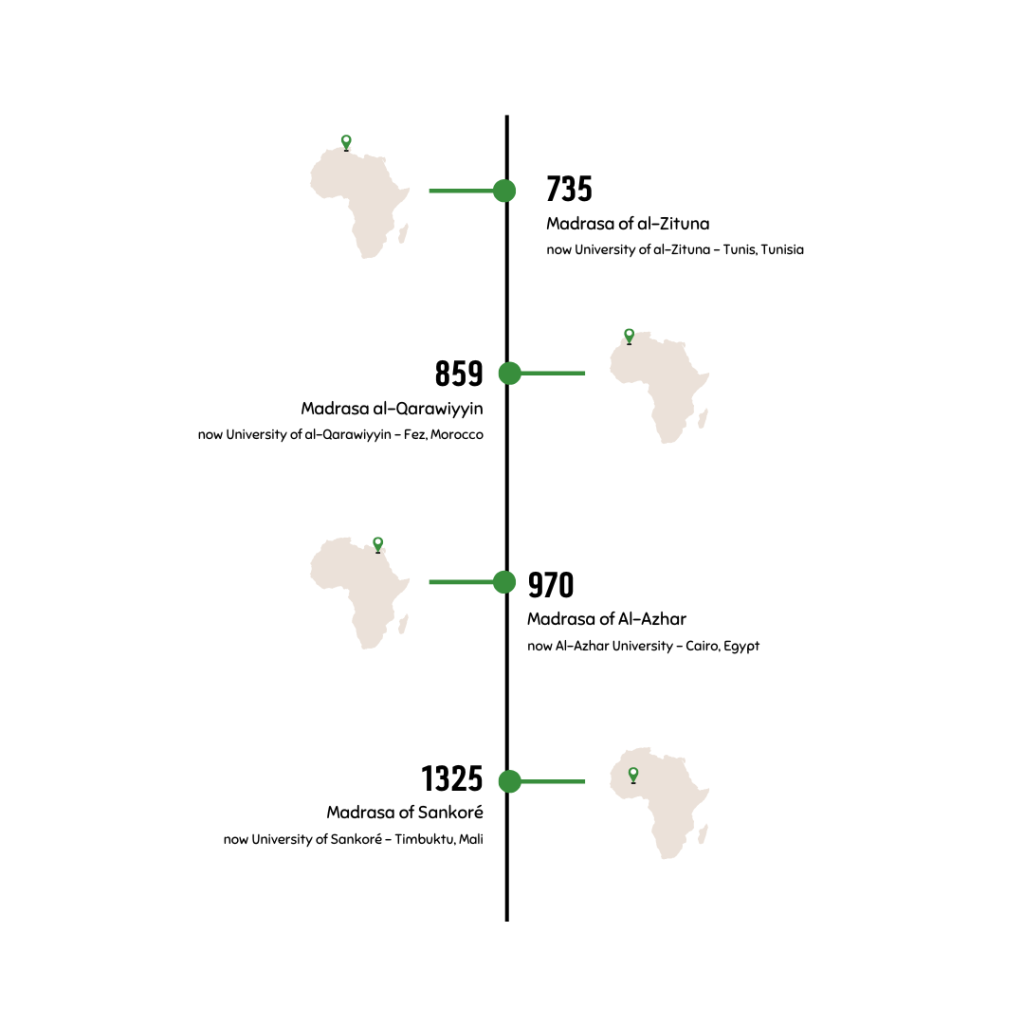
According to Delton, also director for International Relations at the Associação Brasileira de Pesquisadores/as Negros/as (Brazilian Association of Black Researchers), this type of tradition helps, for example, to establish and place Europe in a regime of exceptionality, as the space for the main productions of knowledge and universities. “We can conclude that, while Europe had its first universities there in the 11th century, the African continent had educational places that can be understood as universities as early as in the 8th century. Just as we know that much of what was produced by Africa, the knowledge itself about human biology, bodies, astronomy, mathematics, science, architecture, is often attributed to Europe,” he explains.
The researcher adds that Latin American colleagues call this phenomenon epistemic extractivism, that is, beyond Eurocentrism, it causes epistemicide. “As Édison Carneiro said, the knowledge of black people and their ancestors was appropriated and removed from black protagonism, making us believe that it had come from European people. And today we have the basis to say no, that this knowledge was previously available to African people, and many of whom lived below the Sahara desert line,” he says, referring to the various educational initiatives of the time in the North of the African continent, from Morocco to Egypt.
Embryos of university establishments in the Middle Ages
Contemporary universities
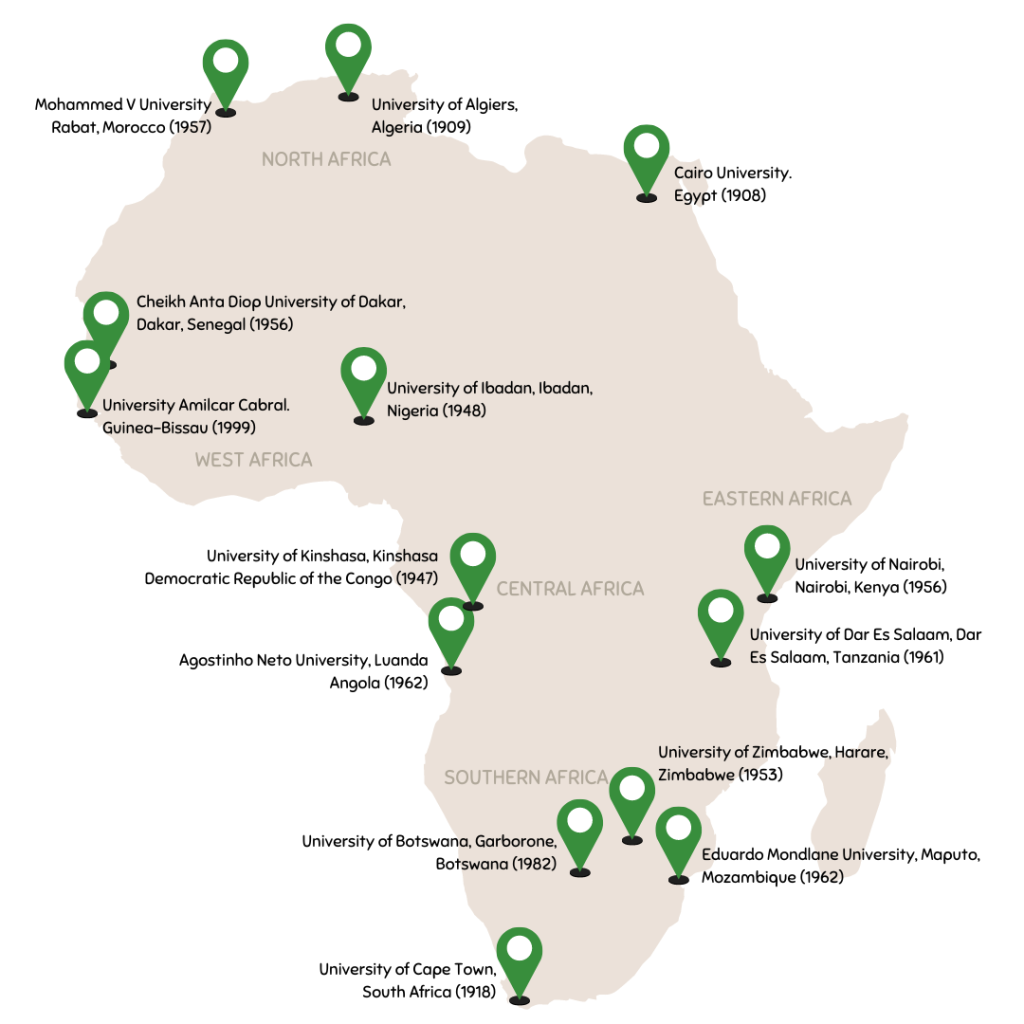
Contemporary universities in Africa arise partially from ancient educational establishments, especially in some places, such as in the northern sub-Saharan part of the Niger River Basin, where there were madrasas, and also in the eastern part of the continent, on the Indian coast, where there are ancient institutions of Muslim knowledge, explains José Rivair Macedo. For the historian, it is important to distinguish these areas of the continent from others where there were no educational establishments, which were purely agricultural locations. Having this in mind will definitely shed light on the influence of colonization.
“The European colonization of Africa took place around 1880 and lasted until 1970. This period corresponds, from the point of view of knowledge, to a moment of cultural imposition by the white Western world of curricular or religious, missionary teaching, on African students in schools and universities,” says Rivair.
The professor explains that adherence to the European model was much easier in regions where there was still no teaching baseline. So, there is a large circulation of Western information on the continent, and the first African intellectuals and leaders were practically all educated using European teaching methodology, he highlights. From then on, the Africans themselves educated by the European empire circulated and reproduced the culture they learned. The researcher cites two examples. “In the struggles for independence in Cape Verde, they met or got to know each other at the student’s house, in Portugal; as well as in 1956, when the so-called first meeting of black writers and artists took place at the University of Paris.”
The director of International Relations at ABPN argues that it is necessary to consider some singularities of each population and culture to understand the process of secularization of education. He highlights that the very notion of time is different between Africans and Europeans, for example. While Europeans follow a chronology, Africans give greater value to mythical time, to endogenous knowledge.
“There is an idea of teaching that comes from orality. We must remember that many African populations have the basis: writing is kept in the head, and what is said is kept in the heart.”
Delton Aparecido Felipe
Therefore, Delton emphasizes that an apologetic production of knowledge often does not use an appropriate methodology to be considered ‘Science’, but can be vital for a population. “We have to remember that this idea of Science comes from a model of production and construction of European society, so we are talking about a form of education imported for black people.”
From the 80s and 90s of the last century, a group called New Studies of the African Continent began, stresses the professor in the State University of Maringá, which produces scientific academic knowledge about certain methodological rituals. This is important, according to him, because it will serve as a basis for the study of the reality of black people with specific academic references and in languages other than English and French. “I always tell my students that we need to think about time for traditional African people beyond Western references. In other words, honor our ancestors to think about Africa today, understand ways of doing science, build knowledge based on other references and educational possibilities, even beyond preparation for the job market,” exemplifies the teacher.
A few contemporary institutions
Transnational experience
The experience of living in an African country has been transformative in the life of Brazilian Janaína Vianna da Conceição. The professor moved to São Tomé and Príncipe in 2019 to lead the Programa Leitorado Brasileiro, in which Brazilian Literature teachers work in foreign higher education institutions to promote the Portuguese language and Brazilian literature. There, she teaches classes on Portuguese Language, supervises final papers, works in research groups on reading mediation and coordinates the community outreach project Leituragem: quem lê, viaja. These and other activities are being recorded on the Leitorado Guimarães Rosa em São Tomé and Príncipe page on Facebook.
“I came from a state where the majority of the population is white (Rio Grande do Sul). Being in a country where I see black people occupying different social positions in society and where I see myself represented on television and on billboards is a new experience. At first, it was very shocking,” she reported.

São Tomé and Príncipe is a country of 200 thousand inhabitants that has a great linguistic-cultural diversity. According to her, knowing the history of important black people, whose existence she had no idea about before, has been revealing in expanding her references.
“I am grateful to know that people like the leader Rei Amador, writers like Alda Espírito Santo, Conceição Lima and Olinda Beja, Katya Aragão (filmmaker), and Gilberto Gil Umbelina (singer from the island of Príncipe), for example, existed/still exist. I feel that by knowing them I also know more about myself, I feel more fulfilled”
Janaína Vianna da Conceição
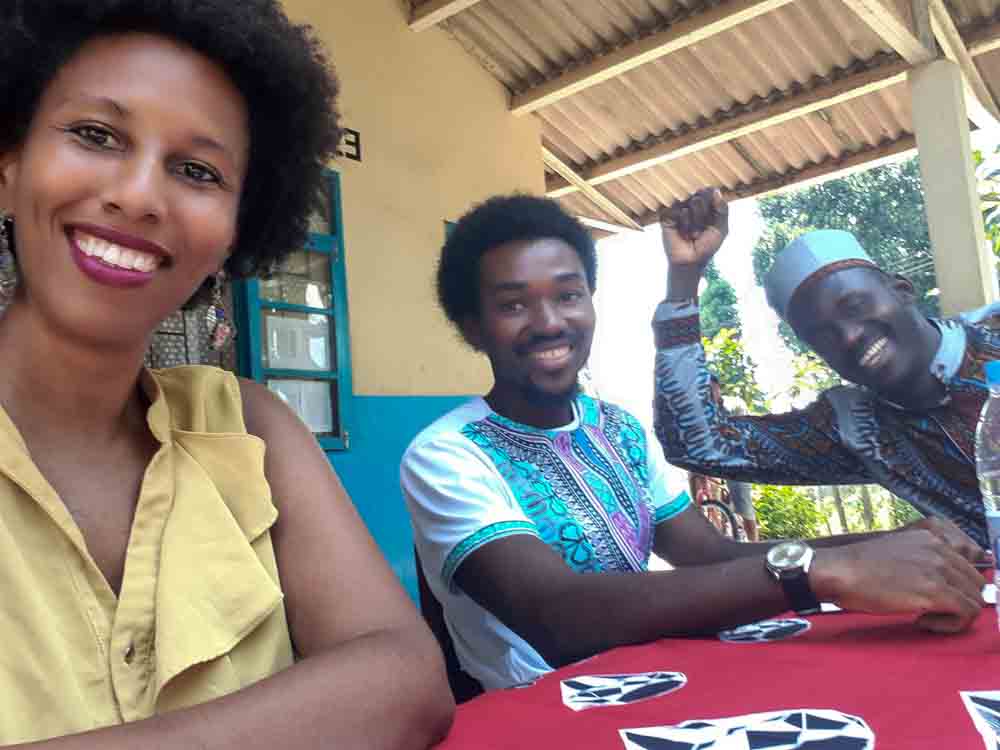
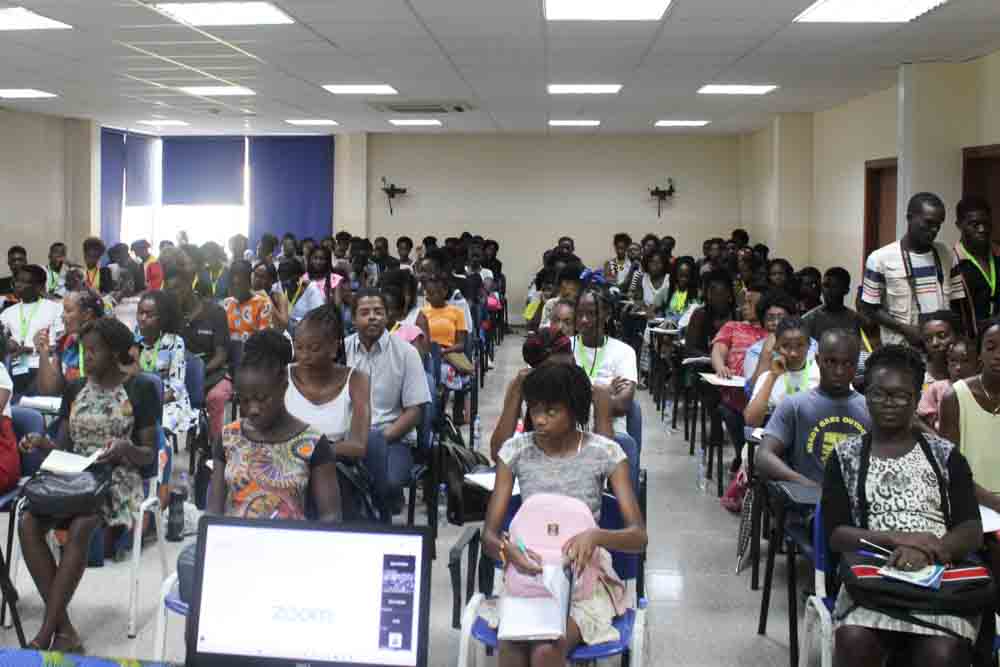
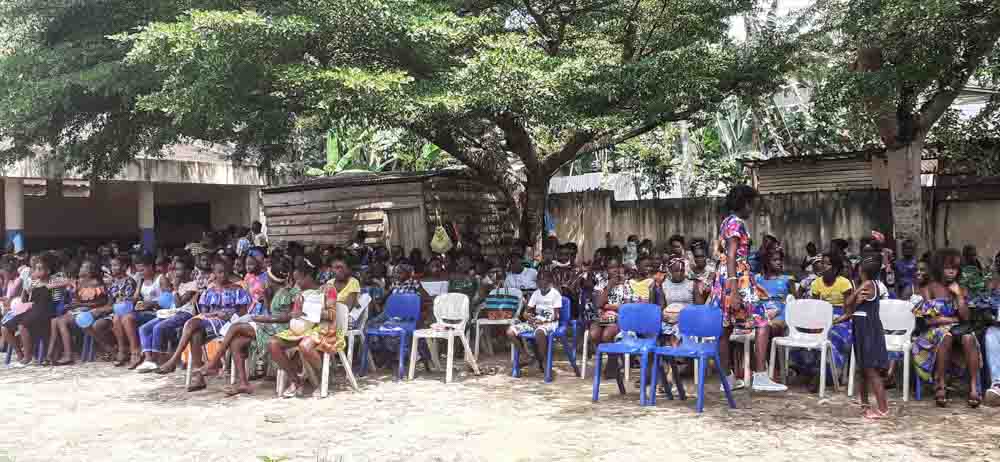
Regarding the differences between the Brazilian and African teaching models, Conceição says that there is no unity in the ways of teaching, especially when considering that Africa is made up of 54 countries. She remembers that teaching there is oriented and designed for the community, focused more on experience. “In São Tomé and Príncipe, there is still a predominance of a Eurocentric curriculum and state policies that follow this model. It is a country that gained its independence in 1975, and the Higher Polytechnic Institute, founded in 1996, was converted into a university in 2014.”
The opposite path was taken by Felizberto Alberto Mango, a student who is taking his doctoral training in Public Policies at UFRGS and one of the 81 African graduate students currently enrolled at the University. He left Guinea-Bissau to come to Brazil in 2013 aiming at pursuing a degree, motivated by the opportunity for free higher education in Brazil, since there is no free education in his own country. “In brief, I would say that studying in Brazil was a unique experience that transformed my life and probably the life of many of my fellow countrymen, as I was able to have opportunities and conditions to study with scholarships without which I might not have been able to achieve,” he summarizes, and thanks local public education policies. His doctoral dissertation conclusion is scheduled for April 2025.
Afro knowledge in Brazil
Centers for Afro-Oriental studies were created in Brazil from the 1950s onwards and were fundamental for the production of knowledge about black people in Brazil and around the world. Today there are Afro-Brazilian study centers and other organizations for knowledge production. There were also improvements in legislation, such as Law 10.639, of 2003, which established the teaching of Afro-Brazilian history and culture in schools, and the Lei de Cotas (Quotas Law). These laws have contributed to a more inclusive education and worked to fight racism, in addition to appreciating more the black knowledge production.
Professor of the Postgraduate Program in Communication at the Federal University of Santa Maria (UFSM) and researcher on topics such as structural racism, Jairo Ferreira compares aspects of legislation, social practices and imaginary in social construction and formation. He emphasizes that it is important to start from the understanding that a society is built of social imaginaries, codes and practices other than laws.
“What the Northern countries did was automate the machine starting with the Industrial Revolution, after having established their conception of the world with the pillars of education and culture. That is, the concretization of the idea through politics, economics and technology”
Jairo Ferreira
He remembers that Science was already extremely diverse since the Islamic world – architecture, medicine and engineering. The Islamic economy (Western, from the Moors, and Eastern, from the Turks) was handcrafted. At most, it was closer to manufacturing. The relationship with spirituality was mediated by writing. It was the North that has automated everything, driven by primitive accumulation and the law of profitability. “This Nordic reference from the last centuries, of a superior people, is one of the main sources of racism. A religious (Christianity), economic (the capitalist way of production) and political (democracy) superiority,” he adds. The professor also emphasizes that it is necessary to expose and debate such legacies, as well as to map and value the social practices of black people to change social relations by overcoming racism, focusing on these three founding axes and justification of domination.
Regarding the social practices of black people, Delton highlights the centers of Afro-Oriental studies or Afro studies, which began to develop in Brazil in the 1950s. According to the professor at the State University of Maringá, the first was in Bahia, soon after in Rio de Janeiro and São Paulo. Spaces for Afro studies are fundamental for developing information and producing knowledge about black people in Brazil and abroad. “I remember now, for example, that the Cândido Mendes University, in Rio de Janeiro, had a very interesting Afro studies center, and one of the black authors and intellectuals who studied there was Lélia González.”
Today, besides these centers that many universities maintain, there are centers for Afro-Brazilian studies and knowledge producers, such as the ABPN itself, in addition to policies and continuous teaching of topics at the higher education level. Delton recalls that Professor Petronilha Beatriz Gonçalves e Silva herself prepared a report in 2004 in which she said it was necessary to carry out the process of recognizing the existence of racism in Brazil and establishing a policy to repair all rights, including the right to know about one’s ancestry. “This was taken away from the black population. Therefore, it is necessary to build a valorization policy, that is, recognition, reparation and valorization are fundamental for the effective teaching of Afro-Brazilian history and culture,” emphasizes the researcher.
Translated into English by Bianca Costa Lopes, undergraduate student enrolled in the course “Supervised Translation Training II (English)” of the Undergraduate Program in Language and Literature, under the supervision and translation revision of Professor Elizamari R. Becker (P.h.D.) – IL/UFRGS.
:: Read in portuguese
Continente africano foi precursor da ideia de educação superior, mas Europa leva referência por instituir seu modelo ao mundo