
Culture | In a scenario where incentive calls do not supply the culturaldemand and require administrative apparatus to deal with their bureaucracies, artists need a lot of collective and individual effort to keep working
*By Alexandre Briozo Gomes Filho
*First published March 16th, 2023
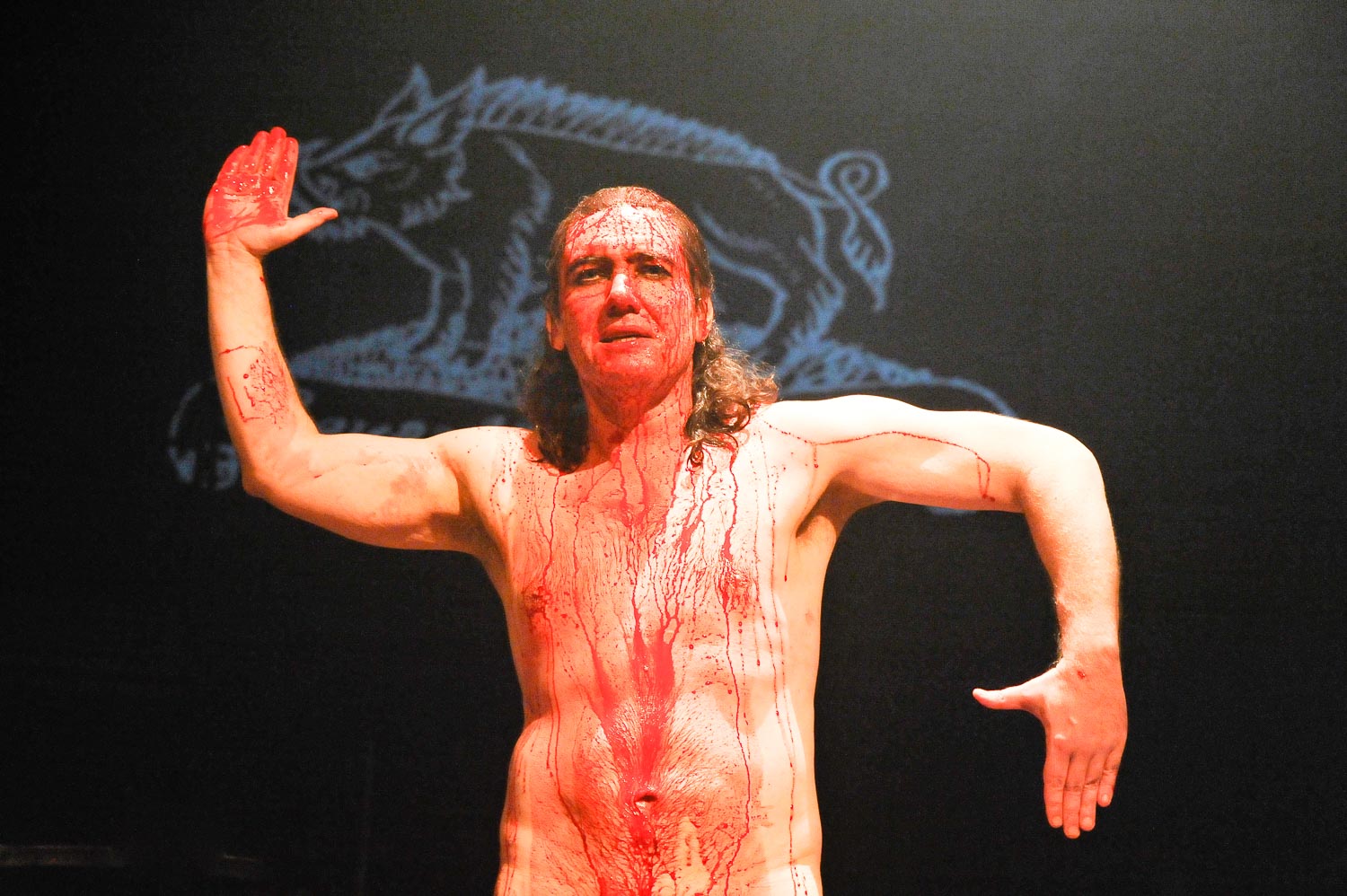
*Photo: Vilmar Carvalho (Archive/Mar. 27th 2022)
A recent study conducted by Getúlio Vargas Foundation (FGV), based on São Paulo state incentive laws, shows that, for each 1 real invested in culture, the return for São Paulo’s economy is 1.6 real. In Rio Grande do Sul, another Brazilian state, there are incentive laws in the form of cultural calls for different art fields throughout the year. Many groups and associations, such as the Opera Company of Rio Grande do Sul (CORS), have an internal organization that facilitates fundraising from resources made available through these calls for proposals. Other groups, like Bloco da Batucada Independente Turucutá, do not have access to these incentives because they lack the right administrative apparatus to deal with the necessary bureaucracies.
According to the Rio Grande do Sul Department of Culture, in 2022, 405 projects received money from Fundo de Apoio à Cultura (Cultural Support Fund) and 421 from Lei de Incentivo à Cultura (Culture Incentive Law). The second had 70 million reais available, the maximum authorized by the state.
When the demand is higher than the supply, artists need to reinvent themselves and seek alternative ways to finance their work. Raphael Oliveira, master’s student in Economics at UFRGS, says that in the absence of financial capital and the presence of intellectual capital, the latter should be leveraged. He also highlights that collective work is a proper way out for artists and groups that do not have access to financing or want to obtain it without too much trouble. Associations that act as cooperatives in art groups, although not yet so present in the cultural scene, green-light the development of the cultural economy, be it legally recognized or not.
Joining forces to make it happen
Marcelo Ádams, actor, drama professor at the State University of Rio Grande do Sul (UERGS) and cofounder of Teatro ao Quadrado theater group, says that there are more productions made yearly than there are incentive calls. “Most groups don’t have fundings and work cooperatively”, he says. Lacking state promotion, Marcelo funds his own projects and counts with many individual and collective efforts to bring to life the projects he plans with his wife and actress, Margarida Peixoto.
To be able to make a self-funded theater show, on many occasions, they gather professionals from different but related areas – such as costume design, lighting, sound design, graphic art, production, acting and directing – in a collaborative joint effort whose payment comes after the show is on, as the money comes in. Each person is paid accordingly, corresponding to their responsibility level and role — actors, directors and producers are often paid more, due to the complexity of their jobs. “If there are 10 people, we take transportation and other expenses from the gross income, and then share the net income proportionally to each one’s function.”

It would be best if workers got paid up front. But, with all the challenges in a scenario of financial instability around artistic projects, the actor explains that cooperation is the way for independent artists to keep working.
Marcelo Ádams
“The expression ‘unity makes strength’, despite being a cliché, is absolutely authentic. We can see how unity can make strength if there is a minimum harmony between the elements that compose this unity.”
The carnival block batucada coletiva independente Turucutá has been working in Porto Alegre’s cultural scene for over 15 years and has to make do to keep itself alive. Musician and corporate trainer Eduardo Gerhardt belongs to the committee responsible for the group’s organization and says that funding comes from performances the 16 people do. Apart from Carnaval, which is the time they have more emphasis in the cultural scene, funding comes from local shows and workshops. “We have applied for an incentive grant, but that requires a network of administrative and financial management that we lack,” says Eduardo. The complex bureaucracy around incentive laws tires the group, so they end up never submitting a proposal. Without enough revenue to go full time, the group members have alternative incomes.
The bureaucracy surrounding culture incentive laws isn’t the only obstacle to block Turucutá. The way the local public and the City Hall administration interact with the group is something that contributes to their constant financial struggle, says Eduardo.
“Society in Porto Alegre disregards popular culture and sees traditionalism as the official culture, and that directly reflects in public policies, fundings and revenues”
Eduardo Gerhardt
Working cooperatively with other similar collectives would make it easier for them, but this isn’t yet possible. Eduardo understands that other groups have their own personalities, very different from each other, which could make it hard to make decisions — what to accept and what not, from where the money would come and where it would go. “Unifying certain things can be a burden, I don’t think we are quite there yet,” he concludes.
Rouanet Law allows physical and legal persons to allocate part of their income taxes to the funding of cultural projects previously approved by the Cultural Department. Marcio Noronha, Dance professor at UFRGS and researcher of Culture Economics, highlights that, due to the fact that Rouanet is a law that serves the patron and gives the entrepreneur autonomy, it strengthens companies’ cultural production strategies. “Let’s say I’m a businessperson and have this brand X. I’ll probably be interested in associating it with big artists and famous people with consolidated careers,” he explains. What is left out are artists that are not on the Brazilian or local mainstreams and end up not getting the same incentive or recognition in their projects, like group Turucutá.

Art is work
Improvisation and reinvention are two of art’s strong qualities. As the sociocultural landscape changes, art transforms itself to keep its role of translator of those changes, and artists improvise with the tools they are given. Doing this individually might be a huge effort, but collectively, it not only makes the job easier, but it also ‘opens roads’ that hadn’t been seen before.
An example of what came out of the union between enterprise and art is the Rio Grande do Sul Opera Company (Companhia de Ópera do RS), also known as CORS, which is legally recognized as an association, but acts as a cooperative. From the desire to create something independent from the existing institutions in the field, the company, now composed of over 40 members, started around the beginning of the coronavirus pandemic. It was in this period that Flávio Leite, CORS director, registered the company on Aldir Blanc Law, which made emergency actions supporting the cultural sector. As the pandemic got worse, the operatic singers group had to wait for the return of in-person activities so they could debut their group’s name with their first presentation. Since then, the shows’ investments come from ticket office money.
The success from their first show yielded the group a positive repercussion in the media and an invitation from Theatro São Pedro’s director for the theater to host the company’s activities. Flávio credits CORS success to their organization, which is done by professionals from different areas. According to him, all members have other skills besides singing. “I have a degree in Public Relations, so I take care of that. We also have a producer, a teacher that plays and gives piano lessons, a journalist that is responsible for the group’s communication, a makeup artist and costume designer, and that is how we function,” he reports. The soloists have an independent career apart from the company, which allows them to have an alternative income. Awarded for the last time in 2020, the group plans to participate in incentive calls again this year.
Expanding the network that CORS promotes, outside artists are hired for some shows, like dancers and visual artists to create scenarios. This is due to the fact that an opera show needs artists with different expertise.
Flávio is sure that cooperative work is the right way for better art promotion, as this has been the model used in other areas as broad as agriculture and finances. “It takes a village,” says the director. He also highlights how important art is in the social realm: “We need to drop this idea that art is a cost when it actually is an industry, it is jobs, it is work. Not to mention that its objectives are societal change, social sensibilization through culture and awareness about current issues,” he concludes.


Translated into English by Guilherme Faller, undergraduate student enrolled in the course “Supervised Translation Training II (English)” of the Undergraduate Program in Language and Literature, under the supervision and translation revision of Professor Elizamari R. Becker (P.h.D.) – IL/UFRGS.