
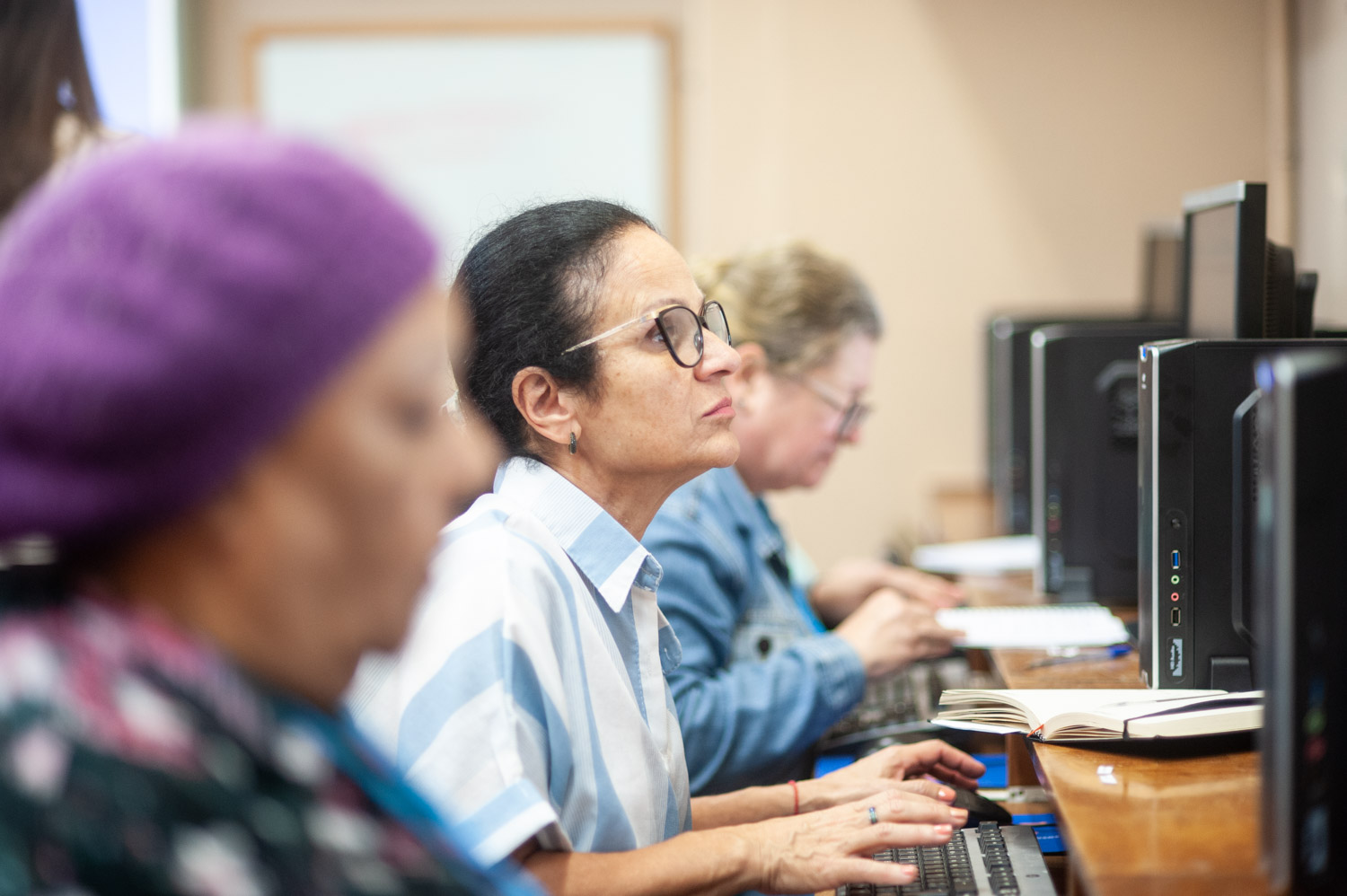
Current affairs | Experts point out that digital products and systems are often developed without taking into account the specific needs of the elderly and they advocate the creation of more user-friendly solutions
*By Carolina Zanette Dill
*First published June 29, 2023
*Photo: Flávio Dutra/JU
After a trip to the United States in mid-2009, retired tour guide Stella Harris heard from a customer the word “e-mail” for the first time. After that, in her efforts to adapt to the changes in contemporary society, she made her first contact with the Internet. The unfamiliar terminology piqued her curiosity, and over time, she soon encountered more and more terms related to the digital world.
76-year-old Harris has witnessed the advent of the Internet, the widespread use of computers, the shift to smartphones, and the rise of social networks. Her effective participation in each of these phases has not occurred naturally. Classified as a digital immigrant due to being born before the technological evolution, she had to adapt to these transformations. “It’s always a challenge because we think “I’ve already grasped everything there is to know”, but then we realize things have already changed,” she admits.
For today’s elderly, navigating communication and information technologies can pose significant challenges, especially for those who haven’t had prior exposure to these devices. The issue can become more challenging due to the rapid pace of change, requiring constant adaptation and the acquisition of new skills that may vary with each technological shift.
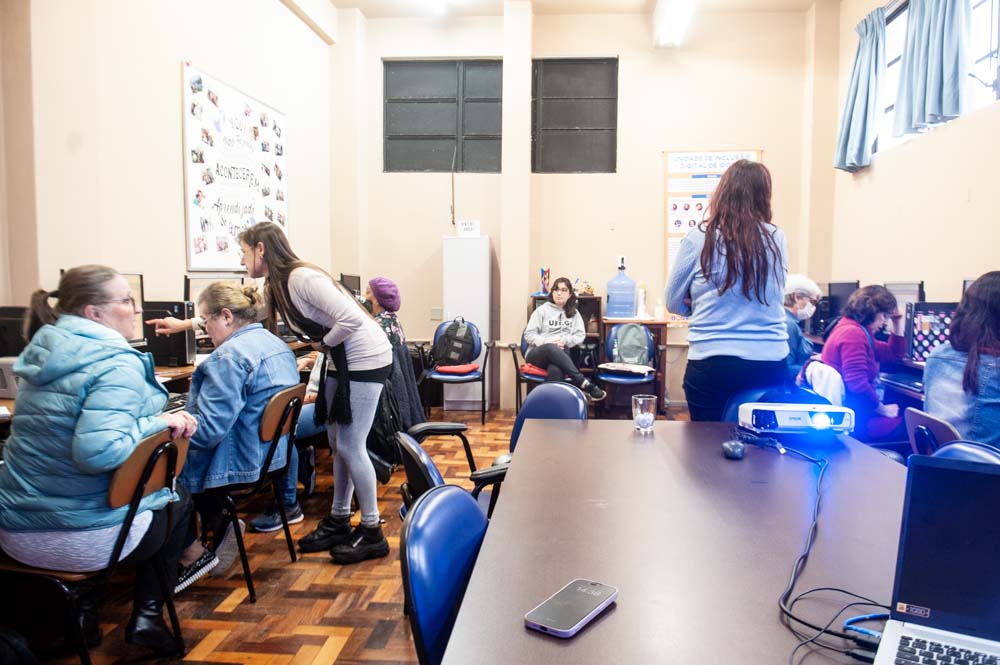
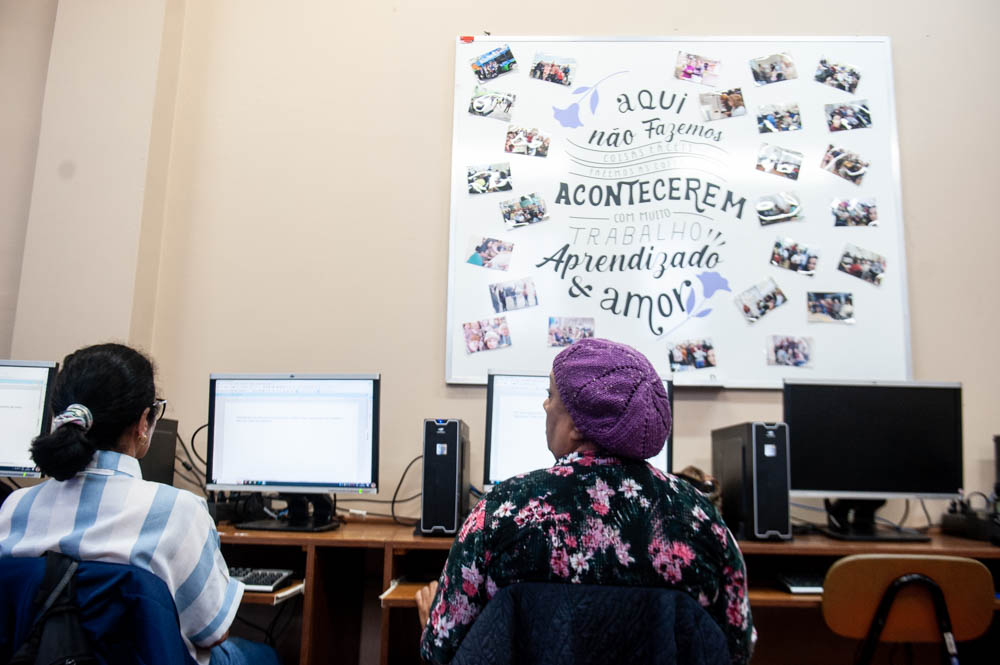
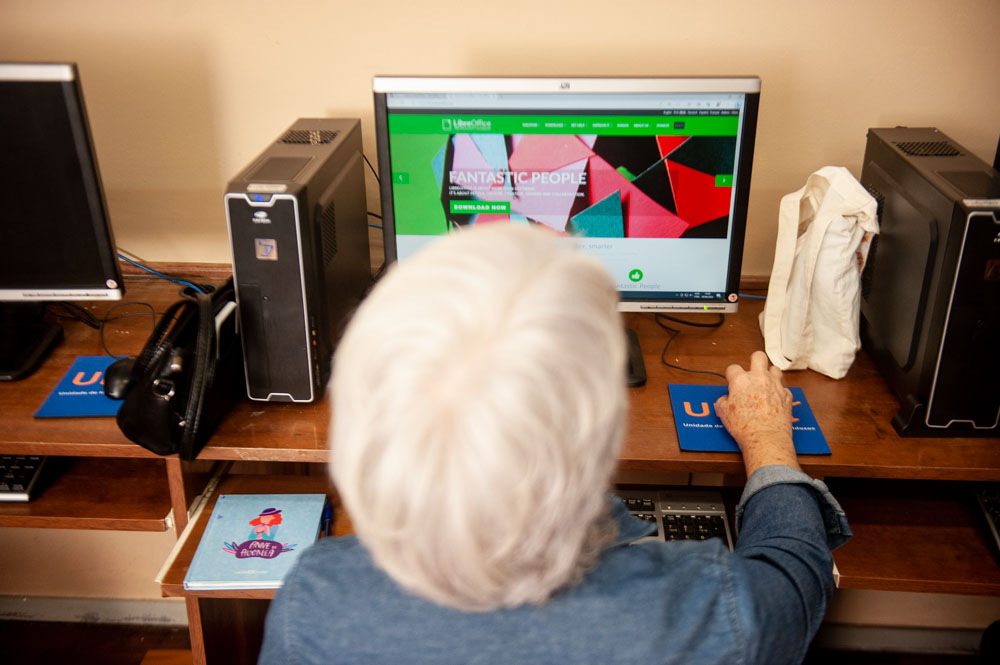
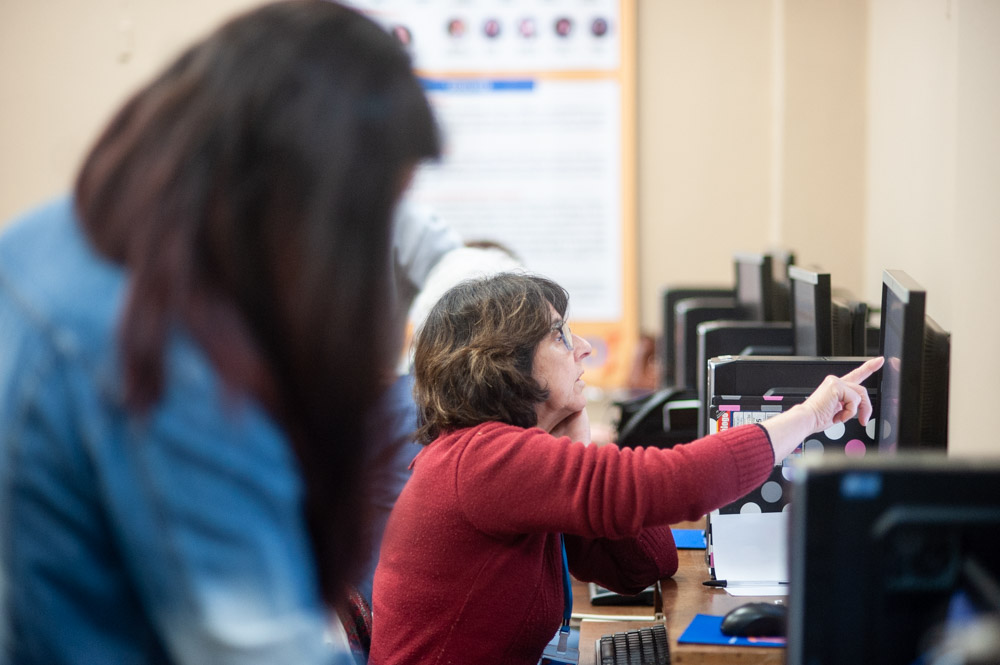
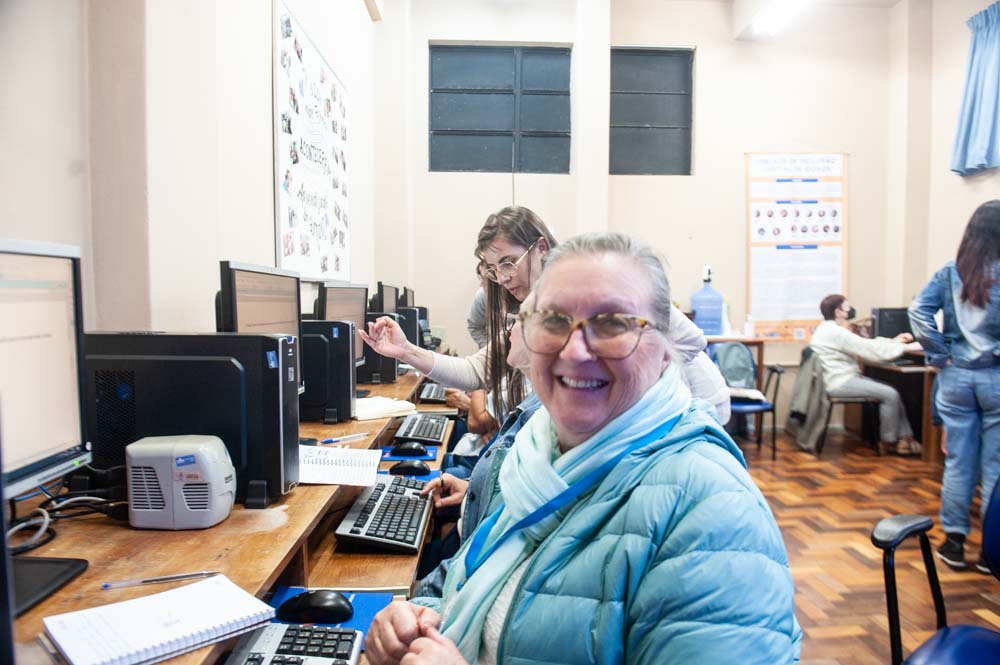
Harris, a former tourism guide, found the UFRGS Digital Inclusion Unit for the Elderly (UNIDI) as a way to enhance her interaction with technologies. This initiative, led by Letícia Machado, aims to create educational materials to promote the digital inclusion of the elderly. In a tech-driven society, Internet usage provides access to information and knowledge acquisition, facilitates communication, and plays a crucial role in citizenship. Machado emphasizes that “it is not about using technology for its own sake, but about showing that it is possible to do something on this computer to enhance your quality of life”. Thus, the digital inclusion of older people goes beyond mastering technology; it ensures that everyone can fully participate in an increasingly connected society.
Being digitally included means being socially included. Through technology, it is possible to talk to other people, order food, schedule appointments, make bank transfers, and pay taxes. The Internet has become integrated into various aspects of our lives, from transportation to healthcare. When it comes to work, the market values people who know digital resources. In other words, part of the population is missing out on opportunities and facing disadvantages. Johannes Doll, a professor at the Faculty of Education at UFRGS, says that, “digital inclusion prepares older individuals to deal with the resources of the digital world. Because, in a way, if one looks into the future, he/she will realize that being into the digital world will make it easier for them to handle resources that can help them as they age.”
Doll explains that exclusion goes beyond issues of access and social inequalities. According to the researcher, in the mid-2000s, buying a computer was restricted to those with higher purchasing power. Older people and women represented the majority of those who faced difficulties in purchasing technologies. With the popularization of smartphones, nowadays the financial issue has decreased. “Today, I don’t need to invest in a computer with a screen and all the input devices. However, owning a smartphone also means facing the challenges of making full use of it. In this way, social exclusion remains an issue. If I can only use my smartphone to make/receive calls and take pictures, I’m excluded from many other resources I could be accessing.”
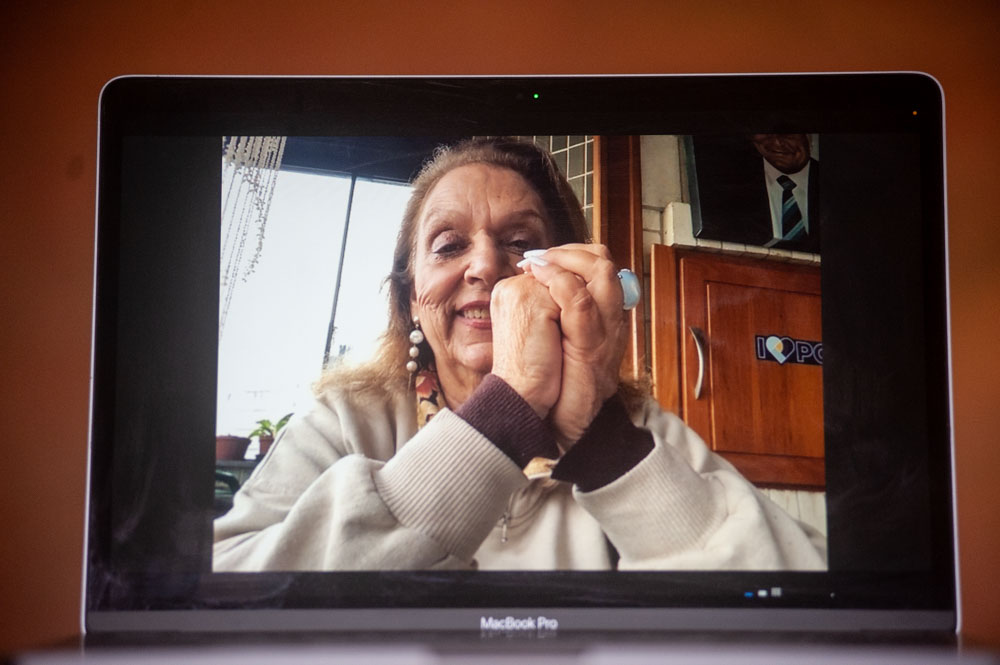
For me and many people my age, [digital inclusion has] opened a window to a world whose existence I had completely ignored. I had only heard my grandchildren talking about it, but I hadn’t been actively participating in the conversation. Now, being connected to the digital world means being included, not excluded. If they’re talking about something, I can get to know what they’re talking about.
Stella Harris
Changing scenarios
As communication and information technologies rapidly increase, so does the aging population. According to data from the Brazilian Institute of Geography and Statistics (IBGE), from 2012 to 2022, the population over 60 years of age grew by 39.8% in the country. This increase in the proportion of this age group in relation to the total population is attributed to factors such as lower mortality rates, birth control, and an overall increase in longevity, thereby influencing life expectancy. Over the years, the projection is that there will be a gradual inversion of the age pyramid, with the number of elderly people surpassing that of the younger population.
Another data from IBGE shows a significant rise in Internet use among people over 60, from 44.8% in 2019 to 57.5% in 2021. Despite this increase, however, most apps, websites, systems, and other digital technologies are designed without considering the specific needs of this population. A collaborative survey by BigData Corp and the Web for All Movement pointed out that less than 1% of Brazilian websites are considered accessible.
As we age, it is common to observe physical changes. Visual decline, changes in hearing ability, a general slowdown in cognitive processes, as well as in motor aspects, are part of the aging process. Thus, the fine print on smartphones and tablets, touchscreen displays, the use of mouse and keyboards, excessive buttons, and low color contrast can be a challenge due to physical decline. The lack of accessibility limits the use of gadgets, contributing to the exclusion of a large portion of the population from the benefits offered by technologies.
“From the user’s perspective, there is a lack of comprehensive accessibility initiatives in Brazil. There are isolated initiatives, but without a collaborative approach,” says Hélio Braga, who holds a Master’s degree in Computer Science and is a member of the Accessibility and Usability Group at the Universidade Federal do Estado do Rio de Janeiro (UNIRIO). Braga emphasizes that considering the reliance of communication technologies on sight, hearing, and reading abilities, it is necessary to turn accessibility features into a permanent feature. This, he argues, would not only benefit the elderly but also a broader spectrum of people.
Accessibility on the web should integrate programming, design, and technology to create barrier-free navigation. The Web Content Accessibility Guidelines (WCAG) recommend device configuration systems should allow for personalization, including the ability to change color contrast, adjust letter and screen sizes, and incorporate interactive elements, such as buttons and links – such adjustments would certainly contribute to making information perceptible and user-friendly.
According to Harris’ experience, many websites require users to navigate through a lengthy process to reach their final goal. “Sometimes, we run into difficulties because certain apps fail to provide clear, step-by-step instructions. If I’ve been trying something and it’s not working, I either start it all over again or ask for assistance.”
According to Machado, coordinator of the UNIDI, the strategies of the companies responsible for creating equipment and software are focused on digital natives. Driven by economic growth, this industry is focused on catering to a younger target audience. For the next years, Braga anticipates a shift in this tendency, as the age pyramid in Brazil changes. In a society becoming increasingly tech-savvy, older individuals are expected to become more demanding in their technology preferences. Braga also predicts that those who have grown older in a technological era will emerge as a formidable market force—individuals who not only understand technology but also demand products that align with their needs and preferences.

It is important to look at the whole picture
Issues related to accessible interfaces – such as font and button size, color contrast, or sound adjustments – are important. Letícia Bono, a researcher with a PhD in Design from UFRGS, suggests that contextual factors that go beyond the direct interaction between humans and computers also significantly impact the elderly’s technology experience. Bono argues that technology experience is influenced not only by the computer use but also by personal, environmental, and social factors. In the context of digital inclusion, it is necessary to recognize the obstacles that hinder the elderly’s access to technology, and one of these hurdles is age prejudice.
“Becoming elderly, as far as we can see, means receiving a label and having to deal with the world while being permanently considered inepter. There is a series of misbeliefs about the elderly: that they don’t want to learn technology, that they are reluctant to embrace technology, and so on. But [our research findings] have disproved them all. The elderly like it … they like to learn things, they seek information, and they are motivated to do so. So, feeling that they’re not included in the digital world, for example, is a complicating factor.”
Letícia Bono
Professor Doll advocates the recognition of the heterogeneity of the elderly population. While the legal definition, as per the Statute of the Elderly, describes anyone above 60 as elderly, Doll points out that the needs of a 60-year-old may vastly differ from those of a centenarian. “It’s not simply a matter of preference or age; it could be attributed to lack of resources, financial constraints, limited educational opportunities, or difficulties in writing/typing. In other words, we can’t judge people solely based on their age,” says the researcher.
Bono, in turn, emphasizes the importance of considering diverse backgrounds. “People who are or have turned 60 are already beginning to be labeled as elderly. If product designers or anyone developing a product for the elderly clings to this stereotype, they could be led to misguided design decisions,” she points out.
Understanding the practicality of products is a crucial factor for the elderly to embrace the digital environment. “They want their gadgets and services to be purposeful, not a waste of their time. Sometimes, they struggle to grasp the very purpose of the product being offered to them,” notes Bono.
In an era when services have increasingly been turned into digital services, Harris recalls the time when she arrived at a restaurant and came across a QR Code for the first time. As she entered, she noticed there was no traditional menu in sight, just a small code waiting to be scanned – at first, she didn’t know how to proceed. “You walk into restaurants these days, and it’s like, ‘where should I point my camera to?””
New gadgets are often accompanied by the fear of potential damage. “ ‘It’s something new, and I haven’t mastered it yet,’ they think. The fear of making a mistake takes over them,” says Harris. UNIDI’s coordinator Leticia Machado observes that this is a common feeling among students attending the classes offered by the Community Outreach Project, especially when they worry about potential judgments or fear that using the new technology might compromise their safety.
“We try to teach and show them all the time that it’s not just the elderly who fall for scams – an understanding that makes them more approachable. These are fears that have been culturally created, but that, little by little, we’re helping them to overcome by showing them that if something breaks, it’s okay – broken things can be fixed.”
Letícia Machado
User communication is a factor to be also taken into consideration, especially in the digital environment, which is rife with foreign terms and specialized vocabulary. Bono points out, “The concepts of the digital world – pervaded with terms like save, upload, and cloud, some of which may be foreign words to the ordinary user – may be easily understood by some users – like experts and professional users –, but challenging to be grasped by others.”
Emphasizing the importance of user-friendly communication, Machado, a PhD holder in Design, suggests that the vocabulary should cater not only to the elderly but also to individuals with varying levels of education and age. When developing new products, it’s crucial to address the needs of such diverse audiences at every stage: from project design and production to marketing and after-sales.
Translated into English by Pedro Henrique Marques Sieburger, undergraduate student enrolled in the course “Supervised Translation Training II (English)” of the Undergraduate Program in Language and Literature; translation revised by Júlia Silva de Souza, undergraduate student enrolled in the course “Revision of Translated Texts – English/Portuguese” of the Undergraduate Program in Language and Literature; translation and translation revision were carried out under the supervision and translation revision of Professors Elizamari R. Becker (P.h.D.) and Márcia Montenegro Velho (P.h.D.) – IL/UFRGS.