
Security and law | Faced with prison overcrowding and low rehabilitation rates, courts and institutions begin to turn to mediation procedures such as peace-building circles based on dialogue and non-violent communication, especially when working with teenagers
*By Elstor Hanzen
*First published July 13th, 2023
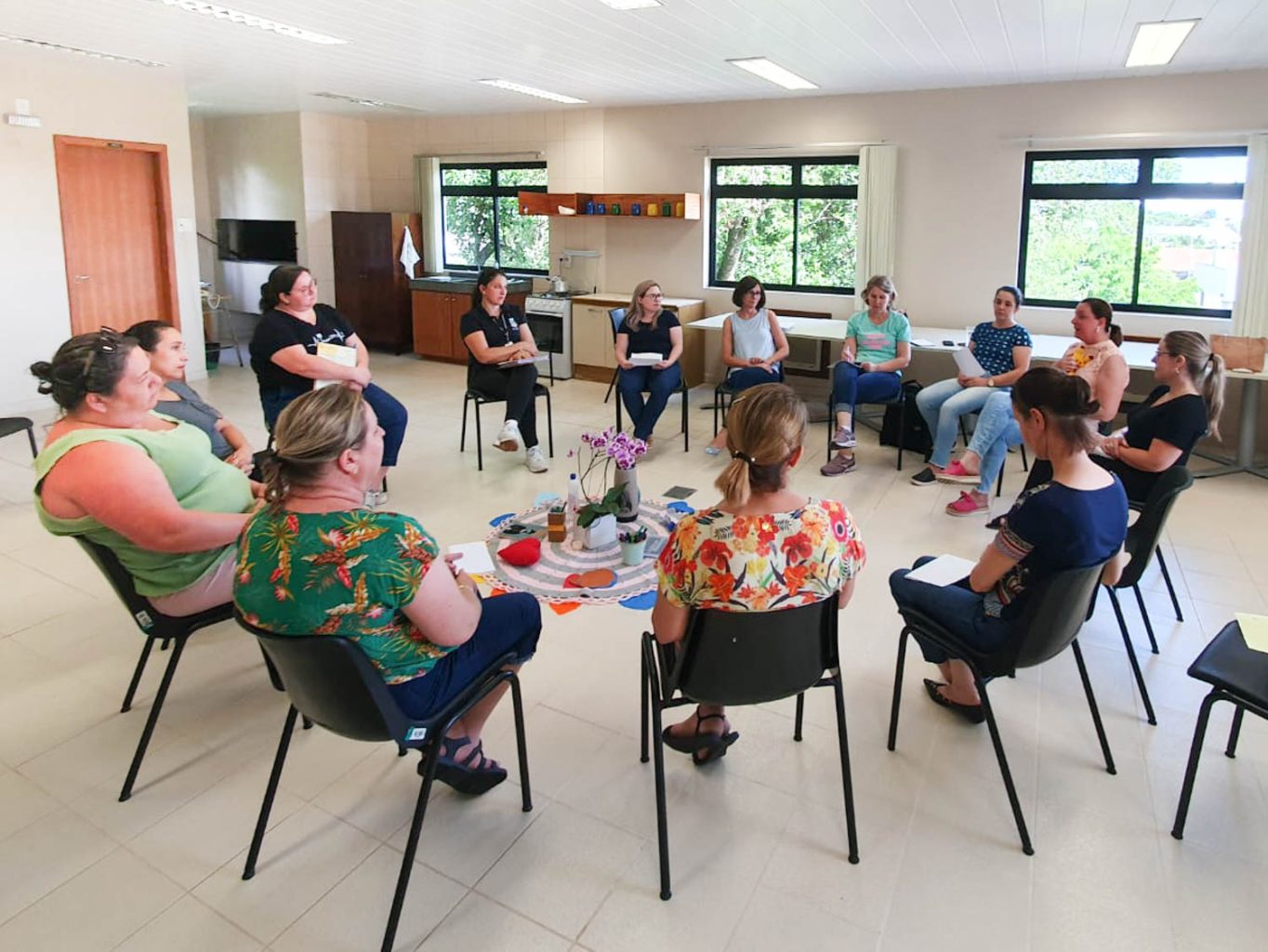
*Photo: In the city of Horizontina, in the state of Rio Grande do Sul, a Restorative Project has been developed since 2020 with the participation of 30 mediators who work alongside the school community with judge Cátia Paula Saft (Personal archive)
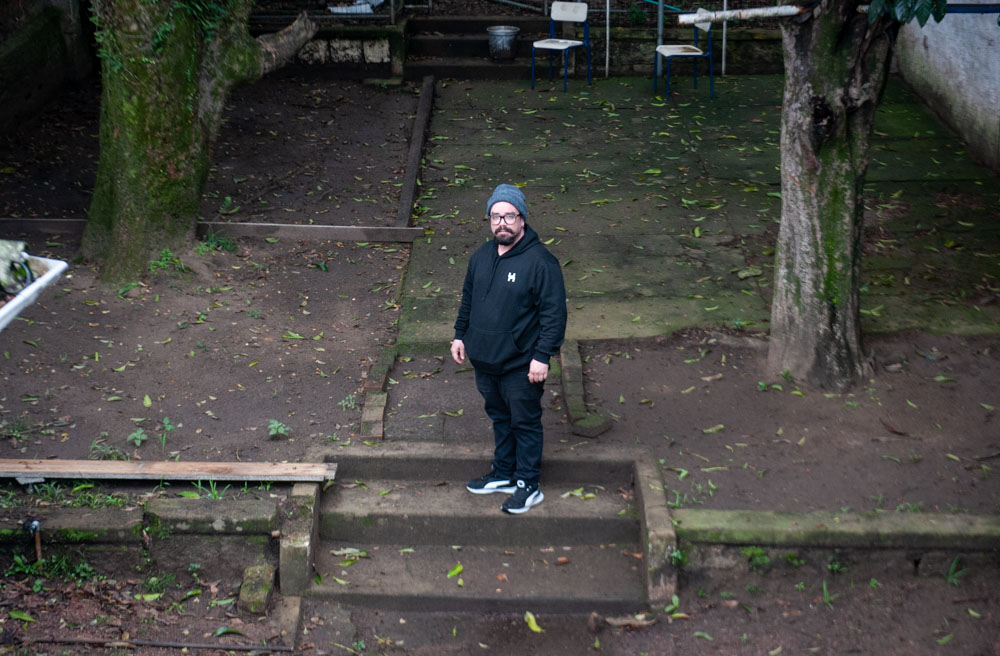
Adilson Rodrigues Alves grew up with a father who spent more time in prison than out of it. At the age of 17, he wanted to start his own gang at Bom Jesus district, one of the most violent neighborhoods in the capital of Rio Grande do Sul, Porto Alegre. At the same time, Alves used to attend an Umbanda center, an African-based religion, and a center for the celebration of the state’s culture, the Gaucho Traditions Center (CTG). Those activities were unusual for a teenager of that neighborhood and became an obstacle to his acceptance among his friends.
Conflicted between these two worlds, in 2006 Alves looked up to the “criminal gang” – people next to him who were part of criminal organizations, were popular with girls and were respected in the region. In February, amidst of a period of recess in his other two activities and during school holidays, he took the opportunity to show his new friends that he was “a proper man” and deserved more recognition. He then invited another boy, to whom he wasn’t even that close, to be his partner in their first crime attempt. One night, at another district, the boys held a couple with a toy gun and stole their car.
A few days later, while driving around in the stolen car, Alves was apprehended in a traffic stop. He was a month short of his 18th birthday. Being underage, in March he was taken to the Rio Grande do Sul Socio-Educational Assistance Foundation (Fase, in the Portuguese acronym) to serve socio-educational measures with other 1.118 teenagers. After 45 days in the institution, friends who knew him from his cultural and religious activities and soccer games in the neighborhood, along with the teenager’s mother, mobilized a petition to show that the mistake the boy had made was correctable and that he deserved a different future.
Restored lives
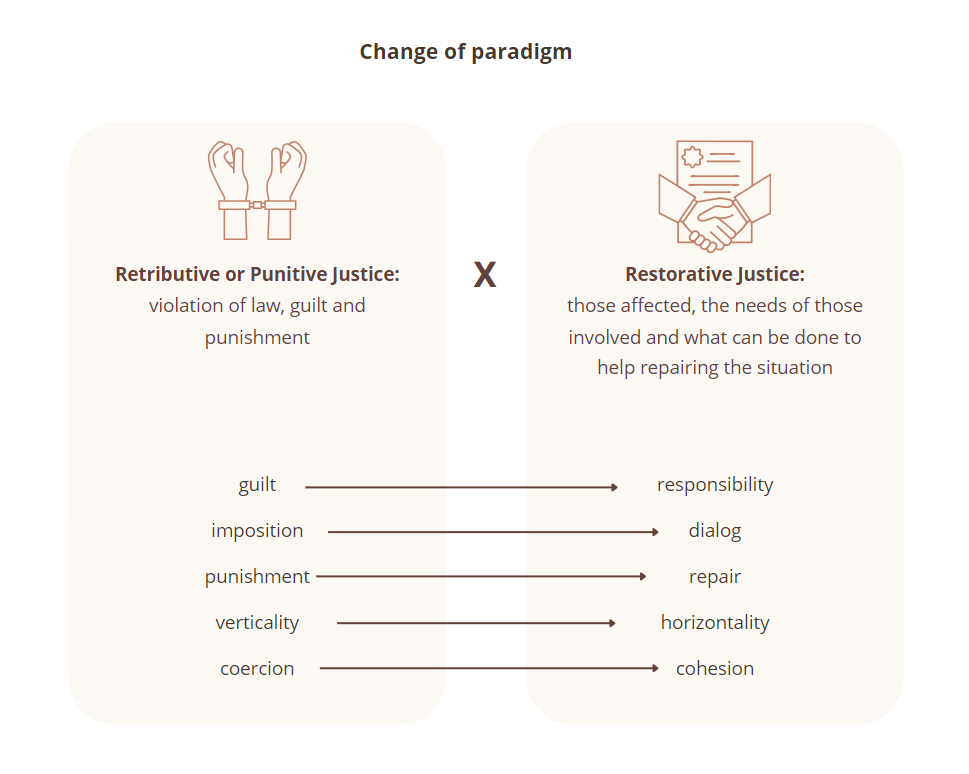
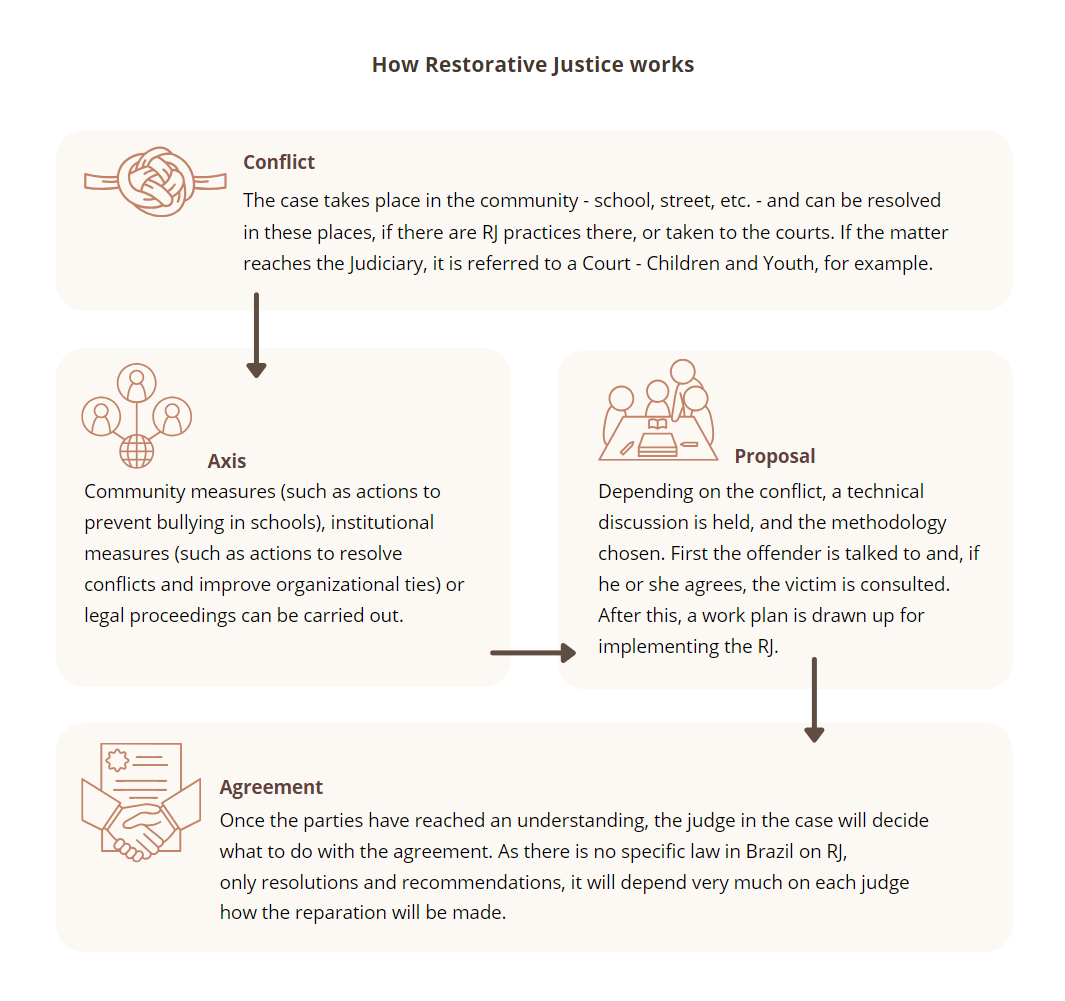
Alves’ case reached the magistrate of the Court of Justice of Rio Grande do Sul Leoberto Narciso Brancher, who is one of the pioneers in the study and implementation of Restorative Justice (RJ) in Brazil and, at the time, was developing the Justice for the 21st Century project. Back then, restorative procedures were still in their earliest steps in the state and were based on the idea that the tripod of ‘guilt, law and prison’ does not satisfactorily reintegrate the offender into society or repair the damage caused to the victim, their family, and friends.
In large part, Brazil’s punitive systems only look back, leaving those involved linked to the unfortunate occurrence and sentencing the person who committed the crime to 5, 10, 15 years in prison, never worrying about the best solution or the future of those affected. “Restorative Justice reverses the focus, it looks forward, it tries to build a better future from a given mistake. It then asks about the needs of the people harmed to restore and repair the damage, replacing punishment with meetings and dialogues,” the magistrate explains. He also emphasizes that the strategy of focusing efforts on young people is also a vision for the future. For this reason, RJ is based on cohesion, repair (reconstruction, restoration), remedy (harmonization, convergence) and responsibility. It therefore requires participants to engage in dialogue in order to solve the problem.
In Alves’ case, Brancher, with a recommendation from Fase, recognized the conditions for implementing Restorative Justice. Such conditions were the voluntary participation of those involved, the recognition of the crime by the perpetrator and the sharing of responsibilities. The victims were invited to the meetings but didn’t want to attend.
The magistrate then made room for meetings and peacemaking circles – based on the American model that works on prevention in schools on a daily basis to promote an environment of dialogue – in which Alves committed himself to giving up criminal life, getting a job and returning to his studies. According to Brancher, activating primary networks of belonging, such as family, school, and community life, is an efficient way to implement restorative justice, because it includes significant and essential affectivities. Another positive activity is listening to people and giving them a say in the process, a process called “object of the word”, as well as telling uplifting stories, which allows them to be the authors of their own journeys.
“Do not restrict the operations to judicial agents, in a vertical manner, but to work as a team, in a network that involves health, education, security. This is how a cultural matrix of justice is changed. We must talk to the person and invite them to draw up a term of commitment and responsibility.”
Leandro Brancher
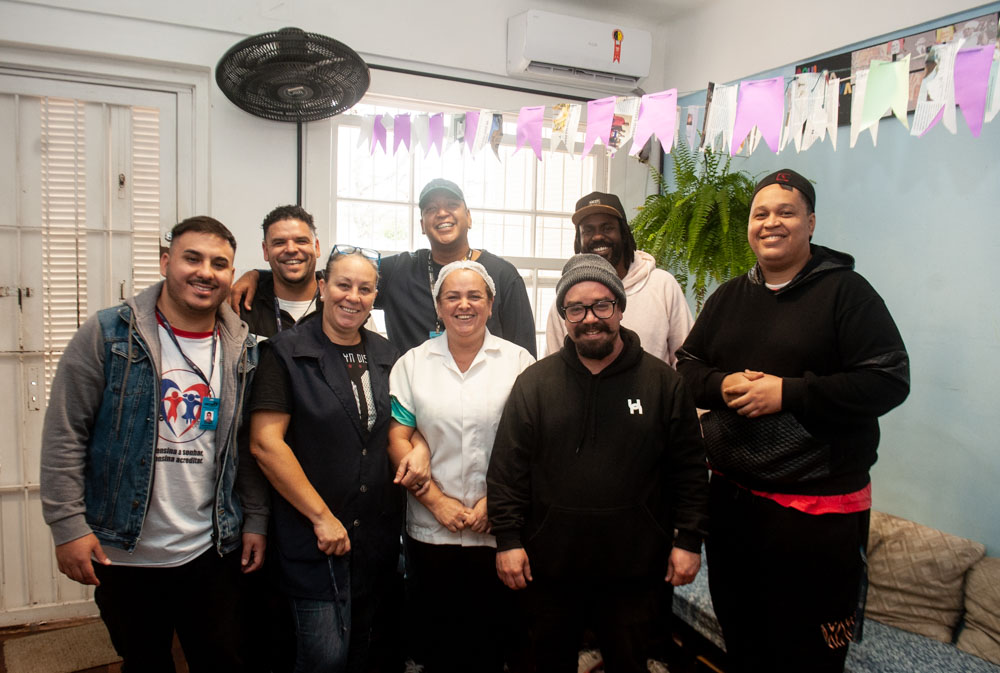
Part of the team while working on the shelter where Alves works. Well-structured and catering for 15 to 20 teenagers who study and work, the house is a shelter for young people who are in a situation of social or family vulnerability (Photo: Flávio Dutra/JU)
According to article 319 of the Brazilian Code of Criminal Procedure, the judge may analyze the opportunity and convenience of applying the RJ as one of the precautionary measures at the presentation hearing. Within the Judiciary, it can be applied at any stage of the process.
“I was rescued by those who knew me, knew my essence, and I began to take part in peacemaking and conversation circles. I started thinking about the life I wanted soon after, working on a project to raise awareness among teenagers in schools, meeting new and different people, like Dr. Leoberto, and turning my life around,” Alves recognizes. “I then realized that that couple could be with someone sick inside the car, taking them to the hospital, or with a child in the backseat. In short, everyone has their own history,” he adds.
Today, Alves is 34 and coordinates a shelter that takes in around 20 children or adolescents who have been removed from their families in Porto Alegre. Both his parents and his three brothers are dead, and he is grateful for the outcome of his story and for the restorative justice practices that have helped him to get this far and to be fine.
“If I didn’t get caught, I was going to keep committing crimes. I would eventually get arrested or killed anytime soon, like my younger brother, who died at 18.”
Adilson Alves
Case zero
In 2002, Daiane Vidor (40), now a lawyer, was at home with her eight-month-old baby and her mother when she was held up by three robbers, two teenagers and one adult. Vidor, who was 19 at the time, and her mother were also taken hostage. The victims knew the teenage assailants because they lived in the same neighborhood.
When the case went to court, Restorative Justice was applied. In addition to the custodial measures, meetings were held in which everyone could speak and be heard, and the offenders apologized.
“I realized that caring for the victim is crucial, as well as caring for the defendant, because both have their lives shaken up.”
Daiane Vidor
Due to the striking incident, Vidor chose to study Law and works today as a criminal lawyer. “I’m completely passionate about my profession,” she says. The situation she and her mother lived through is considered the case “zero” because it was from it that Brancher started the restorative justice program in Rio Grande do Sul, when he served as a judge in the 3rd Children and Youth Court in Porto Alegre. In November 2022, the Court of Justice held a meeting to mark the 20th anniversary of the event, which featured testimony on the lessons learned by the various people involved in the case.
The model for implementing restorative justice in Porto Alegre was tested and shaped little by little. In 2009, magistrate Brancher submitted the formal request for the creation of the Restorative Practices Center to the court administration of Court of Justice. According to a contextualization presented in the document, “since March 2005, the Regional Court for Children and Youth in Porto Alegre has been, in a pioneer movement, implementing Restorative Justice practices”. According to Brancher, this is not an explosive revolutionary approach, which seeks to end traditional justice, but rather a subversive one, which gradually changes a system, inoculating a new culture of justice. In 2016, the National Council of Justice of Brazil (CNJ) issued Resolution 225/2016, which defines the National Restorative Justice Policy within the Judiciary.
In Rio Grande do Sul, the city of Caxias do Sul became an example regarding restorative practices. The city was a kind of laboratory for the implementation of the Social Pacification Program for the 21st Century. The program, which was coordinated by Brancher, relies mainly on the application of restorative practices in municipal schools. In 2014, the administration of Caxias do Sul created the Law 7.754, which implemented the ‘Caxias da Paz’ [Caxias of Peace] Restorative Pacification program.
Among the many cases Brancher took part in Caxias, one involving a 17-year-old girl had a unique outcome. She worked as a cashier in a mini-market and used the bus to get around. One day, she was mugged at the bus stop. A 19-year-old boy threatened her and stole her phone. The episode left the girl in such a shock that she needed psychological treatment.
Brancher arranged an encounter between the victim, the offender, and their families. “They talked to each other, and the perpetrator even gave financial compensation for the victim’s psychological treatment, even though they both came from families with limited financial resources. The assailant, the victim and the girl’s mother all lived nearby, and left the meeting in the same Uber,” the magistrate recalled.
Social integration and focus on young people
Justice has been an element of mediation since the beginning of times. Daniel Achutti, Professor at the School of Critical Restorative Justice, and a researcher at the Pontifical Catholic University of Rio Grande do Sul (PUCRS), recalls that the current punitive system comes from a not very long transition. “Before that, people awaited trial, then were sentenced to death, or released. When it was no longer possible to justify execution, imprisonment became the greater penalty. What we have now is something from the 18th century onwards, since the Enlightenment period,” he explains.
Achutti, who is also a consultant to the Restorative Justice Commissions of the Brazilian Bar Association (OAB, in Portuguese) of the states of São Paulo and Rio de Janeiro, analyzes: “now there is a general dissatisfaction with the system, both from the victim, who is neither listened nor given reparation, and from the offender – and their family members –, who lives in inhumane conditions and does not get a chance to recover and return to social life. It is simply a machine for convicting people and throwing them in high-cost prisons”. In an international context, abolitionism and alternative justice systems have been discussed by American writer and educator Walidah Imarisha in an interview for The New Inquiry in 2017.
In the book Discipline & Punish: The Birth of the Prison, Michel Foucault shows that the way offenders are punished has changed, in large part, because society and the way power is exercised have changed. This happened because each period has its own penal laws, which rely on different forms of punishment, from physical violence to the application of humanitarian principles for the recovery and reintegration of the offender into society.
Just as the execution system evolved to the prison system, there could be an evolution from this to the restorative system, Achutti points out. He says that RJ can be used to address different situations of varying severity, including homicide cases, because it doesn’t focus primarily on punishing the offender, but on repairing the victim’s losses.
“In order not to always punish the same social groups, we need a broad restorative format,” Achutti explains. Besides, he recognizes that the method produces more satisfactory results in socio-educational measures with young people, such as teenagers. This was the case with Vidor, Alves and many other girls and boys who benefited from RJ.
Brancher goes beyond and emphasizes the need for looking at each youngster story. He says that, in general, there is a mosaic of faults before an infraction, ranging from the family and the school to the child protective services and the SUS (Brazilian single healthcare system), their affective and pedagogical capacity. When all that fails, the police and justice come in. That’s why he advocates for a multifocal vision before any sentence. “Working with children and young people is a privileged niche for building laws and a friendlier justice”, Brancher points out.
The magistrate also says that, in this area, there is a more flexible legal structure, because the judge can, at any time, alternate, modify, suspend, or close the case without a decision on the merits. There is also a tendency towards interdisciplinary visions, with the work of Social Work and Psychology teams. “Even in the more severe cases, the judge can approve the suspension or even the extinction of the process when it involves teenagers, if a deal is made”, he says. The case is not the same for adults, for example. The measure is provided for in the Brazilian Children and Adolescents Statute (ECA, in Portuguese).
Brancher stresses that the ECA and the National System for Socio-Educational Assistance (SINASE) are in favor of a pedagogy of peace for adolescents: “in 2012, SINASE mentioned for the first time in Brazil the RJ when stating its objectives: criminal reprobation, social integration, criminal rehabilitation, and accountability of minors”.
According to Brancher, depending on which button you press, you can reach three worlds: repression, rehabilitation, and accountability. However, RJ could be more advanced today. That doesn’t happen because of the entrenched punitive and incarceration culture, mainly involving drug trafficking. “Everything is very much under the influence of a policy of arming people, a culture of police brutality, and violence and hatred on social media. It’s like a disease that takes time to cure. We’re in the process of a homeopathic cure, and I don’t know if we’ll get there,” concludes the magistrate.
Omission may be more violent than action
The British researcher and a reference in non-violent communication Dominic Barter tested restorative practices and conflict mediation for the first time in 1995, when he went up to the slums of Rio de Janeiro, where most favelas are located. Even though he had never heard of the term Restorative Justice at the time, the practices of listening, responding, and making amends in an empathetic way were already known to the researcher. “I’ve tried to work in areas of conflict to reduce repression, to strengthen the partnership within us, and to do this together with others, to build agreements. There, something non-violent is happening. For me, the two things have always gone hand in hand”, Barter says.
Barter emphasizes that it is essential to differentiate between violence and crime, because they are not always the same thing. Sometimes non-action is more violent than action. A recent example is keeping people in slavery-like conditions, such as what happened in Bento Gonçalves. Many people who could have acted before and didn’t, left the workers in inhumane conditions”, he says.
According to Barter, what happened in the Brazilian city of Bento Gonçalves involved violence and illegal activities, but there are other cases that, although legal, are very violent. “Hunger is one example. While millions are literally starving, others travel in private jets and spend billions. This is legal, however, it is extremely violent”, he observes. “Violence is the tragic expression of necessity. It is tragic not only because of the damage it causes, but also because it is so effective that drives our actions and omissions. For this reason, we must address this necessity,” he adds.
The researcher explains that, when we settle agreements where only a few people win and many other lose, it is hard to break the monologue of individual and collective violence. “This is a very colonial logic, we need to get out of this competition where, for one to win, another must lose. Because this also generates a series of other social consequences, such as depression and other mental health problems. Violence and insecurity contribute to worsening the environment. Our ecosystem is not healthy,” he argues, and concludes pointing out that conflicts are natural and healthy in a society, and that dialogue – amidst conflict and pain – is a very important tool for implementing RJ.
To do this, Barter says that the intelligence of involving the people and the reality in which they are inserted is essential, using non-violent communication and peace circles as means. It is therefore better to look at the place of difficulty and learn from the wisdom that is already there, without bringing in ready-made forms from outside. “And this is the spirit for RJ: taking values and traditions into account when solving problems, not trying to bring in a method or a standardized way from outside to solve a specific situation in a locality. If we didn’t have the capacity for dialog and cooperation to build solutions, we wouldn’t have made it this far,” he says.
We’ve failed in education
Like a table, if even just one of its four legs is not in contact with the ground, there is an imbalance. The comparison links up with the document Learning: the treasure within, a report to UNESCO of the International Commission on Education for the Twenty-first Century. The report establishes the four pillars of lifelong education: learning to know, learning to do, learning to live together, and learning to be.
“What our educational system has basically always done is to take care of just one thing: learning the ability to do, that is, technical and professional skills, leaving the others in the background. Only recently has there been a more comprehensive approach in some schools, focusing on caring for the environment and the importance of relating to others. And this also favors the path of RJ,” Brancher analyzes.
Brancher also says that these are vital aspects in the equation, since the pedagogy of punishment always has an authority from the outside in, from the top down. Education, in turn, by internalizing how to live together and how to be, creates a framework of values: ethical reciprocity, responsibility, transparency, loyalty.
“If there is no such balance and only technical training is encouraged, more and more control mechanisms will be needed, security cameras on every corner – a society in the style of George Orwell’s ‘1984’. Even so, none of these will be able to solve the problem, since you can’t put a guard or a camera on every corner, and people will continue to run red lights, feel insecure, commit crimes. The way out is to activate and work on values for autonomy, an internal commitment on the part of the person,” says Brancher.
The strengthening of education as a cornerstone in this process took place with the launch of a national campaign on March 14, 2023. CNJ has chosen 2023 as the Year for Restorative Justice in Education as a way to involve and mobilize both Judiciary and society to act on behalf of education and RJ. One of the main promoters and protagonists of the campaign, Brancher emphasizes that it is necessary to change the cultural matrix to build a fairer judicial system.
“It’s a set of consolidated beliefs that comes from childhood. It’s very strong and present when you censor and punish a child, for example. It is inoculated into the child’s character and deepens in the school and criminal system.”
Leoberto Brancher
Institutional Branch
Among the institutions that already have restorative initiatives and practices are FASE (Fundação de Atendimento Sócio-Educativo do Rio Grande do Sul, in Portuguese) and the Superintendence of Penitentiary Services of Rio Grande do Sul (SUSEPE, in Portuguese). Fase has positively achieved its goals with regard to discharging young people from the socio-educational system through the circle of commitment. In 2023, of the 47 adolescents leaving the socio-educational system, 44 took part in restorative practices. In addition, the organization held two other family circles and two restorative circles resulting from the Disciplinary Evaluation Commission (CAD), which involved conflicts between teenagers.
In a note sent to UFRGS Journal, Fase’s Social Communication Department said that the reference precepts of the peace-building circles are added to the work carried out at the Foundation, because they allow the teams to use this tool as a strategy to work on resolving crisis situations, such as medium and serious disciplinary incidents referred to the CADs. “Whenever there is a conflict between two teenagers, or between teenagers and Foundation staff, the parties are offered Restorative Practice,” says the institution’s spokesperson.
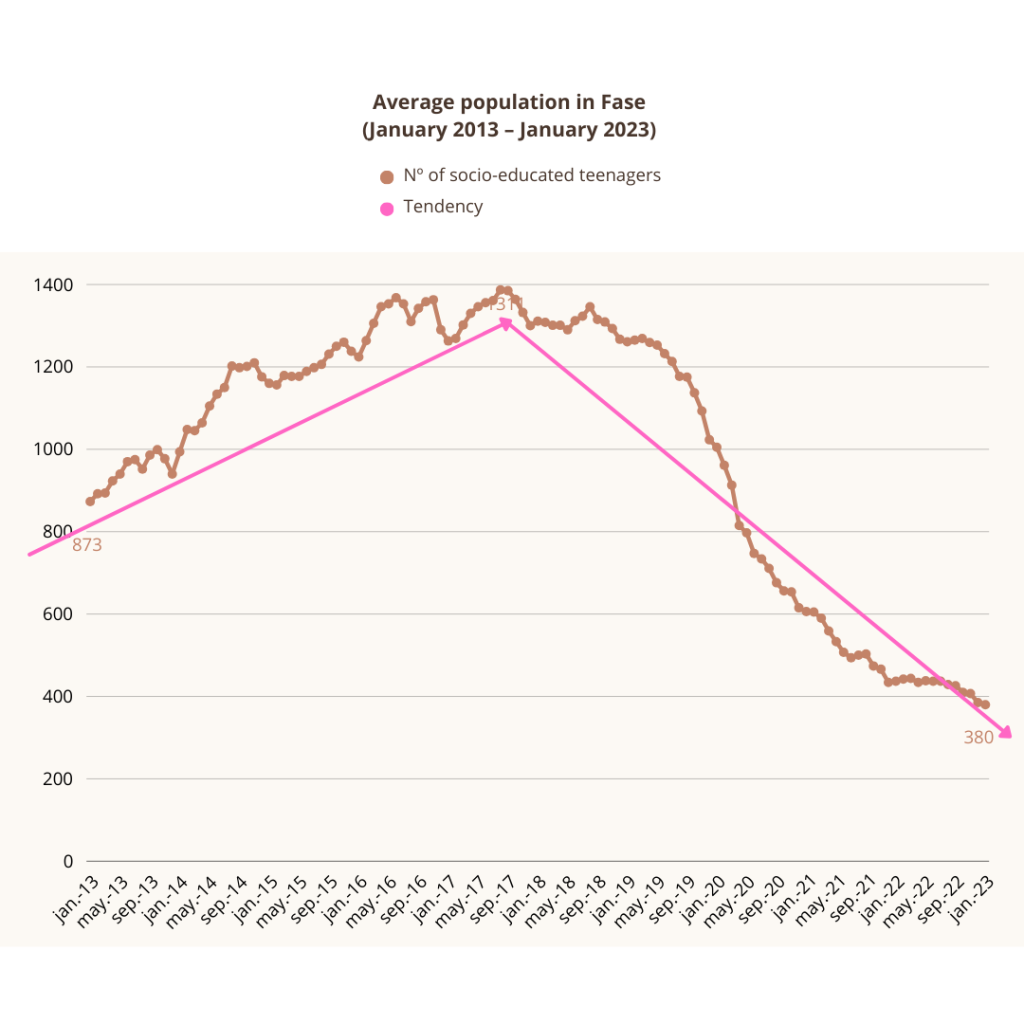
In 20 years, the number of inmates at FASE has dropped significantly. In 2003, there were 906 young inmates; in 2017, there were almost 1,400; today, there are 375. There are several factors involved in the impact of this reality, in addition to the RJ methods. First, there has been a reduction in the country’s youth population. In Rio Grande do Sul, between 2011 and 2020, the accumulated decline was more than 120,000 inhabitants between the ages of 15 and 19, according to estimates. However, in the opposite direction, until 2018, the average number of inmates in Fase increased every year, reaching a rate of 161.6 socio-educated people for every 100,000 inhabitants in the state. Since then, this rate has been decreasing and, in 2022, it reached 57.4, which is about a third of what it was five years ago.
According to Fase’s Egress Monitoring Center, “since 2005, RJ has been disseminated here in the state as a method of resolving and preventing new conflicts in various spaces and institutions, such as schools and even Fase”. In addition to this, COVID-19 and the decrease in violence indicators in Rio Grande do Sul are pointed out as effects on the reduction of inmates in the institution.
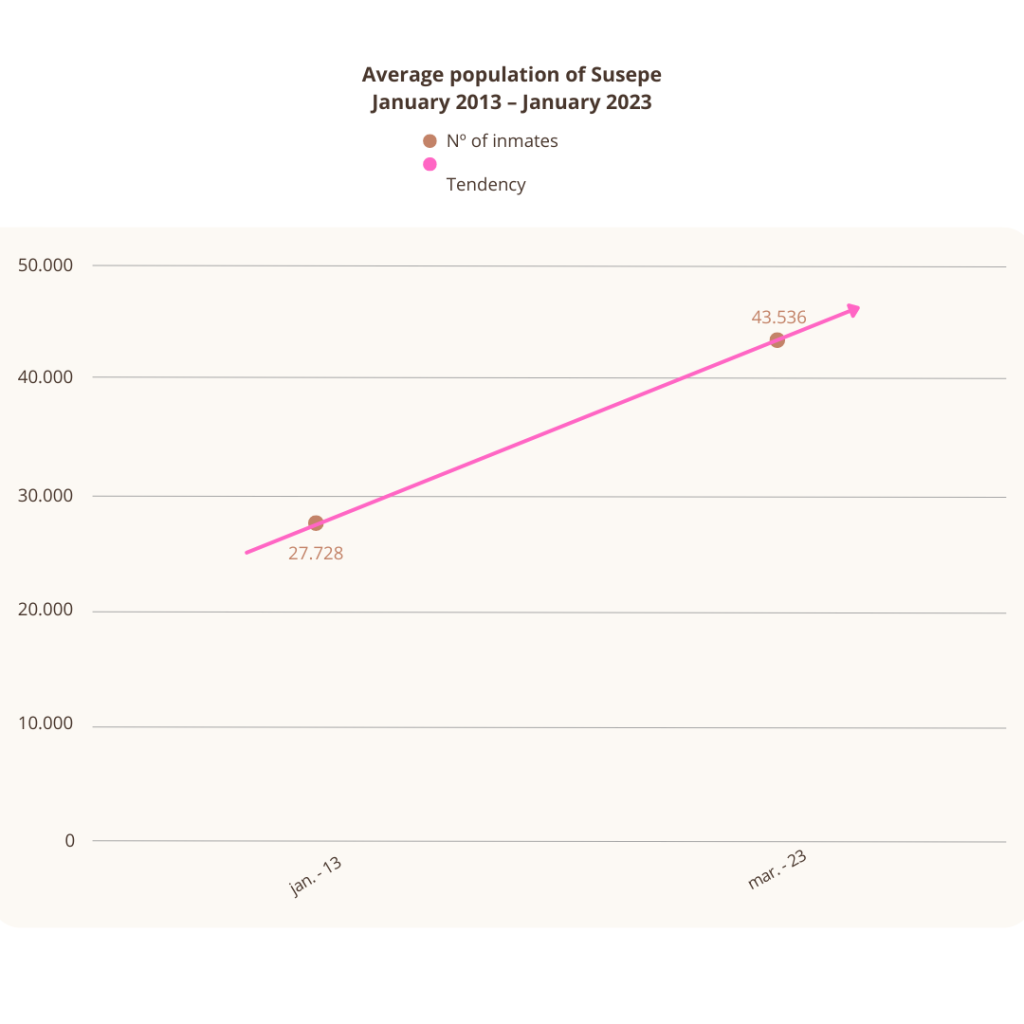
In the opposite direction, the adult prison population grew by more than 15,000 in 10 years in Rio Grande do Sul. Currently, SUSEPE’s documents show that there are 43,536 prisoners serving time, 41,071 men and 2,493 women. According to the institution, in 2013, the prison population amounted to 27,728 people serving time, 26,018 men and 1,710 women.
Camila Ferreira da Rosa, head of the Special Projects and Penal Alternatives Division, says that RJ practices have been taking place since June 2011, when the School of Forgiveness and Reconciliation began running training courses for those working at SUSEPE, who soon became multipliers of the proposal. In the same year, similar study groups began in three regions of the state – Porto Alegre, Passo Fundo and Caxias do Sul.
The Restorative Justice method has been recognized as an educational practice within SUSEPE, having been regulated in 2021. Also in 2021, the Circles in Motion training course took place, promoted in partnership with various entities and legal bodies. In 2022, a special committee of SUSEPE workers was appointed to draw up a draft institutional project, normative instructions, and a work plan to guide all restorative practices in the institution. According to Rosa, it is also a way of multiplying and socializing the knowledge acquired over the years by those working in the area.
Translated into English by Isabel Cony, undergraduate student enrolled in the course “Supervised Translation Training II (English)” of the Undergraduate Program in Language and Literature, under the supervision and translation revision of Professor Elizamari R. Becker (P.h.D.) – IL/UFRGS.
:: Read in Portuguese
Práticas restaurativas avançam no Judiciário e buscam superar a fórmula culpa, lei e prisão ao infrator