
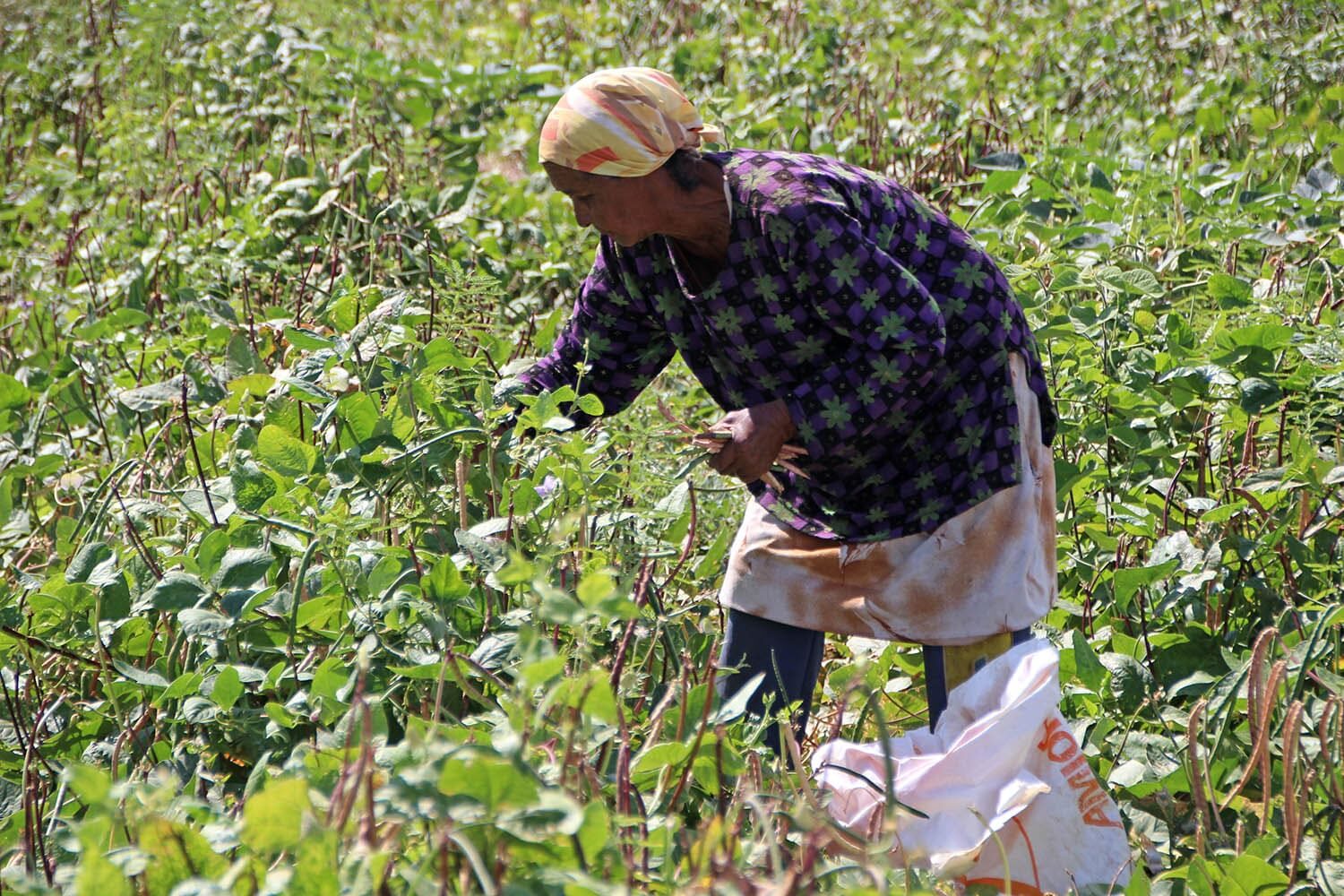
Rural development | Group activities, such as cooking and handicraft workshops, promote association among rural women and act as therapeutic environments for this population group
*By Geovana Benites
*First published January, 19th 2023
*Photo by Codevas/Dissemination
A Master’s thesis defended by a student of the Graduate Program in Rural Development at the Faculty of Economic Sciences at UFRGS (the Federal University Of Rio Grande Do Sul) analyzed the mental health perceptions of rural women participants in community groups and from the point of view of Social Regional Technical Assistants who work for EMATER/RS-ASCAR . Carried out by researcher Joice Schneider Marmentini, under the supervision of Professor Tatiana Engel Gerhardt, the investigation also traced the activities developed by EMATER/RS-ASCAR about the theme. By means of interviews with professionals from eight regions of the State, Joice analyzed how they understood the issue of mental health in their work and how this perception affects the women assisted by EMATER. One of the findings indicate that the group activities developed by EMATER are directed to mental health promotion and prevention for rural women, for they are characterized as therapeutic environments.
Mental health entails much more than clinical diagnoses – it is associated with how an individual reacts to life’s challenges, changes, and the conciliation between his/her own ideas and emotions.
According to the research, people who live in rural areas are more susceptible to developing problems related to mental health – and both in the countryside and in the city, women specifically are even more at risk.
Mental health is an ever-present issue in the lives of rural women and pervades their social environments, not only among them but also in their interactions with a wide range of professionals who work with such populations to improve their living conditions and rural development. Mental health happens all the time, everywhere, provided people allow it to happen. So, mental health is not only a question of diagnosis – mental health is achieved when it is openly and activiely promoted in social spaces and in social interactions,” explains Joice.
Welcoming, Caring, and Listening
EMATER/RS-ASCAR aims to contribute in a planned, free and continuing way to the economic and social development of Rio Grande do Sul’s rural areas, functioning as entity for advisory, defense and warranty rights. For this occurs, the institution develops actions with the purpose to strengthen, provide autonomy and prominence to this group of population. In 2013, Joice entered EMATER as a social rural extension worker and then she was able to work with indigenous and small-scale family farmers. Her Master’s thesis came up from that meeting and from her will to better understand the rural context and if/how public policies would reach these populations, especially the women from these regions.
“′The period of the COVID 19 pandemic showed us that we should reframe our practices and understand that our mental health is important and needs care. Before the pandemic, the Internet access in rural areas was optative, but presently it has become a necessity.”
Joice Schneider Marmentini
For this study, the researcher talked to ten professionals (mostly women) from eight regions of the state. At first, the list of questions addressed issues related to the educational and personal tracks of each interviewee, such as level of education and working time in the company.
After this stage, Joice asked about the understanding of these professionals in relation to the groups of women assisted by EMATER.
“Most of the professionals said that [such groups] are very important tools to reach entire families because once you are working with women, you know this will consequently take [the subject area] to her family”, says Joice. “In other words, women play a catalyst role in the outreach of social work among her relatives, partners and fellow workers,” she adds.
In the interview, Joice also asked questions related to which activities had been promoted by the institution, first to sort them out and second to identify if there was any work focused on mental health. The researcher observed that, although there is no work specifically focused on the mental health of the rural populations, there are social and health care activities that somehow deal with this issue.
When the interviewees were asked about how they perceive the mental health of rural populations, they said the aging of the rural population seems to be a prevalent cause of illness.
“They realized that women get ill more frequently because of the overwork: besides helping in the tillage, women are also in charge of the housework. In rural communities, only women are responsible for taking care of the house and feeding the children, thus being more overloaded with such tasks than other women who live in urban areas,” reports Joice.
Access to mental health
Based on the interviews, Joice was able to conclude that the activities performed by EMATER are of great importance in promoting the mental health of rural women. According to the professionals’ reports, activities related to handicrafts, to bioactive plants, to food sovereignty and its security were the most influential in promoting the mental health of these women. Including, for example, crafts, gardening, landscaping and culinary therapy workshops. Such activities open “a moment to improve skills, as well as to express emotions in what is being done, which could be painting or knitting. So, this moment is the stimulator of the therapy and of the therapeutic environment,” says the researcher.
In addition, these activities have also deepened the integration among the women in rural areas. As a result of them, the professionals noticed that the participants created support groups to help each other, such as message groups on WhatsApp, which facilitate a more constant social interaction.
“We reported that there was a sense of collective responsibility, this concern of solidarity revived with more significance in people’s lives.”
Joice Schneider Marmentini
If, on the one hand, the activities performed with the interviewees reinforce the role of women in the patriarchal society’s subaltern places, on the other hand, these same women can use the same strategies to promote meaningful changes by getting hold of the knowledge acquired through what they have been experiencing. Rural handicraft activities, for example, can either consolidate the role of women as home caretakers or can also raise the women’s awareness for the commercial potential of selling their handicrafts and consequently opening opportunities for their financial independence, which would give new meaning to the whole activity performed. “We have to promote research that emphasizes not just mental illnesses, but also mental well-being, inclusive programs that make people feel good,” concluded Joyce.
Translated into English by Paulina Da Costa Amaral, undergraduate student enrolled in the course “Supervised Translation Training I (English)” of the Undergraduate Program in Language and Literature, under the supervision and translation revision of Professor Elizamari R. Becker (P.h.D.) – IL/UFRGS.
:: Read in Portuguese:
Dissertação investiga a promoção da saúde mental das mulheres rurais a partir da perspectiva dos profissionais da Emater/RS