
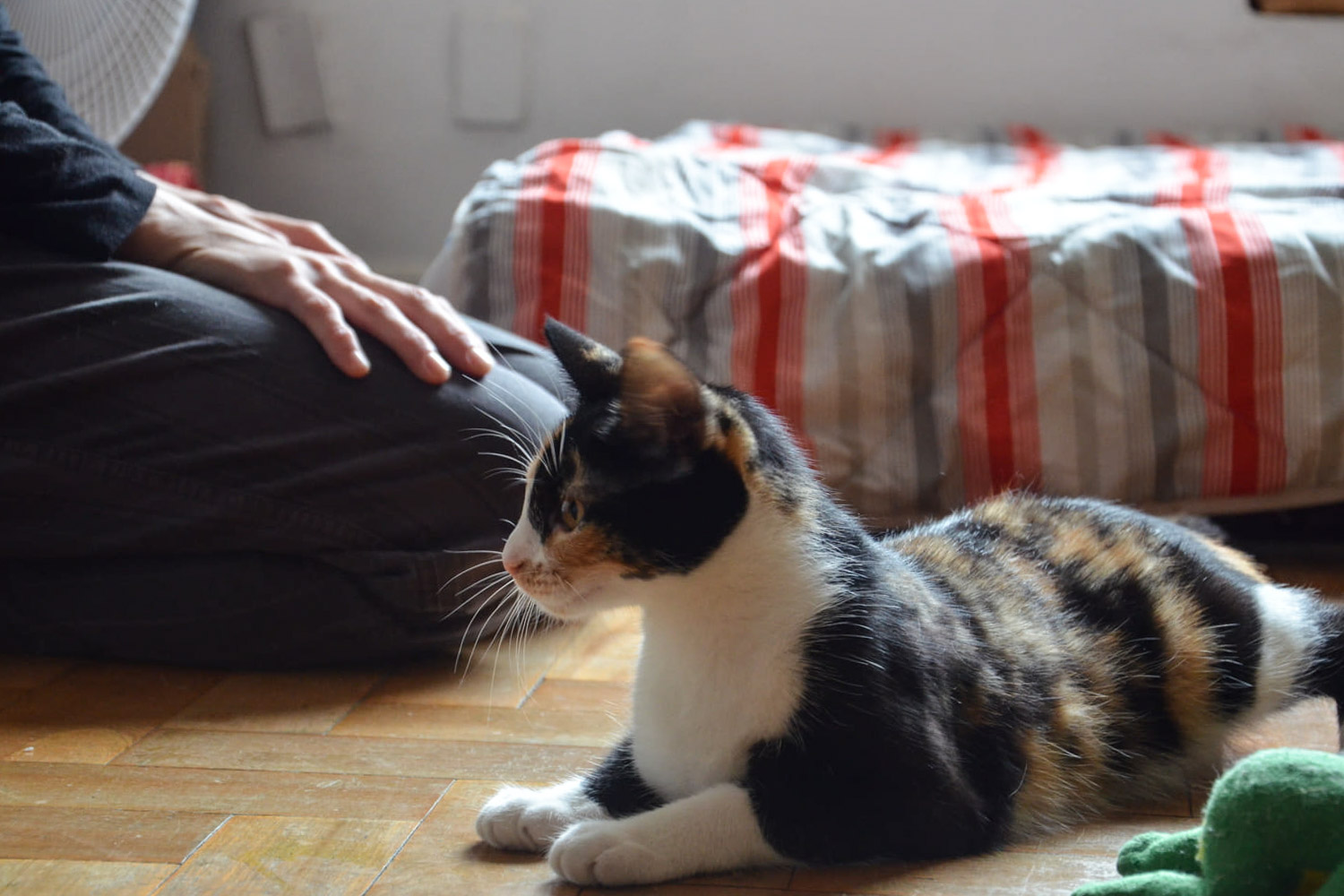
Biological Sciences | Master’s thesis analyzed the impact of confinement and social interaction on the well-being and behavior of domestic cats
*First published April 10, 2025
*Photo: Pietro Scopel/UFRGS Journal
The COVID-19 pandemic drastically changed everyone’s daily lives, but its effects were also felt by another group: domestic cats. A study conducted by veterinarian Maíra Ingrit Gestrich-Frank as part of her Master’s in Animal Biology at UFRGS revealed that the relationship between cats and their guardians changed during the confinement period.
Passionate about felines since childhood, Maíra has always sought to better understand the needs and behaviors of animals. During her undergraduate studies in Veterinary Medicine and Psychology at UFRGS, she deepened her research on feline welfare, which culminated in her master’s thesis. “The Covid-19 pandemic provided a unique opportunity to analyze how human-cat interaction influences the behavior and body condition of these animals,” she explains.
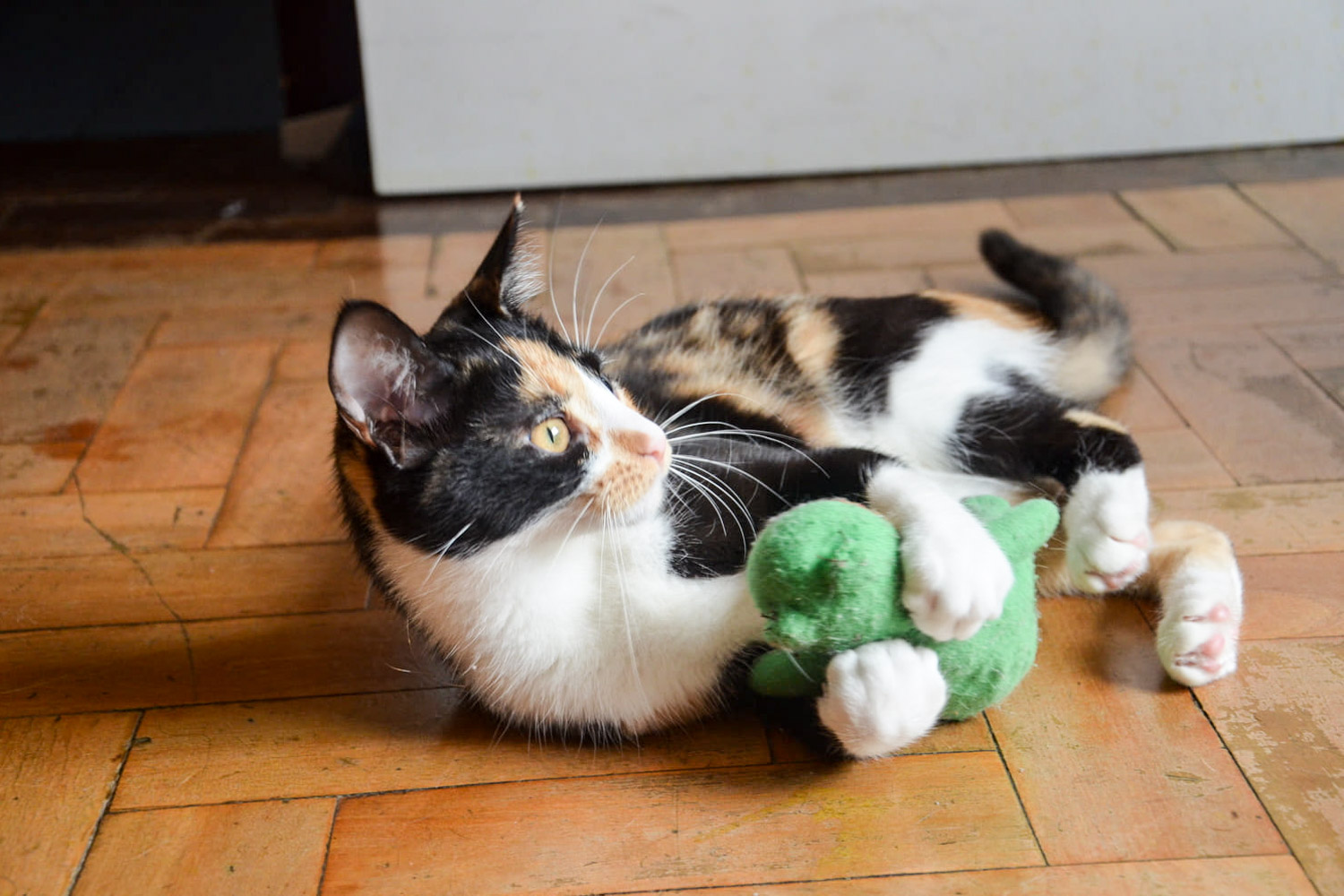
With guardians spending more time at home, the study observed an increase in what is known as the “environmental score,” indicating an improvement in the quality of cats’ living environments. There was an increase in the availability of resources such as scratching posts, safe resting areas, and interactive toys. Positive interactions between humans and cats, such as playing and brushing, also became more frequent during that period.
However, some behavioral changes among the cats also drew attention. Many became more affectionate and playful, seeking greater interaction with their guardians. On the other hand, negative behaviors, such as restlessness, excessive grooming, changes in appetite, and inappropriate elimination of feces and urine, also showed a slight increase.
“During confinement, cats spent more time with their guardians. Therefore, the increase in time spent together was the main change in routine and social interaction between humans and cats observed in our study,” Maíra points out.
“The data show that cats who spent more time alone had lower environmental scores. In other words, more frequent presence of guardians at home and interaction with their cats seem to be factors that contribute to a healthier feline environment, in the sense of providing more environmental resources for their pets”
Maíra Ingrit Gestrich-Frank
The research also indicated that lack of safe outdoor access and a monotonous routine may predispose cats to obesity and other diseases. Cats that had access to fresh air, through screened windows or enclosed patios, or engaged in physical activity were less likely to gain weight. The study suggests that leash walks and “catios” (safe, enclosed areas) are alternatives to help keep cats active and healthy.
Methodology and Data Analysis
The study analyzed three distinct periods: pre-pandemic, confinement, and post-confinement; investigating how changes in routine impacted the well-being and behavior of domestic cats. Maíra used an online questionnaire with 31 questions, answered by cat guardians from different regions of Brazil.
Participants were required to be at least 18 years old, live in Brazil, have lived with the cats studied for at least one month before the start of the COVID-19 pandemic, and be able to provide information for all three analyzed periods. Additionally, only cats over two years of age were included in the analysis.
Data collection took place in 2023, and participants provided retrospective information about their cats’ conditions across the three phases. The sample was obtained through social media posts, animal adoption groups, emails sent to universities, and posters displayed in veterinary clinics.
The questions that composed the environmental score evaluated several aspects of the cats’ living spaces, such as the availability of food and water bowls in different locations, food enrichment through objects filled with food (like balls or puzzle feeders), resting spots where cats could sleep undisturbed, litter boxes distributed in multiple areas, proper scratching surfaces (scratching posts or tree trunks), and elevated areas where cats could perch. The study also assessed the types of interaction between guardians and their cats, including activities like brushing and playing, as well as the absence of punishments, such as yelling, scolding, or using water sprays.
The behavioral score, in turn, evaluated cats based on ten negative behaviors, scoring them to allow comparison over time. These behaviors included: spending long periods hidden; showing excessive fear; displaying aggressiveness, restlessness; frequent meowing and agitation; engaging in excessive tongue grooming; ingesting non-food items (like plastic or fabric); changing in appetite; gastrointestinal problems (vomiting, diarrhea, or constipation); inappropriate elimination (urination or defecation outside the litter box); and destructive behaviors (such as scratching or biting furniture and objects). The higher the behavioral score, the lower the presence or severity of these problems.
Maíra also highlights that the lack of training among guardians in assessing cats’ body condition and the retrospective nature of participants’ reports were limitations of the study. “In the future, refining the scales and conducting new studies could broaden our understanding of how the environment impacts feline health,” she says.
Recommendations for Guardians
To ensure feline well-being, Maíra emphasizes the importance of following the guidelines of the American Association of Feline Practitioners (AAFP) and the International Society of Feline Medicine (ISFM), promoting enriched environments and positive interactions with cats.
“Respecting cats’ resting periods, providing them with safe hiding spaces, and avoiding punishments is essential. A cat’s well-being is directly linked to the quality of interaction with its guardian”
Maíra Ingrit Gestrich-Frank
During activities such as eating, drinking water, and using the litter box, cats can feel vulnerable; therefore, these items should be placed in quiet areas, away from noise and heavy movement, to prevent stress and anxiety. It is also important to provide structures for climbing and scratching, as these are natural behaviors that contribute to their well-being. A private space for resting and hiding also helps cats feel protected and in control of their environment.
Routine and interaction with humans should be predictable, allowing cats to feel safer. Small habits, such as offering a treat before leaving the house or playing at the same time every day, can help reduce stress and provide enjoyable, stimulating moments.
Another essential aspect is sensory enrichment. Watching the outdoors, following the movement of an aquarium, or playing with sound-producing toys are examples of visual and auditory stimuli that can engage cats. The sense of smell can also be stimulated with specific herbs or pheromones. Maíra adds that, whenever possible, giving cats access to a protected outdoor area, such as a screened balcony, is an excellent option. In addition, some cats can adapt to the use of harnesses and leashes for walks, as long as their limits are respected and the experience remains positive.
Thesis title: O impacto do confinamento e do convívio social no bem-estar e comportamento dos gatos domésticos (Felis catus) – The Impact of Confinement and Social Interaction on the Well-Being and Behavior of Domestic Cats (Felis catus)
Author: Maíra Ingrit Gestrich-Frank
Supervisor: Flávia Pereira Tirelli
Co-supervisor: Maria João Veloso da Costa Ramos Pereira
Program/Unit: Graduate Program in Animal Biology – Institute of Biosciences, UFRGS
Translated into English Victória Lenz Menezes, undergraduate student enrolled in the course “Supervised Translation Training II (English)” of the Undergraduate Program in Language and Literature, under the supervision and translation revision of Professor Elizamari R. Becker (P.h.D.) – IL/UFRGS.
:: Read in Portuguese
Pesquisa revela mudanças na relação entre gatos e tutores após pandemia