
Chemical Engineering | Proposed process improves caffeine adsorption by more than 90%, an important indicator of contamination in water resources
*By Gabhriel Giordani
*First published Mar 9, 2023.
*Photo: Pixabay
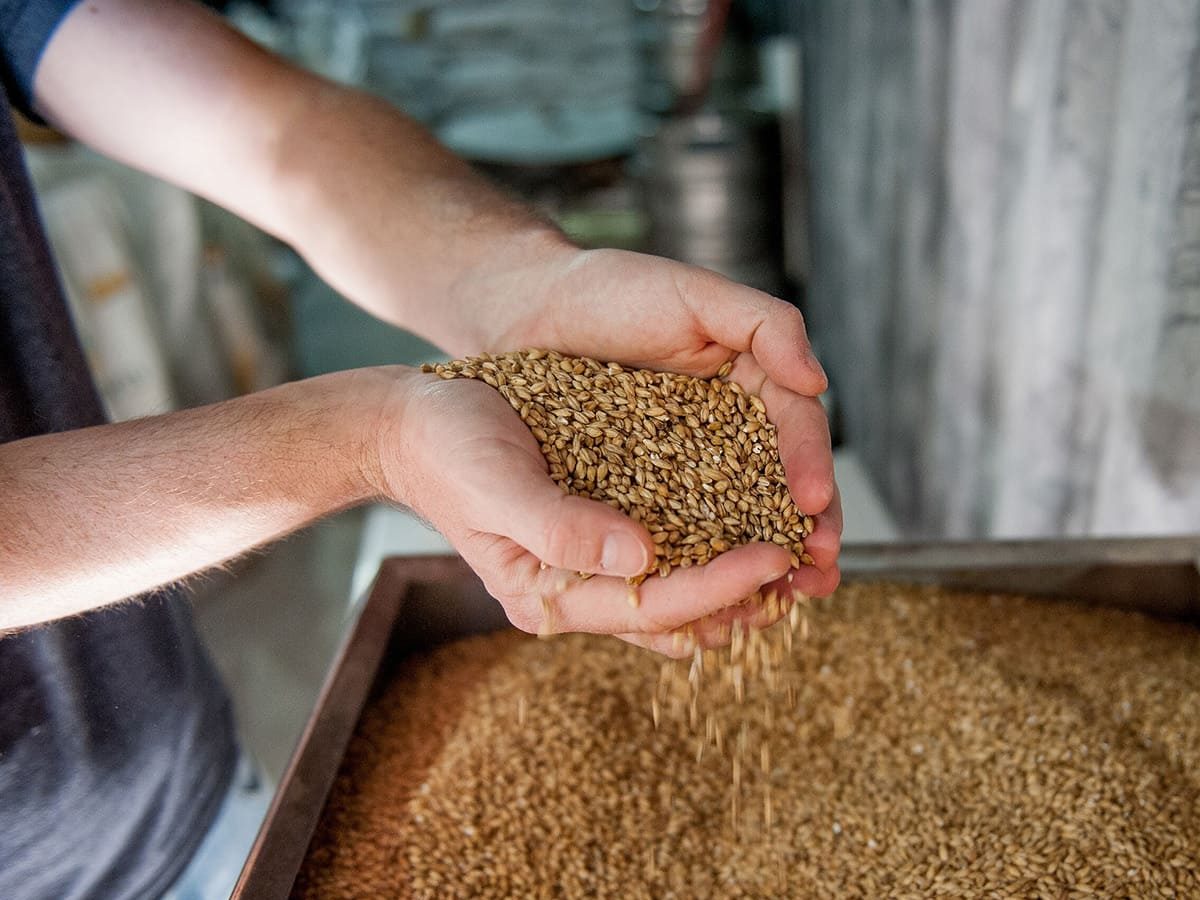
Research by the Graduate Program in Chemical Engineering at UFRGS studied new ways to combat pollution caused by caffeine from pharmaceutical compounds. In the study, researcher and chemical engineer Suyanne Bachmann used malt residue from breweries to adsorb caffeine.
Caffeine is currently considered the most representative pollutant caused by pharmaceutically active compounds and an important indicator of anthropogenic contamination (caused or created by human action) in water resources. Although the compound does not cause toxicological effects in the short term, a high concentration of caffeine indicates that the aqueous matrix (rivers, lakes, etc.) is polluted and that there is an enhanced probability of potentially dangerous contaminants that are difficult to detect, such as drugs, agrochemicals, and pesticides.
To solve this problem, an activated carbon adsorption procedure is used today. Adsorption consists of retaining a certain substance (in this case, caffeine) on the adsorbent surface, without being incorporated into the volume of the other (aqueous matrices). This process, however, has limitations in terms of cost and regeneration of activated carbon, that is, the possibility of reusing this material.
Therefore, Suyanne bet on the use of malt residues from breweries. The material is inexpensive and abundant in the country as Brazil is the third largest beer producer in the world – the sector has grown 35% in the last decade.
“Caffeine is a totally common substance, present in a wide variety of foods and beverages. It is continually reinserted into the environment, and this long-term effect on the environment and human health is not known,” says Suyanne. “This research also showed that the water treatment system currently available is based on physical-chemical processes that do not remove caffeine, subjecting the population to greater exposure [to this substance],” she adds. The work was supervised by Professor Liliana Féris, from the School of Engineering, and co-supervised by Tatiana Calvete, researcher at the Laboratory of Environmental and Analytical Technology at UFRGS.
Development and results
To assess the functionality of the adsorbent, the chemical engineer analyzed three different treatment processes: chemical, thermal, and combined. After that, the most efficient products were selected for kinetic, equilibrium, and thermodynamic studies.
Based on the results of each of those steps, a caffeine adsorption mechanism was designed. The results indicated that the combined treatment (chemical + thermal) was able to increase the surface area of the adsorbent and improve the caffeine adsorption efficiency by more than 90%. The researcher also verified the regenerative capacity of the adsorbent, which means that it can be used more than once for the same purpose.
“This process could contribute to society both in the sense of giving new purpose to the waste that is generated due to the increase in beer production and in the sense of minimizing a possible inappropriate disposal of this material, adding value to it instead. A product that used to be waste can become a source of income,” explains Suyanne Bachmann.
The chemical engineer claims that the results show that the use of adsorption in the physical-chemical treatment contributes to a significant improvement in water quality, mainly through the reduction of alkalinity, conductivity, inorganic carbon, and reduction of caffeine as well.
She also states that, even with all the advances in research and the efforts of several countries in relation to the monitoring of these emerging micropollutants, having control over the presence of caffeine in the water supplies would not be enough to guarantee the protection of the environment. In addition to improving the technologies of the treatment systems, increasing their efficiency, she emphasizes the importance of investing in human and material resources, so that the correct inspection of the quality of the effluents generated by industrial processes may be truly safeguarded.
What still needs to be done?
For further studies, Suyanne suggests new heat treatment studies, with varied times and temperatures so that the structural properties of the adsorbents may be improved. In addition, she argues that kinetic studies should also be analyzed at varied temperature ranges, so that the influence of this aspect on the adsorption rate can be more properly measured.
Finally, she points out that the economic viability of the process and the life cycle of the carbonized acid adsorbent (AD-AC, a type of malt residue that has undergone a functionalization process) should be evaluated seeking to maximize the yield of the material to facilitate its application in industrial scale.
She points out that, as the process is economically viable, energy and chemical resources can be saved. Likewise, transportation costs would be lowered as brewery waste is widely available in the region. According to the 2021 Beer Yearbook, released by the Ministry of Agriculture, Livestock and Supply, Porto Alegre is the second city with the highest number of breweries (43) in the country, and Rio Grande do Sul is the second Brazilian state with the highest production rate of beer.
In addition, Suyanne argues that legal requirements should be created for monitoring pollutants in the country. “The government should review this environmental issue. Once you impose monitoring and make it a legal obligation, every company or industry that treats water will be held accountable. There is no such thing today,” claims the chemical engineer.
Translated into English by Luana Santos, undergraduate student enrolled in the course “Supervised Translation Training I (English)” of the Undergraduate Program in Language and Literature, under the supervision and translation revision of Professor Elizamari R. Becker (P.h.D.) – IL/UFRGS.
:: Read in Portuguese
Estudo utiliza resíduo de malte de cervejarias para o combate à poluição em biomas aquáticos