Anthropology | The study investigates how the family that owns Tafona’s Farm in Cachoeira do Sul critically mobilizes the history of the place for a better understanding of their racial identity
*By Geovana Benites
*First published March 2, 2023
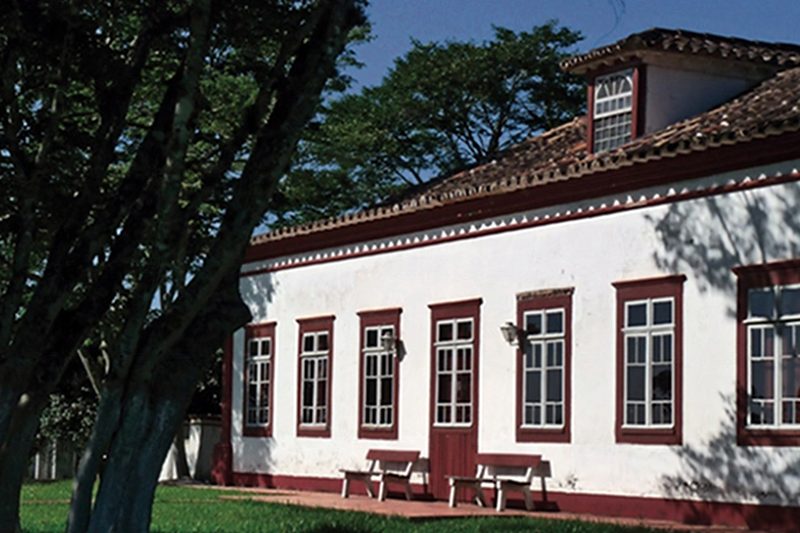
*Photo: Tafona´s Farm, Cachoeira do Sul, 2010 (Renato Thomsen)
A Master’s thesis defended in the Graduate Program in Social Anthropology at UFRGS investigated how the recognition of a slave-owning family’s past affects how White people construct their racial identity. Conducted by researcher Júlia Landgraf, under the supervision of Professor Pablo Quintero, the study analyzed the case of the family that owns Tafona’s Farm, located in Cachoeira do Sul, Rio Grande do Sul. In the 19th century, the site housed the production of cassava flour using enslaved labor.
Through field visits, interviews, and document research, the study examined how the family members mobilize the memory of their ancestors and how it shapes their self-perception as White individuals. Furthermore, the dissertation considers the historical understanding of the processes of racialization in Rio Grande do Sul, as the history of the farm intertwines with the state’s social formation.

Reflections of the past
After understanding the farm’s production process in 2016, the family designated the property as a historical landmark and initiated an educational project, with open visits to students and local groups to talk about the slavery that took place there. Additionally, the project created the blog “Associação de Amigos da Fazenda da Tafona – Casa de Memória,” which narrates the history of the farm. “Despite being something quite obvious, it is also a shock in ethical terms, and then they [the family members] decided they wanted to talk about it,” reveals Júlia. According to the researcher, this behavior stands out because White people do not usually discuss the slavery undertaken by their ancestors.
“This case caught my attention precisely because of this: White people usually do not talk about this past, and when they do, they talk about it in abstract terms, never in concrete terms like ‘my family’.”
Julia Landgraf
Initiated during the COVID-19 pandemic, Júlia’s study was conducted remotely, as most of the analysis relied on in-depth interviews with Marô and Marco, the couple that currently coordinates and maintains the project. During their conversations, the researcher addressed the initiative they formed and sought to understand the experience they had in reclaiming the memory of their ancestors.
The scientist explains that even the family had some difficulty in learning more about the past of the farm because much of the information was hard to access or nonexistent. “For example, we know that the family does not have records about the enslaved people who lived there. There are records about the family’s possessions, but there are none about, for example, who the enslaved people were,” adds Júlia.
For this reason, the longest part of the study was the documental analysis, that included historical records from the 19th century recovered by the family, letters exchanged among family members, as well as documents found in historical archives in Porto Alegre and Cachoeira do Sul. Some examples of these documents that shed light on the farm’s history of slavery are inventories of the family assets, which indicate that the enslaved people were considered property at that time.

Mobilization of White individuals
The field of Critical Studies on Whiteness seeks to promote the reflection of White individuals about what racial privileges are, aiming to dismantle the racism integrated in their identity. Júlia highlights that, through the education of White people, it is possible to change the current scenario.
“White people need to understand that they also have a race, that it is not only the other, such as Black and Indigenous people, who have a race, and that they are part of this process of perpetuating racism”.
Júlia Landgraf
According to the study, the couple who promoted the project gradually developed a discursive education on whiteness. “What they knew was that their ancestors had built their estate as a result of the forced labor of Black people, and their main motivation [to start the project] was a discomfort with this inequality,” Júlia adds.
For Júlia, conducting research in this field was also significant for her as a White woman. She explains that, through the process, she was able to put herself in a position that allowed her to think about and discuss racism, which is not usually done by White people. “Meanwhile, Black people have to deal with racism all the time, and it is not an option for them to stop dealing with it. I think that working intensely on this for two years has immersed me in a very deep pain of contemporary Brazilian society,” she reflects.
Translated into English by Enzo Sezar de Assis, undergraduate student enrolled in the course “Supervised Translation Training I (English)” of the Undergraduate Program in Language and Literature, under the supervision and translation revision of Professor Elizamari R. Becker (P.h.D.) – IL/UFRGS.
:: Read in portuguese
Pesquisa analisa a racialização de pessoas brancas no reconhecimento de um passado familiar escravista
:: Posts relacionados
Trajetórias de figuras negras ensinam que a história dos africanos e afrodescendentes não se resume ...
Livro reflete sobre o trabalho antropológico em prática na atualidade e sua contribuição para os dir...
A comédia de costumes de José de Alencar