
Science | At a crucial time for the preservation of marine ecosystems due to climate change, the modality Simone Dias Marquesis facing difficulties in terms of investment and the training of scientific divers
*By: Simone Dias Marques
*April 11th, 2024
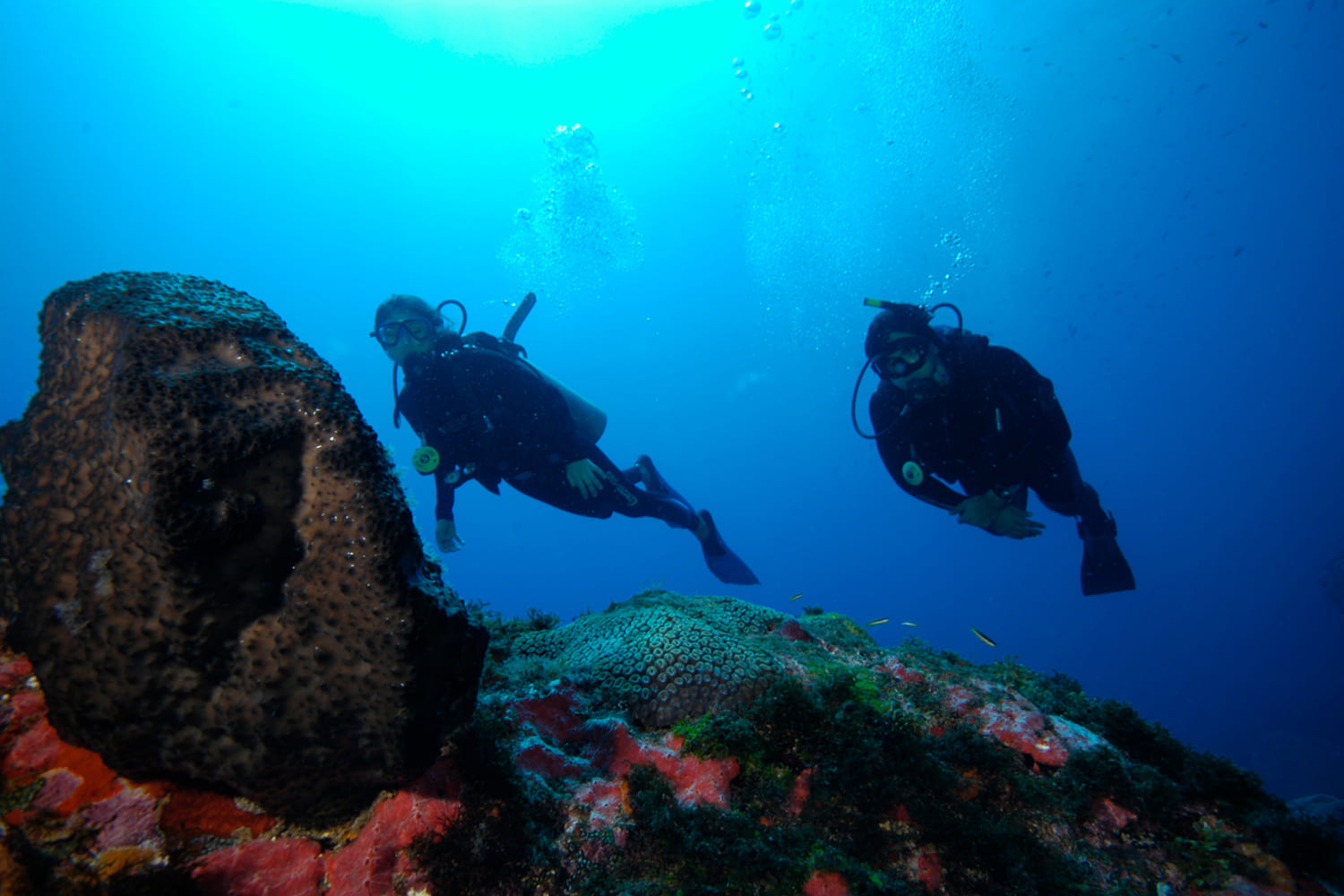
*Photo: ICMBio/Federal Government
Humans represent just a fraction in comparison with the abundant marine life. The biodiversity of the water’s universe is vast, and a lot of species haven’t been discovered yet. Seas and rivers are extremely populated, alive and organized in structures similar to cities. However, most marine species are still overlooked. According to the Census of Marine Life, an international project that registered the distribution and abundance of marine beings, 89% of marine species are still unknown.
The vastness of the global ocean encompasses 97% of the hydrosphere and covers around 71% of the geosphere. The other 3% are located in fresh waters. In this giant blue planet, there is a lot to be investigated by science. To bring discoveries to light, the scientific diving arises as an essential tool to uncover the forms of life and the singularities in the giant natural submerged lab.
This specialized type of scientific research employs precise and adapted techniques to comprehend the intricate aquatic ecosystems. It is through scientific diving that researchers seek to uncover the oceans depths and their forms of life, collecting data and behaviors.
In Brazil, more than 50 academic and research institutions – among them UFRGS and UNIVALI (SC) – use scientific diving as a tool to study a wide range of species, from microorganisms to whole ecosystems. In this news report by the University’s Journal, we will analyze the main difficulties to conduct marine research and how the impact of climate change in underwater communities can affect human beings.
Training and safety
Brazil has one of the largest extensions of ocean in the world, of approximately 1408500666 acres. It encompasses an extensive coastline and oceanic islands, a territory rich in a diversity of ecosystems and marine biomes. These environments include reefs, mangroves, and calcareous algae bank (whose structures house an infinity of organisms). Despite the scientific potential of these areas, they are difficult to access by vessels, which limits detailed and in-depth exploration.
The scientific diving arises as a valuable tool for studies and researches of theses environments, with the purpose of collecting data and samples of remote submerged areas. Less invasive for flora and fauna, this type of research allows direct record taking and observation of physical and biological environments, such as in situ ecological processes and behavioral studies, including studies of endangered animals.
Scientific diving is carried out in different national regions and territories, such as shallow-water coastlines, reefs, calcareous algae banks, oceanic islands, flooded caves and also in icy places such as Antarctica. However, in Brazil, the practice still lacks regulations ensuring physical safety for professional divers and institutional safeguards for organizations utilizing diving in their research projects.
To address these and other important current issues in scientific diving, and to serve as a reference and incentive for the development of marine research activities in Brazil, over 30 academics from different scientific institutions across the country collaborated on the article “Scientific diving in Brazil: history, present and perspectives”, recently published in the Ocean and Coastal Research journal, compiling decades of studies about scientific diving as an essential practice.
According to the authors, the regulation of scientific diving in Brazil requires numerous normative actions. One of the major current limitations is the lack of standardized protocols for training scientific divers. This deficiency makes the training of a diving scientist a challenge, as such training depends on technical training as well as formal academic scientific training. In addition, it is an elitist and expensive qualification, as explained by biologist Carla Menegola da Silva, a professor at the Center for Coastal, Limnological and Marine Studies (CECLIMAR) at UFRGS and one of the authors of the article.
“The family has to support their undergrad child far from home. This is the reality in our course here on the coast, as many students come from other cities, including from other regions, such as the Southeast and Northeast. Students need to be supported with housing, food, the day-to-day expenses of a higher education, and also [diving] equipment. In my opinion, the cost is the biggest obstacle we face in providing this training,” she says. According to the professor, a basic diving course costs between R$2,000 and R$2,300 a month for an undergraduate student.
“Without a doubt, training is the major limitation we have in Brazil. And that includes the lack of standardization, a formalized protocol for scientific diving”
Carla Menegola
For example, diving schools have a standardized protocol: in recreational diving, there is the basic course, the advanced course, and the Dive Master course. For a diving scientist, this doesn’t exist: “It’s a big gap that needs to be filled. Everyone knows that if you want to see little fishes, reef fish or anemone, you have to go through the steps of the protocol that is recognized, standardized, and followed by the schools. That’s why, given the importance of thinking about this, we have created the Working Group [GT Diving] and published this article, highlighting the need to have perspectives on training people in science diving,” adds Carla.
Since it is submerged, the world of the sea is little known to the public, the media and political decision-makers. According to the authors of the article, “the restrictions on knowledge of marine environments are, at least in part, related to technological, logistical, and financial constraints, including diving equipment, protocols, and underwater scientific methodologies”. In order to diffuse the importance of scientific diving and bring to light these and other issues that are still restricted to the marine sciences, the article evolve to be published as a book.
Menegola points out that there are few universities in Brazil with adequate training for diving scientists, such as UNIVALI (SC). “There are specific scientific diving laboratories there, where the professionals who are trained and have the technical training are part of the institution’s teaching staff,” she says.
“But this is an exception – it doesn’t happen in other universities. For example, we [at CECLIMAR] are divers because we got a degree and we have been using this knowledge throughout our professional lives, but we don’t have the autonomy or the information to deliver diving training, because the training is part of the physiology of diving,” she adds.
In other words, physiology includes safety knowledge and physical details that need to be strictly observed when the person is at the bottom of the water. According to the biologist, these are notions that should be transmitted by an accredited diver, with the appropriate training in basic and advanced diving, preferably having fulfilled the Dive Master trainingand the diving instructor training.
“This is not our case. As a faculty of the Marine Biology Program, I face this challenge every semester. How do you show your students how to practice without putting them at risk, knowing that many of them don’t yet have certified diving training? To learn, it’s important to be in the water. We have the Integrated Field Practice II course, which teaches the biological part, studying the biota of a particular location and whose goal is to offer undergrads learning and practical experiences.”
In fact, once at the bottom of the water, you need to be careful and know how to deal with the environments and instruments. According to the CECLIMAR professor, the scenarios are varied and complex. For example, in freshwater environments favorable to archaeological research, there may be caves, as is the case in Brazilian plateaus. In addition to diving knowledge, these environments also require elaborate techniques of site diagnosis, because sometimes the environment has only a single entrance and exit. They are narrow and obscure spaces, with ebb and flow caused by the force of the waves. Therefore, you need to know how to avoid crashing into walls or rocks.
Consequently, it is very important for a diver to already have all the know-how to be able to deal with each environment. “To give you an idea, there are places where the diver can’t get through with his vest on; he has to take it off to get through and, at the same time, be careful enough not cut off the cylinder air supply. These are very risky places that also require very appropriate training,” she points out.
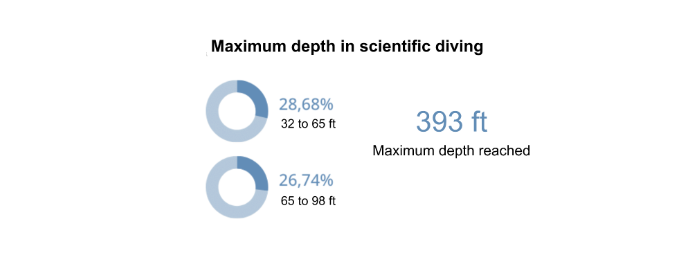
In scientific diving, safety is a priority. Deeper dives, such as up to 230 ft or 328 ft, are carried out by experienced divers who already have solid training. “The pressure increases with depth, which requires a careful ascent with decompression stops. During the ascent, it is important to remember that the diver should never ascend faster than the bubbles he is producing, to avoid decompression problems,” says the biologist.
In addition, there is special equipment to ensure the diver’s safety and the availability of air during prolonged ascent, including rebreathers and additional cylinders. “Even on shallow dives, attention to safety is crucial. That’s why scientific diving requires trained professionals and constant caution,” says Carla.
Uncovering the waters in the face of scarce resources
In addition to the lack of standards for training scientists, scientific diving research in Brazil is faced with limited resources and the urgent need to explore the oceans before some species disappear. In other words, it is imperative that discoveries are made at a faster pace than the current one, what requires more dedicated people to work along the entire length of the Brazilian coastline.
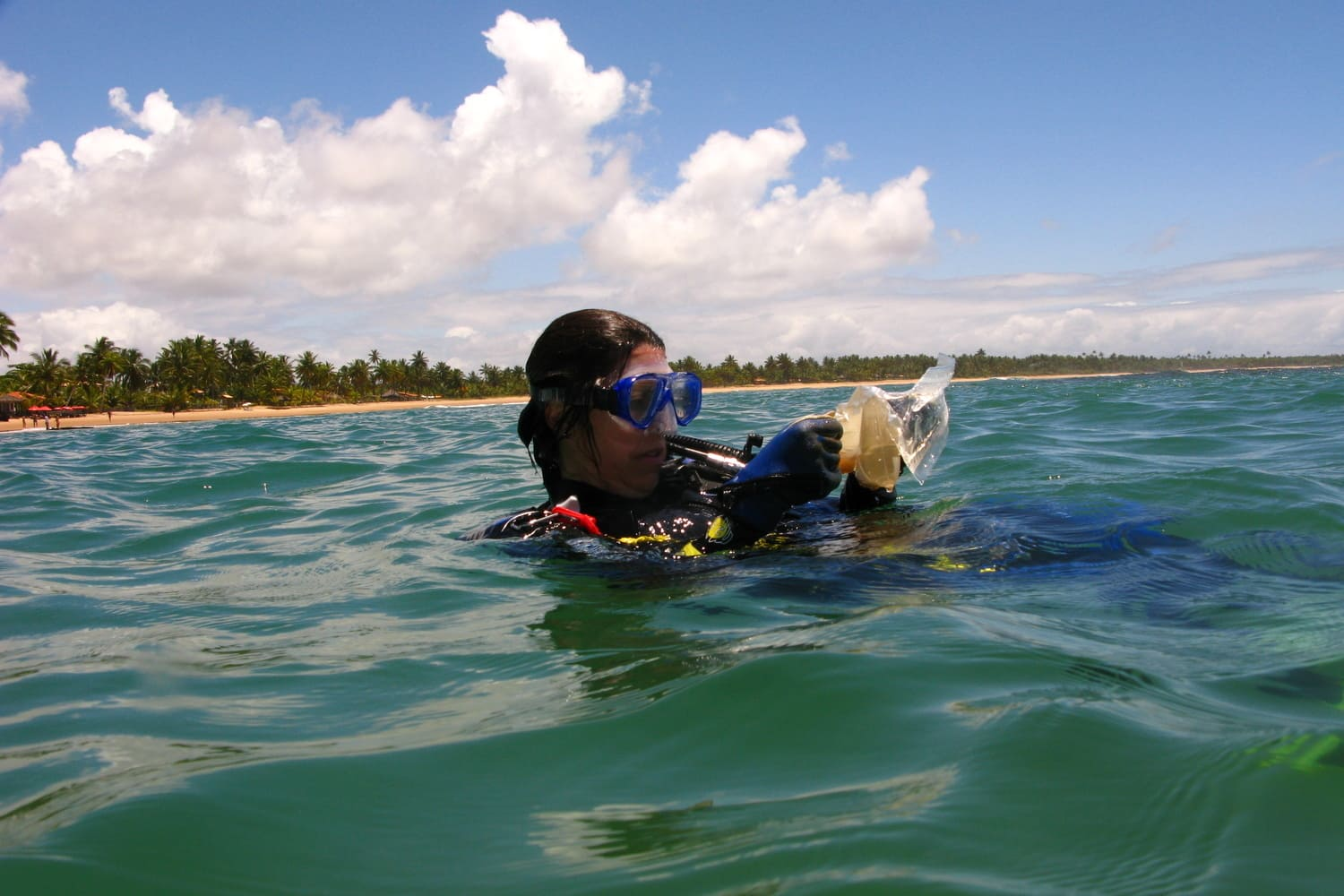
Despite the difficulties, scientific divers are obstinate and sometimes come across surprising discoveries. This is what happened near Praia do Forte (BA), in the so-called Papa-Gente [Folk-Gobble] Pools (named under the significant drowning reports). There, no less than three new species of marine sponge were found. The site, an ecotourism sanctuary, is close to the waterfront and is rich in aquatic life. With a depth of up to 20 ft, all you have to do is put on a mask and fins and dive in.
Through this simple example, Carla emphasizes the importance of investing in funding and promoting scientific partnerships to study marine nature more intensively: “We still have a lot to discover in the 21st century, but research in this field is costly, requires well-equipped divers and an institutionalized approach, because we are losing many species before we even know about them.”
Partnerships also include dive operators and training centers, widening the space for the diffusion of scientific diving and its learning. This logic would provide more access to scientific diving, making it less elitist, and would pave the way for more discoveries about little-known living beings and ecosystems.
As a high-risk activity for the human body, scientific diving requires a lot of training. To keep your performance up to date, you can’t stop diving — in other words, you need continuous practice to ensure safety, autonomy and avoid pre-dive anxiety. Another major challenge is to form teams that are fit and trained for expeditions.
“Despite efforts to obtain more resources, the area still lacks training for diving scientists, continuous practice, and equipment. In addition, an expedition requires investment in equipment for underwater research and safety, a boat adapted for diving, etc. All of this requires specific funds that we are still far from achieving in most institutions,” says Tatiana Leite, a professor in the Department of Ecology and Zoology at the Federal University of Santa Catarina (UFSC), another researcher who wrote the article.
“We also have had no companies offering specific insurance for scientific divers in Brazil since DAN (Divers Alert Network) stopped operating in our country [in 2020],” adds Tatiana.
“The relative scarcity of scientific research involving underwater archaeology, cave diving and diving at depths greater than 164 ft in Brazil reflects the small number of scientists with the technical training to do so,” write the authors of the article, corroborating the scenario of difficulties involved in becoming a diving scientist in Brazil. In addition to these aspects, they also mention the complicated bureaucracy involved in obtaining research licenses.
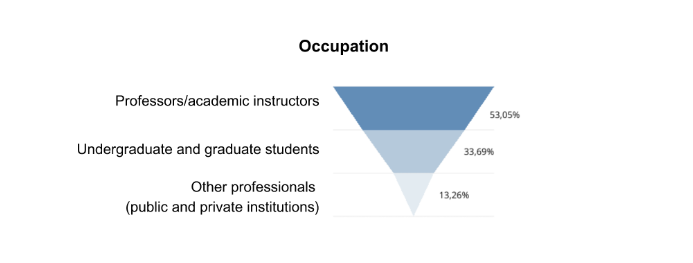
Currently, around 150 researchers carry out scientific dives in the country, facing problems such as a lack of funding, infrastructure and ongoing training. The gap in the regulatory process has led to the activity being carried out without proper training, risking the lives of students and researchers, or even compromising the quality of the results of underwater investigations in the country.
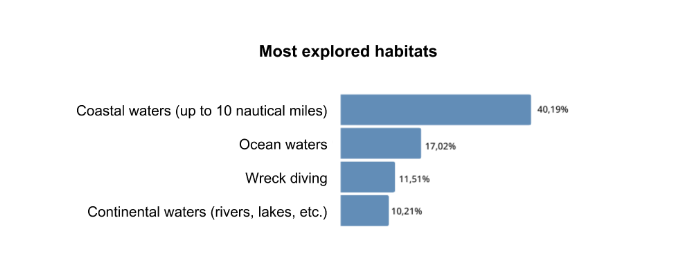
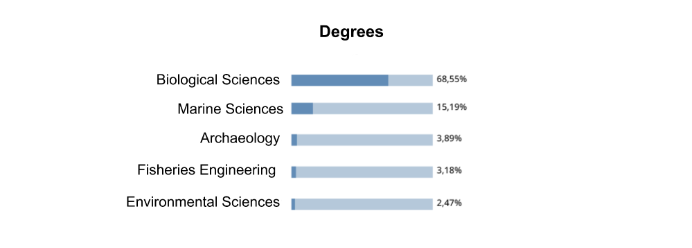
The average scientific diver in Brazil is a young male researcher, usually with a PhD, who carries out research related to the biological sciences in coastal waters up to 98 ft deep. Marine biology research is the main application of scientific diving.

Climate collapse is already affecting the water ecosystem
Brazil has one of the longest tropical coastlines in the world, with unique oceanographic, historical features, and a rich biodiversity. All of Brazil’s underwater ecosystems drastically influence the behavior of the planet’s climate. However, the serious stress factors to which coastal and oceanic regions have been subjected to in the last century have consequences that are only partially known so far.
Despite the clarity of scientific evidence about the devastating impacts of climate change on life on Earth, many companies and governments continue to neglect these consequences. The indiscriminate exploitation of natural resources, the burning of fossil fuels, and polluting industrial practices are just some of the examples of activities that contribute to the accelerated degradation of ecosystems on land and sea. In this scenario in which the term “climate catastrophe” is no longer an alarmist expression, but a realistic one, it becomes even more crucial to invest in ocean research through scientific diving.
“Climate change will primarily impact the shallower areas of marine environments, precisely where scientific diving is most active. Ecosystems such as reef environments and calcareous algae banks are already being monitored and studied to assess the impacts on coral bleaching, changes in the distribution of fauna, changes in the behavior of species, as well as physical and chemical assessments of the water.”
Tatiana Leite
The coral bleaching mentioned by Tatiana is just one of the photophysiological reactions of living organisms to the heat of the seas. When a coral bleaches, it is dying a slow death from heat and lack of food. Currently, the increase in the average global temperature is one of the most urgent climate problems: recent studies show that the oceans are 35,6 °F above their normal temperature. A recent report by the United Nations Environment Program (UNEP) concludes that the current commitments under the Paris Agreement put the world on track for an increase in temperature ranging from 36,5°F to 37,22°F [2,5°C a 2,9°C].
Climate Transparency states in its studies that by the end of this century, the Earth’s average temperature will be at least 37,76ºF [3,2º C] higher than it was at the start of the Industrial Revolution in the 19th century. Scientists are already saying that this increase should reach 37,4 °F by 2030, when 90% of corals would be extinct. Like a person with a fever of 100,4°F, the seas are burning from the inside, causing glaciers to melt, species to go extinct, ocean levels to rise and weather patterns to change.
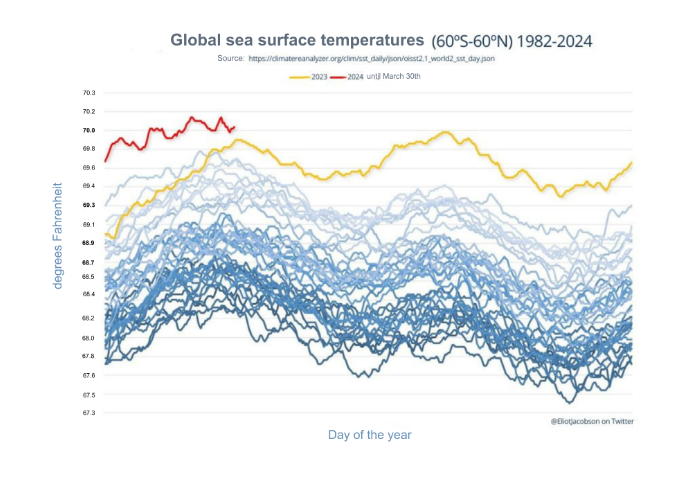
Data cited in the article “Scientific diving in Brazil: history, present and perspectives” and in other global studies indicate that rising ocean temperatures have significant impacts on submerged ecosystems, including coral bleaching and other changes in the behavior and life conditions of marine species. Another symptom of warming is the acidification of the oceans: with the absorption of carbon dioxide (CO2), the average pH of the sea surface has decreased by about 0.1 units, representing an increase of approximately 26% in acidity. Acidification harms marine organisms, especially in the formation of shells and skeletons of calcareous organisms such as corals, mollusks, and some types of plankton.
Today, the percentage of damage already affects approximately 30% of calcareous species, threatening the health of marine ecosystems and the stability of the ocean food chain. This is a serious threat to marine biodiversity, which has a direct impact on food supply and climate regulation on dry land. In this context of deterioration caused by the human minority, scientific diving is an essential tool for monitoring, documenting, discovering, and understanding aquatic fauna before it becomes extinct.
Translated into English by Kethlyn Santos Machado, undergraduate student enrolled in the course “Supervised Translation Training II (English)” of the Undergraduate Program in Language and Literature, under the supervision and translation revision of Professor Elizamari R. Becker (P.h.D.) – IL/UFRGS.