
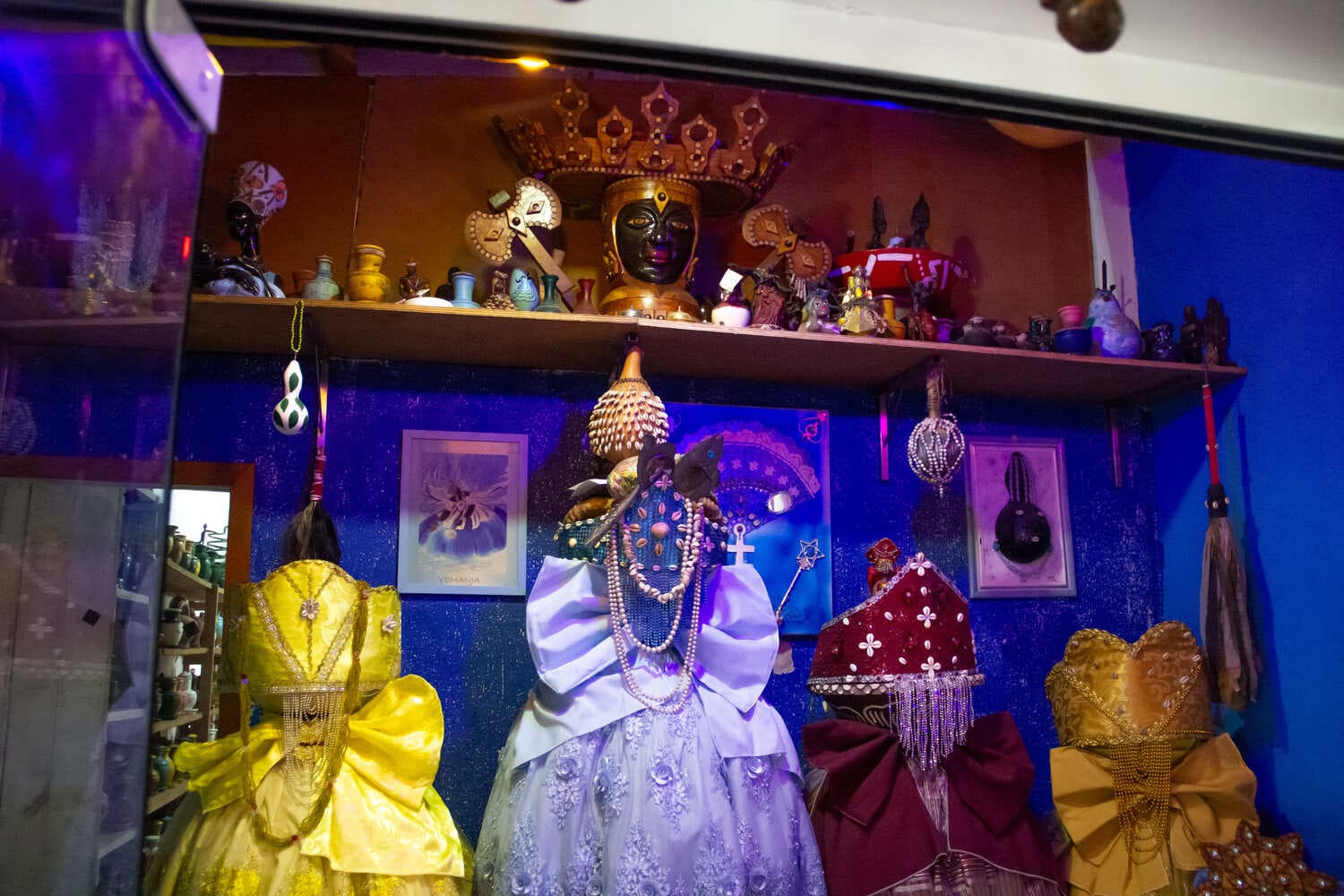
Intolerance | Demonization of traditions which are connected to the African Diaspora is a process as historical as slavery itself and the structural racism pervading Brazilian society. Racist attacks include vandalism, stoning, destruction of terreiros, and murder
*By: Simone Dias Marques
*First published: February 1st, 2024
*Photo: Marcelo Pires/JU
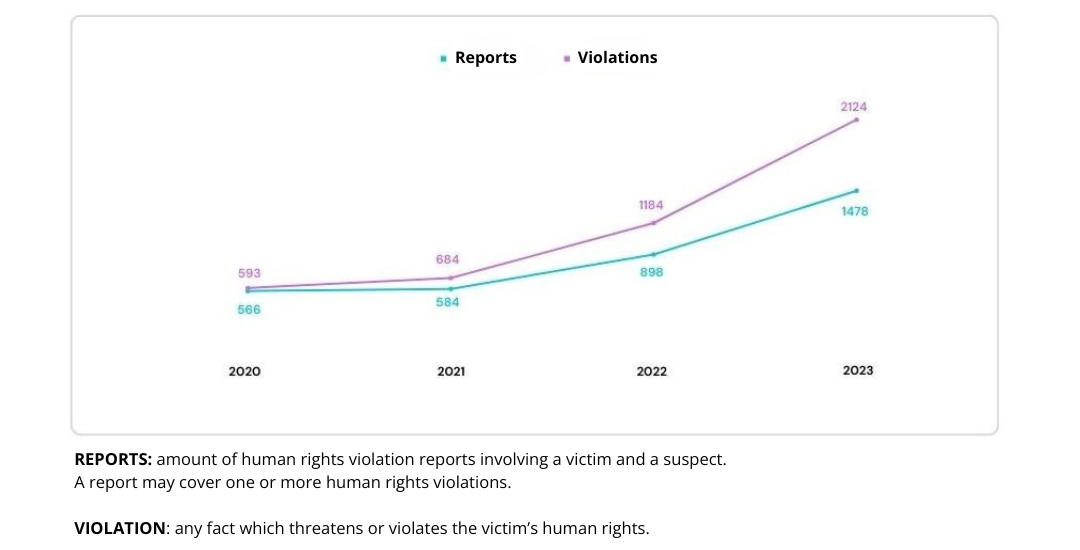
In 2023 alone, there were 1,478 reports of religious intolerance occurrences to the Human Rights Hotline – Dial 100, an 80% increase compared to 2022, according to data from the Ministry of Human Rights and Citizenship. The survey ascertains that the most frequently targeted individuals belong to Umbanda, Candomblé, and other Afro-Brazilian religious traditions.
A significant portion of these cases includes physical assaults on practitioners of Afro-Brazilian religions, as well as acts of vandalism against their symbols and sacred spaces. This is the case of an attack which took place last week on the Ipanema coastline in Porto Alegre, targeting Mãe Oxum monument. The monument, which was declared a cultural and historical heritage of the city in 2023, was vandalized just before the XVI State March for Life and Religious Freedom, held in the Historic Center. The monument was defiled with graffiti which read “pagan” and “Christ is alive.” The Federation of Afro-Brazilian Religions (AFROBRAS) stated to the press that “they are seeking, through all possible legal means, reparation through the identification of the criminal or criminals, vandals, and intolerants.”
“It is unacceptable that in 2024 we still have to face such barbarity. We are outraged. It is hard to express it in words because this strikes at the heart of FAITH, the most sacred thing in this world. A person without faith is a lost soul, without perspective,” declared the president of the entity, José Antônio Salvador de Iemanjá. “If we let this crime go unnoticed [unpunished], there may be further acts of such nature, leading to increasingly violent actions and putting the physical integrity and the very lives of our religious brothers and sisters at risk,” he continued.
The babalorixá also mentioned that there will be an event at the monument “to purify, revitalize, and restore it to its previous state” once the police investigation is concluded. “We are peaceful and interact with all religions because certainly, all lead to the same place, albeit by different paths. Moreover, our State is secular, and we have the right to express our faith. This is why the government declared Mãe Oxum monument a heritage site, what demonstrates the importance of that place, already sacred and consecrated.”
However, such events are not isolated nor recent in Brazilian history. They are tied to the demonization of African-derived religions and their places of worship, a phenomenon historically ingrained in the Brazilian social imagination and closely associated with structural racism. Because of this, as a way to avoid violence, religious houses have become “invisible” in urban settings.
To understand how and why it is still necessary for religious houses to be invisible, JU investigated, with historians, anthropologists, and religious leaders, how we got to this point and why cases of religious racism against African-based philosophies still exist—as shown by the number of reports. After all, it is not rare that intolerance even escalate to murder, as in the case of Ialorixá Mãe Bernadete, who was killed with 25 shots in Bahia in 2023.
The devil used as an excuse for persecution
Throughout the writing of this news report, several key elements indicating the presence of religious racism in Brazil stood out. The first is the historical evangelization associated with state policies, brought by the Portuguese with the mission to spread the Christian faith. The second is the role of the white press in distorting public opinion. Language also emerged as a harmful element, through the use of derogatory and negative terms or cultural appropriation, renaming Afro-Brazilian ancestral elements.
All these aspects are interconnected by one central idea: the use of the Christian imagery of the devil to persecute, torment, criminalize, and victimize Black populations and their religious practices. The devil is the key figure that conveniently serves to justify such injustices, first through Catholicism and now through neo-Pentecostalism.
Terreiro communities are traditional groups whose ancestries, therapeutic practices, religious beliefs, languages, and ways of life are connected to the African diaspora throughout Brazil. They are true social bodies that identify under various names, depending on the region of the country. They organize themselves based on values and worldviews rooted in African traditions and are recognized for their cultural heritage, hospitality, and community services.
Afro-Brazilian religions encompass various beliefs characterized by respect for ancestral wisdom, the forces of nature and life, cultivation of a good spirit, and welcoming all people without discrimination of color, creed, education, class, or social orientation. The cultural food and the act of eating are part of the sacred practices in the terreiros (temples) – spaces for collective living, sharing, knowledge, and faith.
As stated in Federal Decree 6040/2007, they are “culturally distinct groups that recognize themselves as such, with their own forms of social organization, occupying and using territories and natural resources as a condition for their cultural, social, religious, ancestral, and economic reproduction, utilizing knowledge, innovations, and practices generated and transmitted through tradition.”
It may seem redundant to mention, but the rights of the terreiro peoples are recognized and guaranteed by Brazilian legislation – their culture, their territories, and terreiros, their identity, natural resources, and religious expression, as stated in the Federal Constitution (Article 5, VI): “Freedom of conscience and belief is inviolable, guaranteeing the free exercise of religious worship and ensuring, according to the law, the protection of places of worship and their liturgies.”
Despite all these guarantees, racism remains the main cause of physical violence and damage to the property of those who belong to various Afro-Brazilian religious traditions. Precisely because of racist hatred and assaults, the terreiros remain invisible. Forced discretion becomes a form of survival.
The historical construct of fear towards Afro-Brazilian religious practices
Macumba, batuque, spell, sorcery. Why is this language, negative and pejorative in tone, seems to be frequently associated with cases of religious racism? The demonization of African-based religious traditions is linked to various historical factors specific to Brazil.
“The construction of the African ritual as something primitive and out of place is a result of early 20th-century policies. It’s as if everything coming from Africa was imbued with a backward idea, therefore dangerous, that ‘does harm’; people, however, are only afraid because they also believe in magic,” says historian Jovani Scherer, a graduate student pursuing a P.h.D. in History at UFRGS who has been writing the thesis “Príncipe Custódio e a formação do Batuque no RS: história do parentesco de nação mina, nagô e jeje na institucionalização do Batuque”.
As the Brazilian saying goes, spells go but come back. “So, people who take prejudice against Afro-Brazilian religions ironically end up believing them and being afraid of them, perhaps even of popcorn, because they don’t understand its purpose. It’s a symbolic construction that occurred in our society; ‘did you know he is a macumbeiro (Afro-Brazilian religion practitioner)? He deals with trabalhos (incantations).’ As a persecuted group, Afro-religious people can use this same symbolism as if it were a power game to protect themselves,” he explains.
Marked in batuque history as a period of intense persecution, the late 1930s were primarily defined by police actions and the role of the press against the terreiros. “Right after the death of Príncipe Custódio in 1935, there was a period of heavy repression. During this time, several news release creating an atmosphere of demonization, portraying the rituals as dangerous and leading to death began to emerge in the press. I remember reading a series of news reports from the 1930s which were very biased in creating an atmosphere of illegality, saying that they (terreiro peoples) are exploiters, primitive or unworthy of trust, much like a criminal activity. The role of the press, at least in Porto Alegre, was crucial to trigger invisibility and even persecution of terreiro communities,” says Jovani.
Another factor that stimulates racism and the invisibility of Black people and their religions is the idea of Rio Grande do Sul as a “European” region, especially because of the arrival of such immigrants. Additionally, according to Jovani, there is a whole context of scientific eugenics, as well as the way white people related to African people: as savages, inferior beings, and “soulless” people to be “catechized,” since scholars of the time used to perceive African cults as animistic and fetishistic, as a historical stage to be overcome.
When a person is dehumanized, they are objectified. This means they are no longer seen as a human being. As an object, they can be used as one pleases. Ultimately, they are dehumanized and turned into just an object, and thus subject to destruction without ethical consideration or solidarity, nor religious remorse.
But the association with the devil came after this period.
“Perhaps, especially due to the popularization of African-based religions and the connection with Exu, there is a direct association with the devil, with a sensationalist neo-Pentecostal discourse, exaggerating the tones about African-based worship, mainly in the press. This has been true since the early 20th century,”
Jovani Scherer
“It is a historical construction. The visits of the Inquisition to Brazil occurred three times to uncover crimes and heresies and punish Afro manifestations. Catholicism used to be the state religion here. Even today, more than a century after the Monarchy got abolished, there are still many social institutions such as schools and universities that have continued to spread its values,” sums up Professor Vitor Queiroz from the Anthropology Department at UFRGS.
Queiroz explains that about 20 years ago, due to the need to increase their number of followers, neo-Pentecostals began targeting communities in poor neighborhoods, outskirts, and favelas. “There was religious competition for the heart of the faithful.” This competition resulted in the neoliberal promise of “to work for God” and then prosper in this life, as opposed to the Afterlife and Paradise. Another aspect of this new religious ethos is the emphasis on healing rituals and exorcism to expel the devil, creating a context of spiritual warfare, with marketing strategies linked to militarized language: the fight against the devil, the war against Satan. The faithful thus become “warriors” of Jesus.
Narcopentecostalism and protecting “purity” through gun pointing
In the battle for souls, in this combative context, a criminal faction even emerged in Rio de Janeiro: the “Traficantes de Jesus” (Jesus Dealers), a narcoreligious phenomenon consisting of gangs that force practitioners of African-based religions to abandon their temples in the favelas of Rio de Janeiro, such as Baixada Fluminense, Vigário Geral, and São Gonçalo. There are at least 120 evangelical drug-dealing groups in the favelas of Rio. The criminals belong to the TCP (Terceiro Comando Puro) and got converted through evangelical church leaders’ incursions into the Rio prisons with the authorization of the Penitentiary Administration Secretariat (SEAP).
“It’s shocking!” says Bàbá Hendrix Silveira, historian, theologian of African-based traditions, and member of the Council of the People of Terreiro of the State of Rio Grande do Sul. “The Traficantes de Jesus expel the spiritual leaders from the favelas, pointing machine guns at their heads; they force them to destroy all their obligations, altars, and then expel them from their homes and the favela, claiming they work for the devil.”
According to Bàbá Hendrix, to popularize their violent actions, the criminals record videos raising machine guns in their hands and saying, “There won’t be any macumbeiro (Afro-Brazilian religion practitioner) here, the favela is for Jesus.” “We have seen an increase in religious intolerance and violence mainly during this period of convergence between political and religious conservatism, which attributes salvation through politics, and politicians use this (savior) position to legitimize the hateful acts propagated by religious conservatives,” adds the babalorixá.
If there are criminals from the so-called narcopentecostalism on one side, on the other, there are the non-secular power structures and their agents, who help fuel the degenerated imagination against Afro-diasporic traditions. Hendrix recalls several cases in Rio Grande do Sul, including one that occurred in the Vale do Rio dos Sinos: “A child’s body was found on the street, and the police chief was sure that the murderer was a local spiritual leader. But when asked about the evidence, the police chief, who is evangelical, said that ‘the Holy Spirit’ had told him ‘the murderer was that person’. It was only because of that statement that the judge ended up releasing the spiritual leader. This shows how the hegemonic religions in this country use power structures to suppress rights – mainly those around African-based religious traditions.”
For Hendrix, the blend of the State, its laws, and structures highlights the maintenance of the values of just one religion for the entire Brazilian population.
“When we say so loudly that we want a truly secular state, it’s not to break the rules, but so that people have the freedom to choose, and not for the State to choose for them. For instance, any religion can be against abortion, but that can’t be a decision for the State to make.”
Bàbá Hendrix Silveira
Bàbá Diba de Iyemonja, coordinator of the National Network of Afro-Brazilian Religions and Health (RENAFRO), strengthens these arguments and points out that, beyond religious racism, this is institutional racism. “The persecution came initially much more from the Catholic Church, but from the late 1970s and early 1980s on, Pentecostal churches began to emerge, further escalating religious persecution. However, it is also necessary to understand the role of the State and its apparatus – the Military Police and the Civilian Police – in the intensification of persecution as a result of the reinforcement of institutional racism.”
Indeed, Bàbá Diba believes that the increase in violence against terreiros is becoming more and more entrenched in the neo-Pentecostal sector, but it has gained even more strength in recent years.
“Since this penultimate federal government mandate, the persecutions have intensified; it’s as if there were a kind of permissiveness to declare hatred”
Bàbá Diba de Iyemonja.
At the state and municipal level, the number of police raids and brutality has also grown: “The Military Police has returned to raiding the terreiros, to conducting searches, and even threatening to seize our drums because the instrument makes a sound that ‘disturbs the neighborhood.’ So, in the 21st century, we’re still peeking behind the curtain to see if a police car will park in front of our house to pose a threat to our freedom of worship,” says Bàbá Diba. “Afro-Brazilian religions are 10,065 years old. The issue of invisibility, especially in Brazil, boils down to one simple word: racism,” corroborates Tiago de Bará-Onilú, coordinator of the Independent Association in Defense of Afro-Brazilian Religions (ASIDRAB).
However, those who think that only Black people are persecuted for their sacred traditions are mistaken. In Rio Grande do Sul today, more and more white people belong to the terreiro community. In the state’s interior, many terreiros are 100% white. But, according to Pai Tiago, “when a white person declares themselves to be from an African-based tradition, they also suffer persecution, sometimes quite covert.”
Another misconception is thinking that, due to the adhesion of white people, there is a whitening of African religions in Rio Grande do Sul. “You have to look through the lens of Afrocentricity. What exists is the ‘blackening’ of white people through their insertion into African-based traditions. So, it’s the opposite: we are ‘blackening’ the society of Rio Grande do Sul,” explains Bàbá Diba. “The only difference is that when they manifest the orixás, they turn ‘red’,” jokes the babalorixá.

If racist practices are a construct internalized within society, all instances of racial prejudice expose and highlight the slavery process that structured Brazil’s formation and still persists within the social weaving. “Slavery lasted 352 years in Brazil. The first slave ship arrived here in 1536, 36 years after Pedro Álvares Cabral’s invasion, and it ‘ended’ on May 13, 1888. But slavery is still here today. Recently, in 2023, more than 200 workers were rescued from slavery in Bento Gonçalves during the grape harvest. They had been even whipped,” emphasizes anthropologist Marcelo de Andrade Vilarino, coordinator of the research Mapping of Traditional Terreiro Communities in Capitals and Metropolitan Regions, carried out in 2010 by the Federal Government in the states of Minas Gerais, Pará, Pernambuco, and Rio Grande do Sul.
He highlights that religious intolerance is one of the strongest and most impactful forms of violence in the slavery process.
“You are dealing with another’s sacredness and denying them the right to live their faith. Religion is to reconnect, to link with the non-living, the extraphysical world. Depriving someone from the opportunity to worship their gods is an unimaginable violence. In such context, our challenge as a society is enormous.”
Marcelo de Andrade Vilarino
Another structure that still needs to be deconstructed is the concept of whiteness, the privilege associated with being white. For Vilarino, it is crucial to break with this fiction of superiority to build an equitable and dignified world, where all individuals receive equal treatment and have access to the same opportunities. “It’s imperative that, as a society, we address these issues to achieve genuine democracy,” he points out.
Eugenic politics: Black people out of the map
Racism’s presence in Porto Alegre is a historical aspect that influenced its current formation, including the application of public policies of racial “hygiene”: the removal of the Black population to areas increasingly farther from the city center. The African Colony neighborhood, for example, emerged in the late 19th century through actions expelling former enslaved Black people. Today, this region is known as the Rio Branco neighborhood, thanks to the arrival of immigrants in 1959. Thus, the city hall officially institutionalized the process of “whitening” through the name change.
The idea behind the attempt to expel the Black population from the capital, repress its culture, and religiosity, was to ‘erase’ Black people. Throughout the first half of the 20th century, influenced by prevailing eugenic theories of the time, journalism spread a series of stigmas associated with Black people, attributing to them ideas of disorder, cunning, and immorality, which justified the brutal police repression of culture, religiosity, and Black lives.
These negative representations, mainly propagated by newspapers, helped construct the public opinion that “sanitized” and “morally cleansed” various regions of the city, expelling Black residents to peripheral areas through continuous and systematic actions by public authorities. “When the removal of Black communities from the central areas and Cidade Baixa occurred, many terreiros moved to Restinga and Partenon. If we conduct a census, we will find the largest population of Afro-Brazilian religious followers in the city in these neighborhoods,” says social scientist Janine “Nina Fola” Cunha, a member of the African, Afro-Brazilian, and Indigenous Studies Nucleus at UFRGS and an anti-racism activist for over 30 years.
Currently, Porto Alegre has the largest number of terreiros in Brazil, with about 25,000 sites. “In Rio Grande do Sul, there are 65,000, with a predominance of batuque. This means that the Rio Grande do Sul region has the highest number of terreiros in the world,” says Pai Tiago, descendant of the saint Príncipe Custódio Joaquim de Almeida, the “Black Prince” credited with establishing the Bará do Mercado Público of Porto Alegre.
According to the 2010 Census from the Brazilian Institute of Geography and Statistics (IBGE), there are around 600,000 people in Brazil who self-identified as followers of African-based religions, with 407,000 practicing Umbanda, 167,000 practicing Candomblé, and 14,000 practicing other religions, including batuque. Of the 407,332 Brazilians who declared themselves as Umbandistas, 140,315 were in Rio Grande do Sul, representing 34.45% of the total. “We are peaceful and interact with all religions, because we are certain that all lead to the same place, even though through different paths. Moreover, our State is secular, and we have the right to express our faith,” highlights José Antônio Salvador de Iemanjá, president of the Federation of Afro-Brazilian Religions (AFROBRAS).
“Jesus’ Fritter” or “God’s Acarajé”: cultural erasure on the making
Acarajé is a fritter made from black-eyed peas, dedicated to the orixá Iansã, originating from West Africa. In Yoruba, it is called àkàrà (“fireball”) for ajeum (“to eat”), meaning “eating a fireball.” Its traditional preparation is recognized and certified by the National Institute of Historical and Artistic Heritage (IPHAN) as a cultural and intangible heritage of Brazil.
However, since at least 2006, Pentecostals have entered the battle to Christianize acarajé, renaming it “Jesus’ fritter,” disconnecting it from the ancestral and religious tradition that links the baianas of acarajé to this votive food for orixás in their terreiros. At its core, it is another form of domination and violence.
“The idea of imposing a ‘God’s acarajé’ was defeated, at least for now, I believe. But the resistance against this erasure is ongoing. We also make acarajé here in Rio Grande do Sul for the same orixá, which is Iansã (Oyá),” explains Nina Fola.
“Naming this food ‘Jesus’ fritter’ empties its historical, symbolic, and religious meaning. It’s another form of prejudice and whitening everything related to African traditions,” says Nina Fola.
Nina emphasizes that the baiana women of Candomblé view acarajé as a source of income to support their families, and during the slavery period, the money earned was used to buy their freedom. “Acarajé, then, is a heritage, just like the baianas, but now there’s this neoliberal project by the Pentecostal churches to consume the entire culture, to absorb more people and gain more followers,” she adds. The process of cultural erasure, of whitening, is Eurocentric, has always existed, and aims to render any form of African-based culture in Brazil invisible, says Pai Tiago.
Diasporic outlook: evangelize, exploit, unsoul, erase
When a people is to be dominated, the first step is to erase their history and culture. According to Pai Tiago de Bará, when the Portuguese arrived in Africa to plunder the continent and dominate the people, it was a process of kidnapping. “The term diaspora is used when one is forced, due to political or religious reasons, to leave their homeland and migrate. In the process of coming to Brazil on the tumbeiros – the slave ships were legitimate tombs – the African people were forced to pass through the ‘tree of forgetfulness’ before boarding.”
The Baobab tree is considered sacred, a kind of tree of life, and is an intrinsic part of the social identity of many African peoples. It represents the ancestors and the community’s memories. The uprooting ritual around this tree was specifically meant to hurt and torment: so that black men and women, including children, would have their last vision of their culture and land. “We have this diasporic persecution process,” says Pai Tiago. “This labor of the kidnapped, violated, and enslaved is portrayed in history books as if the black people came in a nice little boat just to cut sugarcane,” he mocks.
On top of that, came evangelization, the religious erasure process: “The Catholic Church, through Papal Bills, designated black people as soulless. The missionary work around the world culminates in the plunder of a continent that was extremely rich, with its millennia-old technologies and ancestors, and which today lives in miserable conditions because the appropriation still exists through famous brands and governments around the world, exploiting resources and labor to the fullest.”
Pai Tiago de Bará narrates that, from the diaspora and slavery, in a context of inhuman horrors, survival was imperative – and one way to preserve one’s culture and religiosity was through syncretism. “I say this with much pain, but how do you protect and safeguard your reality? Everything was forbidden. So, this is how the diversity of African-based traditions was born. In Africa, each region worships a different deity. For example, I am the son of Bará, known in Africa as Exu. Some regions only worship Exu, others only worship Iemanjá. The cults came here from different regions,” he explains.
Thus, for the survival of the religious tradition and life itself, it was necessary to worship the orixás together, blend the languages of various regions, and merge the entities with Catholic saints, bypassing the slave owners. Syncretism, therefore, became a form of resistance in which Black people employed whatever they had at their disposal to adapt their rituals to Brazil. In this sense, Pai Tiago de Bará believes this attitude facilitated acceptance but “in a hidden way, to disguise the orixás and their deities, because any trace of African rituals meant punishment, even death, for enslaved people.”
Although the sound of the batuque drums continues to resonate with ancestry and resistance, intolerance still pursues and attacks the terreiros and people of Afro-Brazilian religions. However, Pai Tiago de Bará understands that many who hostilely attack and demonize the rituals “are the same ones who come to the terreiro for blessings, and on December 31st, they jump over the waves, dressed in white, asking for good luck from Iemanjá.”


Mapping of Terreiros in Brazil and Rio Grande do Sul: batuque as food for body and spirit
In 2010, the Federal Government organized the Mapping of Traditional Terreiro Communities, covering the capitals and the metropolitan areas of the states of Minas Gerais, Pará, Pernambuco, and Rio Grande do Sul. The survey was conducted by the Special Secretariat for the Promotion of Racial Equality Policies (SEPPIR) of the Ministry of Social Development and Citizenship, in partnership with IPHAN and the Palmares Foundation, and facilitated by UNESCO.
The research results indicated the presence of 4,045 terreiros of African-based religions in the four capitals surveyed (Porto Alegre, Recife, Belém, and Belo Horizonte). Based on the collected data, it was possible to identify these communities, their locations, main activities, land ownership situations, infrastructure, and other sociocultural and demographic aspects.
“The data from Porto Alegre represented an extremely impactful experience for me, because, if I’m not mistaken, we identified 16 entities representing various fronts, both defending practices linked to terreiros and cultural issues supporting Black youth, as well as those engaged in political party activities,” recalls anthropologist Marcelo de Andrade Vilarino, who holds a master’s degree in Sociology of Religion from the Federal University of Juiz de Fora (MG). From meetings with these representative entities, the research group was able to “demarginalize” more than 2,500 terreiro addresses in the capital of Rio Grande do Sul. “In the metropolitan area, we visited more than 5,000 addresses,” he points out.
The approach used to facilitate the identification of the locations involved having help from terreiro members who were at least 50% of the interviewers. “This strategy not only simplified our entry but also promoted greater understanding and closeness with the communities involved.”
The study focused on three main areas: violence, discrimination, and racism; also considering food security and access to water. As some of the terreiros are historically located in peripheral areas, they become territorial spaces offering assistance to communities to overcome the dire poverty faced by the Brazilian population. According to the anthropologist, this highlighted that they are spaces for building social dignity. “We saw that African-tradition houses have developed actions that promoted food security for their surrounding community.”
Vilarino asserts that this mapping was an important task for Brazilian society as a whole because it was the first time the state invested significant resources to plan actions for terreiro peoples.
“After all, how can the government think of specific public policies for them if it doesn’t know how many they are, where they are located, or what their needs are? After the survey, SEPPIR was able to develop the National Sustainable Development Plan for African-based Peoples in Brazil”
Marcelo de Andrade Vilarino.
He also highlights that the food dynamics in African religious houses are highly effective and significantly contribute to the food security of the people who frequent them: “In the process of offering food to the gods, once they are pleased, they ensure that no food is lacking for humans as well. It’s the reciprocity rationale, the Gift Law. When making an offering, you only dedicate part of the food to the entities; the rest must be distributed, shared with people. Some terreiros even distribute food baskets to the surrounding community.” In other words, no one goes hungry near a terreiro.
Vilarino emphasizes that among the religious leaders who participated the most in the terreiro mapping in Porto Alegre were Bàbá Diba, Bàbá Hendrix, and Mãe Vera Soares; Mãe Carmem de Oxalá from Guaíba and Mãe Maria de Fátima de Oxalá from Gravataí. “These are people to whom I have the utmost reverence, deeply committed to the valorization of African-based houses. I have profound respect and gratitude for what they contributed to our work,” he concludes.
How to report?
Cases of religious intolerance should be reported to the National Human Rights Ombudsman through the “Disque 100” service. Civil society entities, the Public Prosecutor’s Office, and the Brazilian Bar Association (OAB) in the states also have commissions or representations to receive reports.
Translated into English by Giovanna Lorena Gomes dos Santos, undergraduate student enrolled in the course “Supervised Translation Training II (English)” of the Undergraduate Program in Language and Literature, under the supervision and translation revision of Professor Elizamari R. Becker (P.h.D.) – IL/UFRGS.