
The African Series consists of books on African topics, written and published by researchers at the Brazilian Center for African Studies (Content in Portuguese).
Brazil’s Foreign Policy Toward Africa Since 1822: Half-Brothers on Their Father’s Side
Rômulo Neves | CEBRAFRICA-CEGOV, 2025
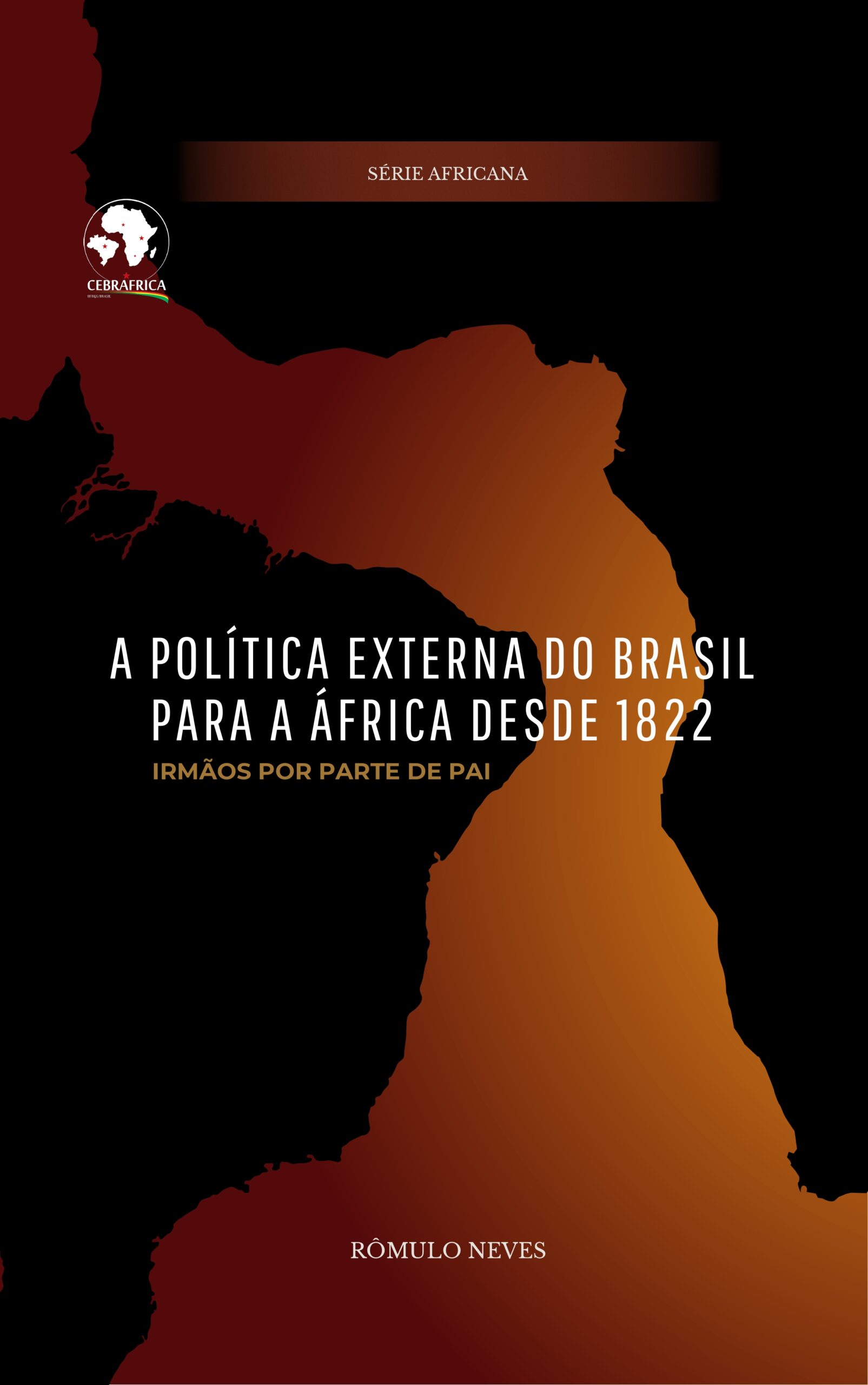 In this work, diplomat Rômulo Neves presents a comprehensive historical analysis of Brazil–Africa relations, covering the period from Brazil’s independence up to 2002, and subsequently from 2003 to 2024. He offers an objective evaluation of the policies and outcomes — or the lack thereof — of each administration with regard to cooperation with Africa. This study constitutes his thesis submitted to the High Studies Course and was defended in 2024 at the Rio Branco Institute. Download
Middle East, Afghanistan, and Central Asia: The Logic of Endless War
Paulo Fagundes Visentini | Editora Leitura XXI, 2022
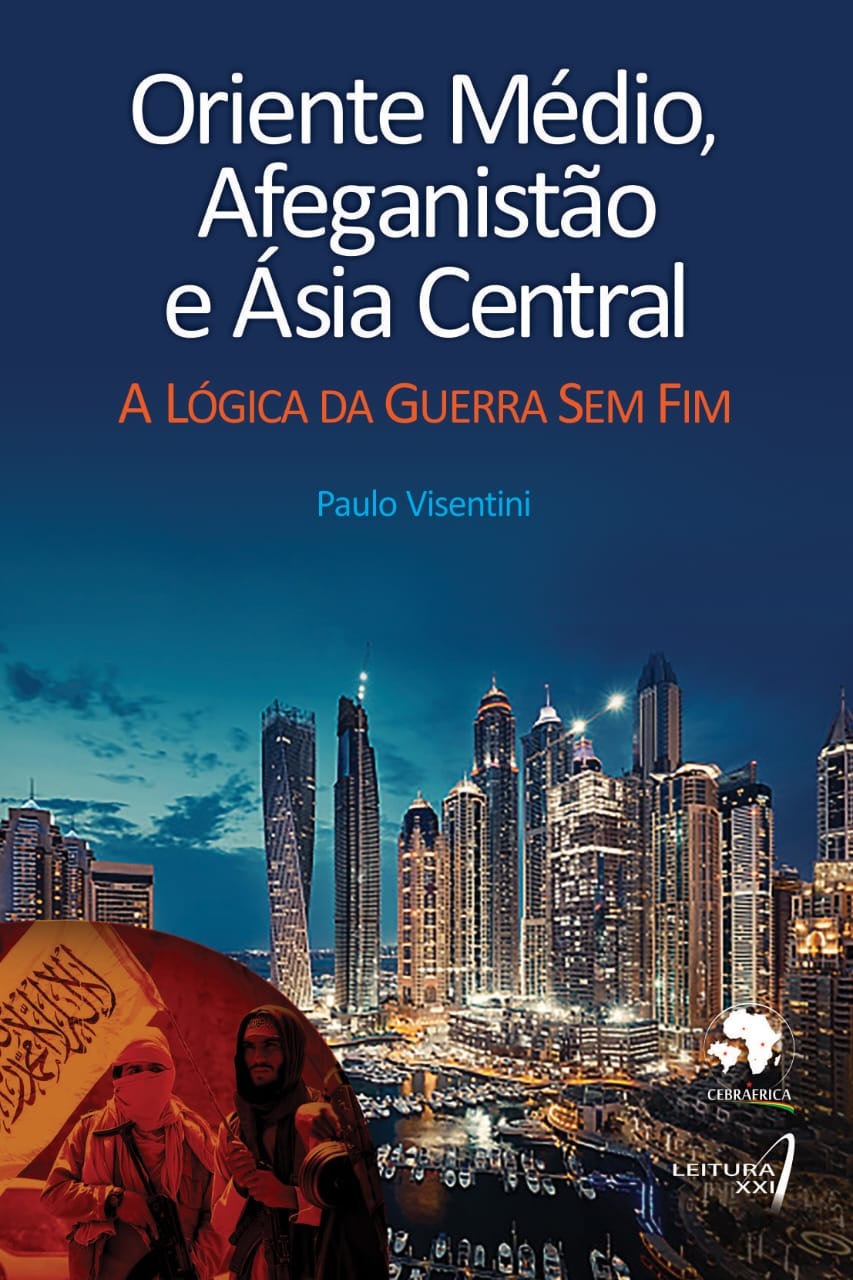 In this book, Paulo Visentini analyzes current events in the Greater Middle East from a historical perspective, seeking to understand the transformations occurring in the region. With this in mind, the author begins his study with the decolonization period, moves through the Cold War era, the Arab Spring, and culminates in the current historical moment of Western decline.
COVID-19 in Africa: Survey of Public Policies, Impact, and Regional Coordination (Vol.2)
Analúcia Danileviz Pereira e Camila Castro Kowalski (Org.) | CEBRAFRICA-CEGOV, 2021
 In this book, a continuation of the research report on the health crisis in Africa, the authors aim to facilitate access in Brazil to information on the evolution of the pandemic on the African continent—a topic rarely covered by national media. Additionally, the researchers seek to provide a critical analysis of the impact of COVID-19 in Africa, including issues related to security, economy, politics, and society. Download
Regional Security in the Horn of Africa: Conflicts, Actors, Agendas, and Threats
Nilton César Fernandes Cardoso | CEBRAFRICA-CEGOV, 2020
 The Horn of Africa has been a conflict-ridden region for nearly half a century. Aiming to provide a Third World perspective on the region, the author analyzes the configuration of regional structures, such as actors, agendas, and threats, offering a southern perspective from an African scholar educated in Brazil, within the framework of South-South Cooperation. Download
COVID-19 in Africa: Survey of Public Policies, Impact, and Regional Coordination (Vol.1)
Analúcia Danileviz Pereira e Camila Castro Kowalski (Org.) | CEBRAFRICA-CEGOV, 2020
 In this book, the result of a research report on the health crisis in Africa, the authors aim to facilitate access in Brazil to information on the evolution of the pandemic on the African continent—a topic rarely covered by national media. Additionally, the researchers seek to provide a critical analysis of the impact of COVID-19 in Africa, including issues related to security, economy, politics, and society. Download
África Occidental: Crisis vs. Estabilidad Política (Content in Spanish)
Yoslán Silverio González | Editora Palmarinca, 2018
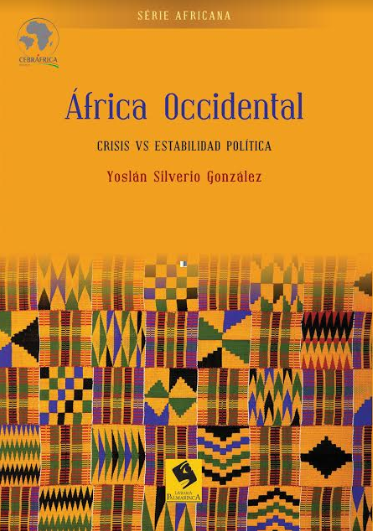 In this book, the author proposes an analysis of the main political crises and armed conflicts that occurred in Western Africa between 2010 and 2017. In addition to the historical focus that allows for specific understanding of each case studied, the text presents a theoretical debate to address African political issues. Furthermore, the destabilizing factors present in various types of conflicts, as well as issues related to security, are analyzed in this work.
Foreign Policy in Southern Africa: War, State Building, and Regional Order
Igor Castellano da Silva | Editora Século XXI, 2017
 The book develops a well-founded analysis of the foreign policy of Southern African countries based on field research. It argues that these countries are not “peaceful poles” in international relations, as often suggested, but rather highly active actors. They are engaged in developing an intra-African international system influenced by state-building dynamics and regional order structures.
The Great Brazil and the Small PALOPs
Kamilla Raquel Rizzi | Editora Século XXI, 2014
 It is a Doctoral Thesis in Political Science from the Federal University of Rio Grande do Sul. Its objective is to analyze, during the period from 1974 to 2010, the political, economic, cultural, and cooperative aspects of Brazilian foreign policy towards three African countries whose official language is Portuguese: Cape Verde, Guinea-Bissau, and São Tomé and Príncipe.
Africa and the Emerging Powers
Paulo Fagundes Visentini and CEBRAFRICA Team | Editora Século XXI, 2013
 The work analyzes the actions and interests of emerging powers such as China, Brazil, and India, as well as Russia, Cuba, Turkey, Iran, and Gulf Arab nations in the African continent. This new form of interaction is based on changes in global politics, which legitimize South-South Cooperation and the construction of a multipolar system that advances alongside the development of the periphery.
Congo, the African World War: Armed Conflicts, State Building, and Alternatives for Peace
Igor Castellano da Silva | Editora Século XXI, 2012
 The author questions the reasons for the continued armed conflicts in Congo, an African country that has been the stage for two civil wars, the latest known as the “African World War.” Faced with the political, economic, and social consequences for the nation, the author proposes intriguing answers to this issue, related to the construction of African states.
African Countries: Diversity of a Continent
Paulo Fagundes Visentini and CEBRAFRICA Team | Editora Século XXI, 2012
 The book explores the vast diversity of the African continent by analyzing its 54 countries across four main topics: Geography and Population, History, Politics/Diplomacy, and Economy.